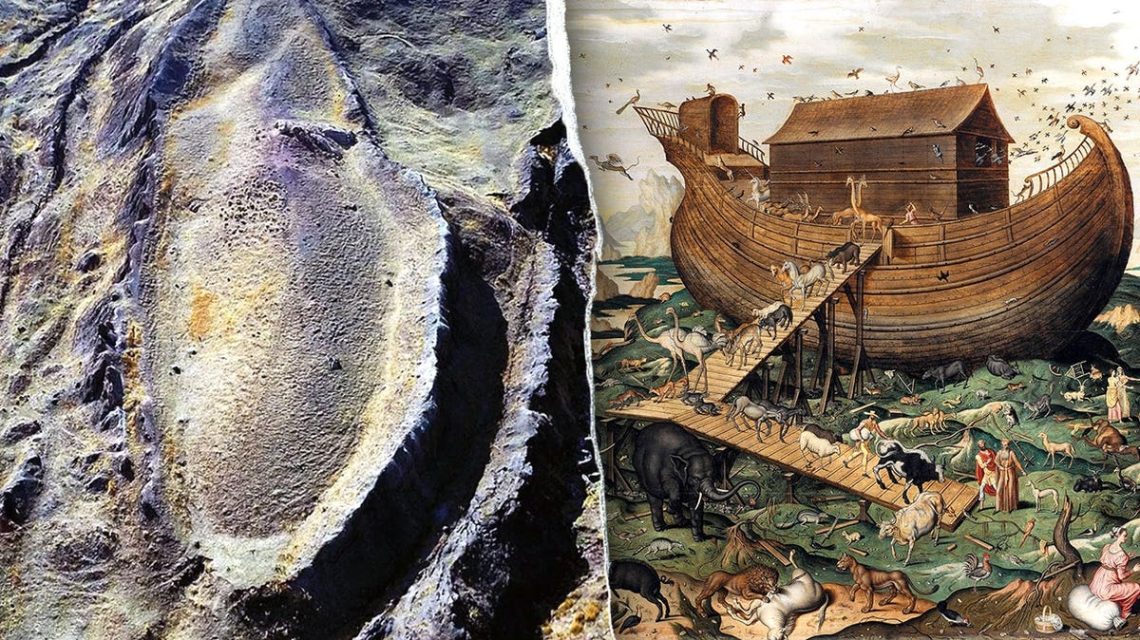
Researcher Andrew Jones claims new soil data supports the belief that Noah’s Ark rests in Turkey. The site at Durupinar has been contentious since the 1950s, with ongoing debate over its origins. Some geologists see it as a natural formation, while others, like Jones, argue for a biblical connection.
ANCIENT RITUAL COMPLEX UNEARTHED AT SITE TIED TO BIBLICAL CITY IN EZEKIEL: ‘STILL HOLDS MANY SECRETS’
A 1996 paper in the Journal of Geoscience Education dismissed previous Ark claims as unfounded, but Jones cites new soil analysis showing significant chemical differences. These differences, he argues, suggest decayed organic material, aligning with the Ark hypothesis.

(Photo Credit: Huseyin Yildiz/Anadolu Agency/Getty Images; Fine Art Images/Heritage Images/Getty Images)
Jones shared with Fox News Digital that new results present compelling evidence for a man-made origin. He noted a statistical difference between soil inside and outside the boat-shaped formation, showing three times more organic matter inside.
This implies a concentration of decomposed carbon materials like wood, resin, or remains of animals, supporting the Ark narrative. Yet, past critics like Lorence Gene Collins and David Franklin Fasold described it as a natural structure.
The recent soil assessment reveals varying chemical compositions beneath the surface, including a dramatic increase in potassium levels and pH variations. These changes suggest an internal chemical environment differing from surrounding soil.
Jones emphasized that the findings indicate a ‘closed system’ of decaying biological substances, altering the earth’s chemistry. Such findings reinforce the belief in a constructed origin rather than a natural occurrence.
The debate persists, but Jones is calling for further examination by Turkish scientists. He advocates core drilling and advanced 3-D mapping for more conclusive evidence. Jones believes the layout and internal structure align with biblical descriptions and suggests the presence of subsurface features.
Additionally, scan results from previous studies reveal subsurface tunnels and intricate formations. These details support the vision that the Durupinar formation is man-made, fueling the broader debate over Noah’s Ark.

(Photo Credit: Huseyin Yildiz/Anadolu Agency/Getty Images)
 Trump Rejects Iranian Proposal on Strait of Hormuz
  Tensions Rise as Russia Accuses Europe of Blocking Ukraine Peace Efforts
  Erdogan Challenges Israel’s Rhetoric and Strengthens Alliances
  Court Rules Against Third-Country Deportation Policy
  Claims to Nazi-Looted Art Spark Legal Battle in California
  U.S. Secures Strategic Control Over Greenland