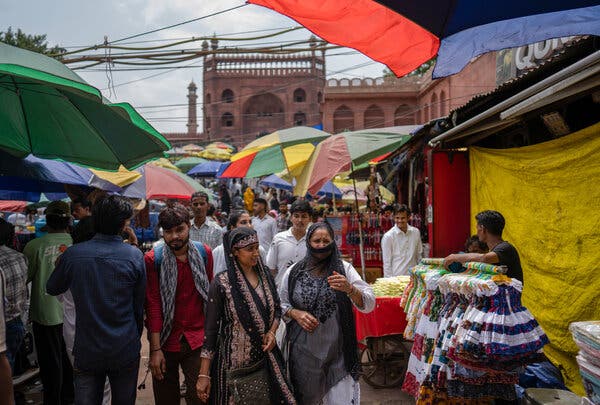
Since April, severe heat waves have swept across India, placing many essential workers in difficult positions. One notable example is the flea market near Jama Masjid, a famous mosque in New Delhi, where vendors have resorted to using large umbrellas to shield their kiosks from the sun.
Sunil Rastogi, an auto-rickshaw driver, exemplifies the struggle faced by many in New Delhi. Working 12-hour days is his norm, his income essential for both daily living and saving for his necessary heart surgery. As summer temperatures soar past 100 degrees Fahrenheit, Rastogi faces a tough choice: reduce his hours and earn less, delaying his surgery, or continue at full pace and risk his health further.
“I feel tired as it is,” Mr. Rastogi stated. “This heat makes me even more tired.”
In New Delhi, millions like Rastogi are caught between the need for income and their health. This includes wage laborers, construction workers, street vendors, and delivery drivers. They form the backbone of the city’s operations yet are the most vulnerable to its extreme weather.
Information from the Center for Science and Environment, a New Delhi-based think tank, highlights the severity of the situation. On the hottest days, ground surface temperatures can climb to 140 degrees Fahrenheit. These conditions can soften tarmac and pose severe risks to barefoot workers, leading to blisters.
Mr. Rastogi’s choices mirror the decisions forced upon countless others in New Delhi, illustrating the broader struggle against challenging working conditions during the intense heat of summer.
 Closure Found Decades After Tragic Humboldt Bay Accident
  Potential Nor’easter Poised to Impact East Coast
  Tourists Rescued from Oregon’s Lost Boy Beach
  Potential Impact of Tropical Storm Polo on Southern California
  Shooting Incident at South Los Angeles Senior Assisted Living Facility
  Legal Challenges in Pursuing a Wrongful Death Claim Against Utah Valley University