The U.S. military waits for clear guidance from the Pentagon after President Donald Trump’s fluctuating decisions on troop levels in Europe. These changes affect military personnel’s lives and might cost taxpayers millions, according to two U.S. defense officials.
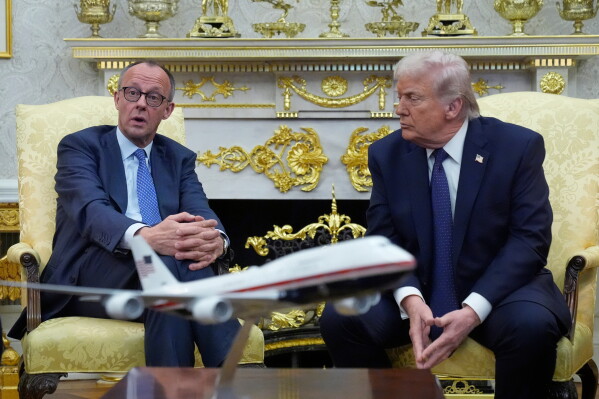
Trump announced in May that he intended to send 5,000 troops to Poland shortly after directing the withdrawal of the same number from Europe. This announcement followed a disagreement with Germany’s Chancellor Friedrich Merz regarding the Iran conflict. The administration claims that troop reductions have been planned and coordinated with allies for some time.
A defense official stated that Trump announced the troop deployment to Poland on social media, coinciding with the Pentagon’s order to cancel the planned rotation of soldiers to the region. Equipment for this deployment was already en route, costing U.S. Transportation Command $32 million, which is responsible for transporting troops and gear globally.
The abrupt policy reversal causes the military to adjust retroactively to align with Trump’s latest directive. This situation not only concerns European allies—worried about the implications for Russia—but also affects the morale of American troops. Many soldiers experienced canceled rotations just before leaving, creating further challenges as the Army faces budget constraints.
Changes to Poland Troop Deployments
The 4,000 troops from the Army’s 2nd Armored Brigade Combat Team, 1st Cavalry Division, stationed at Fort Hood, Texas, saw their rotational deployment to Poland canceled through a memo sent in early May. European allies received notification in the middle of the month.
Some troops were told to cancel their travel plans last minute, while around 1,000 troops who went ahead were left awaiting confirmation about their return. The military lacks clarity from the Pentagon on how to fulfill Trump’s new order to send 5,000 troops to Poland but assumes these will come from existing European units.
The U.S. Transportation Command chartered a ship to move equipment and has already incurred $32 million in costs related to transportation and logistics. Despite these preparations, the unplanned move back from Europe represents an additional expense not covered in the Pentagon budget.
The costs of canceling the rotation are uncertain but likely stem from returning equipment and troops meant for deployment, according to Joe Costa, director of the Atlantic Council’s Forward Defense program.
Impact on Military Morale and Readiness
John Deni, a senior nonresident fellow at the Atlantic Council, highlighted that contracts with private companies for troop and equipment transport usually include cancellation fees. The financial implication of prematuraly recalls remains uncertain, and the Pentagon hasn’t answered queries about the change in plans.
Pentagon planners intended to reduce troop levels for Europe to bear more defense responsibility as part of a comprehensive process, a department official noted.
The revised plan includes halting a unit’s Germany deployment that was trained for long-range rocket and missile firing. Initially, the 2nd Cavalry Regiment, based in Germany, was considered for withdrawal, but this changed following Trump’s new decisions.
Withdrawing Germany-stationed troops could exceed several billion dollars due to the lack of space in the U.S. for these personnel and equipment, explains Joe Costa.
Budget Challenges Amid Deployment Uncertainties
These deployment shifts occur during an Army budget shortfall, previously mentioned by Gen. Christopher LaNeve in his Congressional testimony. The deficit ranges from $2 billion to $6 billion, prompting cuts to training courses nationwide.
The Army advised commands to make critical resource prioritizations to maintain major training and readiness activities. Missions such as the National Guard’s deployment in Washington and operations along the U.S.-Mexico border have strained the budget, pending reimbursement from Homeland Security.
Despite optimism for timely reimbursements, financial challenges persist. In Europe, scaling back support for non-combat training and focusing on essential functions remains a priority, emphasized a military official.
 Doug Lang Appointed as Portage’s New Parks Superintendent
  Florida Businessmen Charged with Felonies for Using Mothballs to Deter Nesting Birds
  The Journey of Annelise Camp: A Family’s Battle and Tragic Loss
  Community Fights Back After Warehouse Fire
  Gary’s Commitment to Supporting Vulnerable Populations
  Detained Pastor’s Health Concerns Rise After Stroke Symptoms