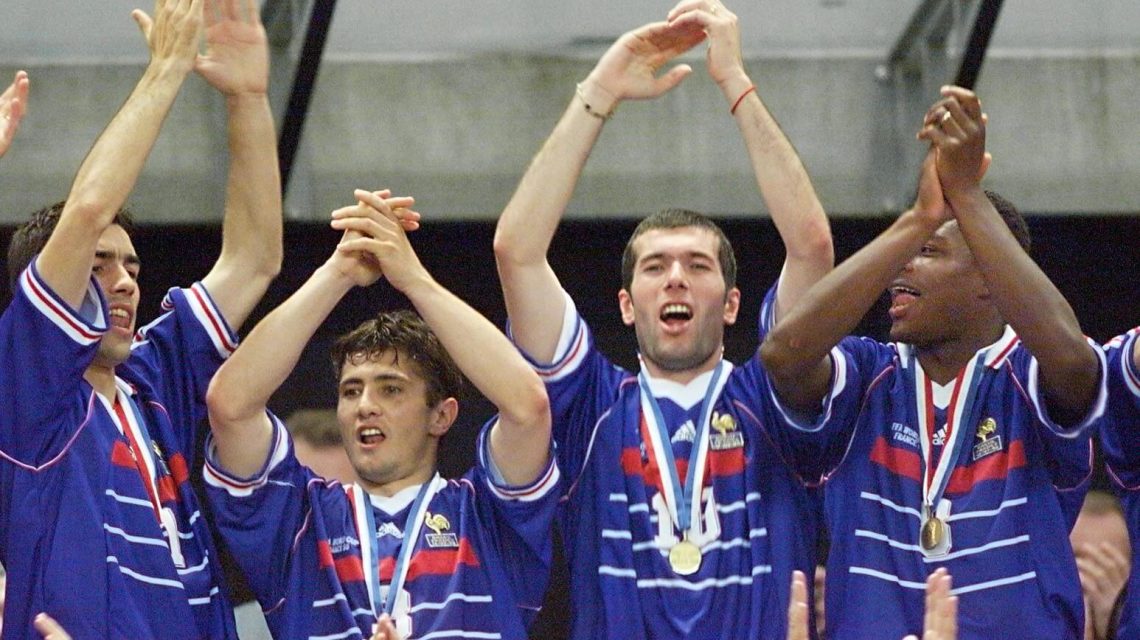
The question of who will win the 2026 World Cup is on many minds. People base their predictions on gut feelings, data, or feedback from various sources. But what if we ignored current factors and relied solely on historical records?
The Athletic has done the homework. By analyzing all 22 teams that have previously won the World Cup, certain questions need consideration: the age of the squad, player types, their qualifications, and where they play.
Key Historical Insights
Hosting the tournament once held significance, but recently, it hasn’t. Only France won the World Cup as hosts in the past 11 tournaments. The location of a team is more crucial; being a decent team is necessary, but expectations should be moderated.
Historical data shows the reigning Ballon d’Or winner has never clinched the World Cup. A few have won it shortly after gaining such recognition: Rivaldo, Ronaldo, and Messi. Extravagant transfer fees have rarely been tied to winners, with 1982’s Rossi and 1986’s Maradona being exceptions.
Teams don’t require a squad full of recent club champions. For example, recent winners Argentina in 2022 and Spain in 2010 did not have many continental champions. Performance in the previous tournament can be irrelevant.
Qualification and Other Factors
No team has won after qualifying through play-offs. However, shaky qualifications haven’t deterred past winners like Brazil in 2002. Historical scandals pre-winning, such as those of Italy in 1982 and 2006, show that perfect preparation isn’t needed.
Defending champions struggle to maintain superiority. No team has retained the World Cup since Brazil in 1962. Thus, Argentina might not repeat their success.
Being the top-ranked FIFA team isn’t an assurance either. The FIFA top-ranked team has never won since rankings began. This insight rules out France, who are currently at the top.
The historical range for champions is from ranks 2-18, narrowing potential winners to teams like Spain, England, Brazil, among others.
Trimming the Contenders
History narrows the field to specific teams. Due to past patterns, Spain, the Netherlands, Germany, and Croatia remain formidable contenders.
Squad Insights and Coaching
Successful squads often possess a strong goal scorer, though not always an absolute megastar. Having domestically based players has usually been a common factor. A steady captain with numerous caps, like Kimmich, van Dijk, or Modric, provides leadership stability.
Coaches’ backgrounds show no consistent formula for success. Nonetheless, never has a non-domestic coach won the World Cup, placing teams like Brazil and England at a disadvantage.
Experience Matters
Historical winners’ average squad ages suggest a sweet spot around 27 years. Germany aligns best with historical trends based on age, domestically-based players, and leadership.
Conclusion
If history were the sole guide, Germany seems the most likely 2026 winner. While this analysis might not be definitive, it offers an informed perspective for those discussions with friends, whether in the pub or elsewhere.
 Joe Burrow’s Unusual Remedy During NFL Game
  New York Rangers Place Players on Waivers Ahead of Season Opener
  Cubs Face Tough Decisions Amid Wild-Card Battle
  Chicago Cubs vs Miami Marlins Game Photos and Highlights
  Alabama Secures Victory Against Florida State but Faces Fan Scrutiny
  White Sox Triumph Over Royals With Offensive Power