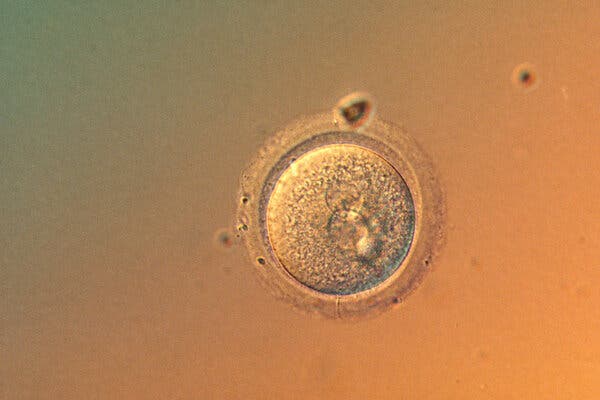
Scientists at Columbia University have edited the DNA of early human embryos with an accuracy not seen before. This breakthrough might lead to the possibility of engineering babies with specific traits.
The potential of this technology has sparked debates for years. Some experts believe it could allow parents to repair mutations that cause diseases in embryos. However, others warn that it could be misused to select for preferred traits, raising concerns about eugenics.
Dieter Egli, a geneticist at Columbia who led the study, urged for public discussion on the pros and cons of altering embryonic DNA. He stated, “As a scientist, you can provide the data for discussion, but then essentially there you stop and let others take over.”
The research utilized a newer technique known as base editing. This method allowed Egli and his team to replace individual genetic letters in DNA sequences with precision, avoiding the damage often linked to the older CRISPR method.
Dr. Egli highlighted that while promising, the research leaves many questions unanswered, particularly concerning potential harmful side effects. “We’re not saying this is going to be used tomorrow in the clinics,” he noted.
The study has been posted online and is currently under review for publication in a scientific journal.
 Secure Your Internet Connection with Consistent VPN Usage While Traveling
  OpenAI’s Complex Solution to Navier-Stokes Equations Stirs Debate
  The Impact of Extended Job Searches on Mental Health
  Concerns Over AI’s Impact on Higher Education Learning
  Reassessing the Central Role of Rome in the Roman Empire’s Road Network
  Google Fined for Breaching EU Privacy Rules