
In Wellington, New Zealand, the Afghan women’s soccer team is fighting to revive their international careers. Their journey has been marked by determination, bravery, and extensive support. These players faced a significant setback when the Taliban regained control in 2021, halting their dreams. One of these resilient players, Fatima Yousufi, left Afghanistan with only a backpack, aiming to play soccer internationally.
Before the Taliban takeover, Yousufi and players like Mona Amini had the opportunity to study and play soccer. When the political situation changed, women’s sports were completely banned. As a result, the national team players left the country to avoid persecution. Thirteen of these players found refuge in Australia, dedicating five years there to train and play, hoping to once again represent Afghanistan.
This week, 23 members of the Afghan Women United program are attending a training camp in Auckland, New Zealand. They will compete against a team from the Cook Islands. Although the national soccer federation doesn’t recognize the team, FIFA has granted them eligibility for international competition as of April. Amini, a midfielder, expressed joy and pride, reflecting on the hard work that led to this achievement over the past few years.
Seven months ago, the team participated in the “Unite” tournament and secured a win against Libya. Amini recalled hearing their national anthem after years, describing it as an incredible moment.
FIFA’s recognition marked another significant milestone in their arduous journey. Yousufi, now a goalkeeper based in Melbourne, described the news as monumental for the team. It was a profound moment, especially for those who had lost so much upon arriving in Australia, including family, childhood memories, and the national team itself.
Even as many Afghan players are now spread across Europe and the United States, they keep their memories of challenging times as motivation. They aim to represent and inspire women and girls back in Afghanistan. The last official competitive match for the Afghan women’s team was in 2018. Amini shared the struggles they faced when they lived under the Taliban’s threat, making it risky to even step outside, much less play soccer freely.
Yousufi recounted her experiences as both a student and a soccer player in Afghanistan. She faced societal barriers and family opposition, but persisted. Despite threats like bomb explosions, she and others embraced these challenges to be part of the national team.
Amini emphasized a basic human desire for freedom, lamenting the restrictions imposed by the Taliban. The limitations on education, sports participation, and following personal dreams have been particularly difficult.
Now, as refugee players, they strive to represent all women and girls from Afghanistan. Amini expressed their commitment to be a voice for those who cannot speak. Yousufi noted that as players supported by the Australian government, they continue their journey not only in soccer but also in education, aiming to change perceptions in Afghanistan.
The team aspires to demonstrate that Afghan women and girls can contribute significantly to society, pursuing education and sports, and asserting their rights to do so.
AP soccer: https://apnews.com/hub/soccer
 Legacy of Mike Ditka: From the Gridiron to the Sidelines
  Mike Ditka: A Legacy in Football
  The Dallas Cowboys’ Disheartening Loss to Tampa Bay Buccaneers: Reactions and Challenges
 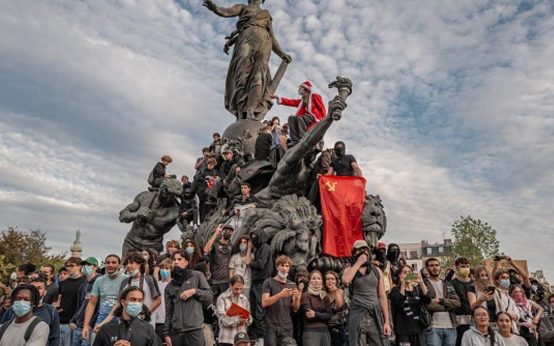 Investigating France’s Student Protests: A Web of Far-Left and Socialist Influences
  Troubled Times for Former Quarterback Tony Romo
  Recovery of Stolen Renoir Paintings