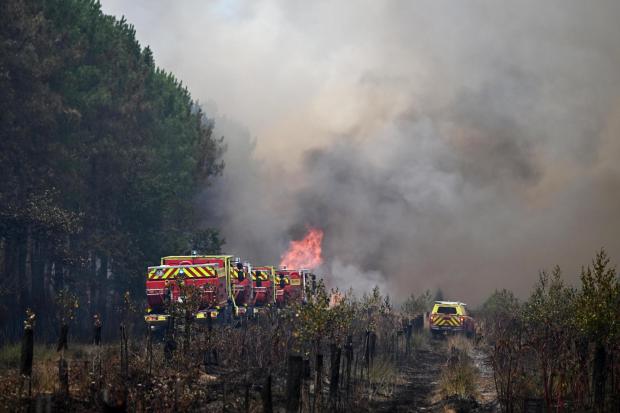
Heat waves and limited rainfall have led to historic wildfires in France and Spain, forcing hundreds of thousands to flee. The continent faces one of its largest evacuation efforts since World War II, as rising temperatures threaten to worsen the situation. Fires in southwestern France have burned an area four times the size of Paris and are nearing Madrid in Spain.
Climate Change and Rising Temperatures
Europe experiences faster warming compared to other regions, with multiple extreme heat events this year. A prolonged June heatwave resulted in drought conditions. Record temperatures drained moisture from vegetation, creating fuel for the fires. A study by World Weather Attribution linked the record-breaking heat to climate change. Météo-France reported June as the hottest on record, with temperatures averaging 6.8 degrees Fahrenheit above normal and rainfall nearly 50% below average.
Spain is familiar with summer forest fires, but climate change has exacerbated its effects. The reduction in farming and related industries has left forests more susceptible to fires.
Record-Breaking Fires
Reports from both national and EU authorities suggest this year’s fires are of unprecedented scope. Over 1,160 square miles have burned in France and Spain, according to the European Forest Fire Information System. The French Interior Ministry has recorded 13,566 fires covering more than 448 square miles, the highest annual figure on record.
In Spain, 591 square miles have burned, six times more than at the same point in 2025. The largest and third-largest fires recorded in Spain occurred this year, notably in the rural region of Ávila, west of Madrid, burning over 193 square miles.
Massive Evacuations
More than 300,000 people have evacuated their homes in the two countries. France has seen over 250,000 evacuations, primarily in Gironde. With the peak tourist season approaching, local authorities took actions to keep visitors away, including banning children’s holiday camps.
In Spain, 79,000 residents have been evacuated from areas west of Madrid and Castellón. Meanwhile, 30,000 people remain confined to their homes.
International Assistance
In response to the disaster, the EU sent aid to the affected countries. Seven planes and four helicopters were deployed to France from various European countries, in addition to six planes sent to Spain from Greece, Italy, and Turkey. European Commissioner Hadja Lahbib emphasized solidarity, stating, “No country should ever have to face a disaster of this scale alone.” The Copernicus satellite program provides authorities with updated fire risk maps.
 Russia’s Secret Plan with Iran: Financial and Strategic Moves
  U.N. Secretary-General António Guterres Addresses Final General Assembly
  Suspects in Haitian President’s Assassination Extradited to U.S.
  Transforming Faaborg Family Farm from Hogs to Mushrooms
  UN General Assembly: Global Leaders Seek Influence Amid International Conflicts
  US Embassies Warn Americans After Houthi Missile Attack