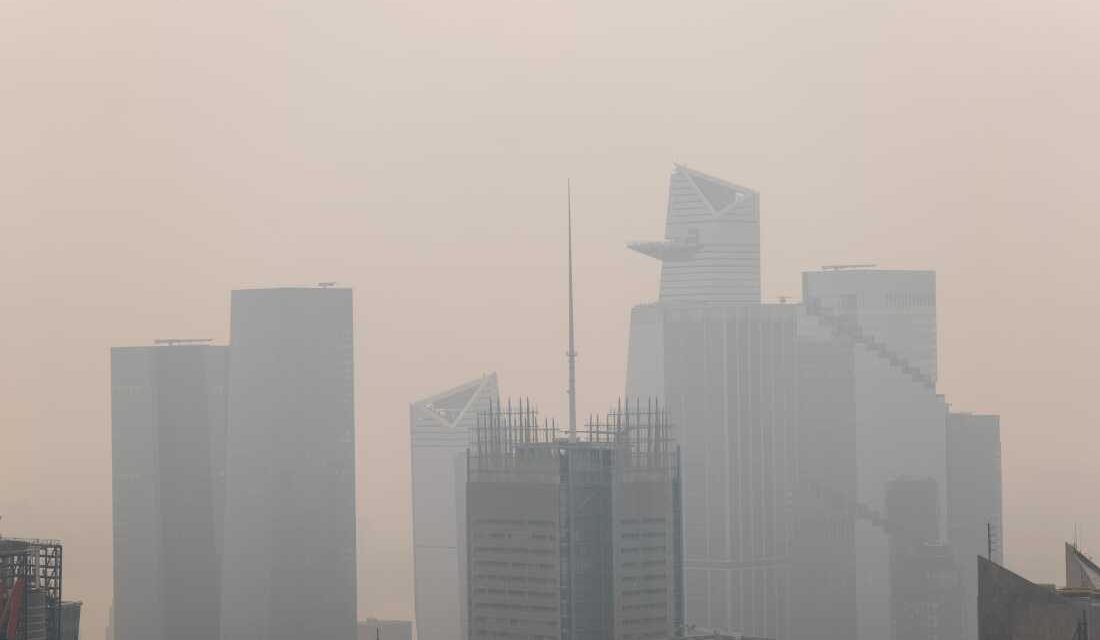
Dangerous wildfire smoke is spreading across parts of the U.S., affecting air quality in several states. The smoke originates from numerous Canadian wildfires, creating a haze over areas like the Manhattan skyline. The situation is affecting states in the Great Lakes region, New England, and even as far south as Maryland.
Conditions in Ontario and northern Minnesota have facilitated the spread of wildfires, driven by extreme heat and dry weather. Over 800 wildfires are currently active in Canada, according to the Canadian Wildland Fire Information System. Record temperatures in western Ontario and Minnesota have reached over 100 degrees, forming a heat dome. This has allowed wildfires to propagate rapidly. Derek Mallia, an atmospheric sciences professor at the University of Utah, highlighted the unprecedented spread of these fires.
In Ontario, social media is filled with videos showing the intense fires and smoke-filled skies. Air Quality Ontario has labeled the air quality in certain areas as “very high risk,” and evacuations are taking place. States like Minnesota, Wisconsin, and Michigan are also experiencing unhealthy air quality, affecting northeastern cities such as Philadelphia, New York City, and Baltimore. According to AirNow, these areas will continue to face smoke-filled skies through the weekend.
Climate change, driven by human activities, is worsening these conditions. Longer droughts and heatwaves are leading to drier vegetation, increasing the frequency and intensity of wildfire smoke events. Dan Westervelt, an associate research professor at Columbia University’s Lamont-Doherty Earth Observatory, noted that wildfires are becoming a regular occurrence, sometimes more than once a year.
Health Risks Associated with Wildfire Smoke
Wildfire smoke consists of fine particles that can penetrate deep into the lungs, impacting health. Dr. David Eisenman, a UCLA professor, points to research linking wildfire pollution to heart attacks, strokes, respiratory illness, and pregnancy complications. Exposure to such pollution is among the top causes of premature deaths globally. Even when smoke isn’t visible, Eisenman advises checking air quality monitors since invisible toxins may present hazards.
Alongside the smoke, millions of Americans are contending with a heat advisory as temperatures exceed 100 degrees. The combination increases public health risks. Eisenman recommends following the Environmental Protection Agency’s wildfire smoke guidelines. Key actions include monitoring air quality reports, using air purifiers, and creating a cleaner air room in your home. To minimize exposure, stock up on essentials to reduce outdoor activity and wear an N95 mask when necessary.
 EPA Dismantles Greenhouse Gas Rules, Causing Concern
  How Battery Innovations Transform Renewable Energy
  Data Centers Stir Controversy in Texas Amid Growth Boom
  Urgent Archaeological Efforts in Quinhagak Stay Ahead of Erosion
  Concerns Rise Over NIPSCO Permit In Jasper County
  Reader Reactions on Grizzlies and Data Centers