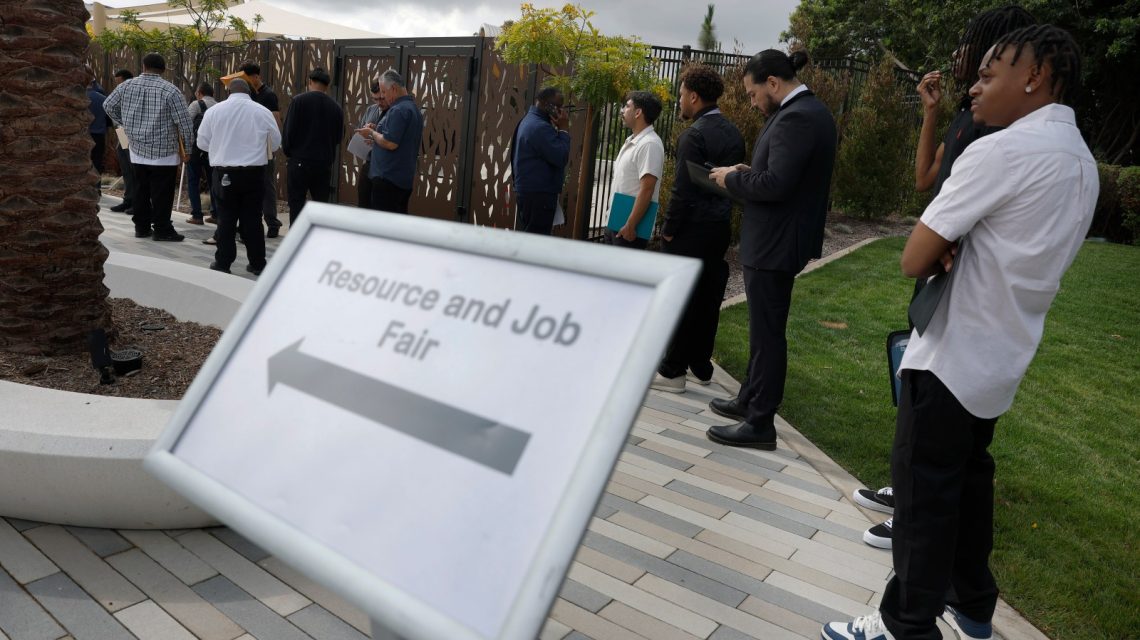
Virginia workers now see larger unemployment checks thanks to a new state law. This legislation, approved by the Virginia General Assembly and signed by Governor Abigail Spanberger, raises the maximum weekly unemployment benefit from $430 to $478. The minimum benefit increases from $112 to $160. These updates apply only to new unemployment claims filed after July 5.
The Virginia Employment Commission (VEC) reports the increase aims to provide financial support to job-seekers and stabilize household finances during joblessness. The U.S. labor market remains stable, yet pockets of economic uncertainty persist due to restructuring from artificial intelligence, changing consumer demands, and shifts in government spending. Although Virginia’s unemployment rate is below the national average, lawmakers emphasize the need for stronger protections during transitions.
Virginia’s Unemployment Rate
Virginia’s labor market stays healthy compared to many states. As of May, the seasonally adjusted unemployment rate was at 3.8 percent, compared to the national rate of 4.3 percent. The labor force participation rate slightly dropped to 63.3 percent.
Virginia’s unemployment rate has gradually increased from exceedingly low levels in recent years, reflecting a nationwide market cooldown. However, Virginia’s diverse economy, supported by government employment, defense contracting, healthcare, education, and technology, remains beneficial.
Economists consider unemployment rates between 3 to 4 percent indicative of a healthy labor market. Yet, federal workforce reductions, tech-sector restructuring, and slower hiring across the economy contribute to a modest increase in unemployment.
In high-cost metropolitan areas such as Northern Virginia, Richmond, and Virginia Beach, financial pressures are significant for those losing jobs. Supporters of the law argue benefits were inadequately keeping pace with inflation and rising living costs.
To access the maximum weekly benefit of $478, workers need earnings of at least $18,900.01 across two quarters during the base period.
States With Best and Worst Unemployment Benefits
Virginia’s increased benefits improve its national standing, though still behind the most generous programs. A recent Newsweek analysis revealed vast differences in unemployment benefits based on location. Some states offer maximum weekly benefits above $1,000, while others fall below $300.
Washington state provides the highest benefits, exceeding $1,100 weekly, while Massachusetts also offers over $1,000 weekly assistance for up to 30 weeks. Other states with generous benefits include Minnesota, New Jersey, and Oregon.
Conversely, Mississippi offers the lowest maximum weekly benefit, and states like Florida, Alabama, and Louisiana provide low overall packages considering payment and duration.
Virginia’s previous maximum benefit ranked in the lower half among states. The new increase to $478 places it somewhat higher, though still below levels seen in many northeastern and western states.
This variation reveals the decentralized nature of the U.S. unemployment insurance system. Though it functions as a federal-state partnership, individual states largely set benefit formulas, payment levels, and eligibility rules. Consequently, two workers with similar earnings could receive vastly different financial support based on their state.
National Unemployment Rate
Calculated monthly by the Bureau of Labor Statistics, the unemployment rate measures the percentage of individuals in the labor force who are unemployed but actively seeking work. It excludes those who have stopped looking, as well as retirees, students not seeking jobs, and voluntary workforce leavers.
Economists view this indicator as crucial for assessing labor market strength. Lower rates generally suggest strong worker demand and a healthy economy, whereas rising rates can signal economic weakness or recession.
In May, the national unemployment rate was 4.3 percent, higher than the post-pandemic lows but below typical recession levels. For comparison, unemployment surged to nearly 15 percent during the COVID-19 shutdowns in 2020 and hit 10 percent during the Great Recession.
Virginia’s current rate of 3.8 percent highlights its favorable standing relative to national averages.
Layoffs in 2026 vs. 2025
Despite media coverage of corporate layoffs, job-cut announcements have decreased significantly in 2026 compared to 2025. According to Challenger, Gray & Christmas, U.S. employers announced 443,604 job cuts in the first six months of 2026. This marks a 40 percent drop from the 744,308 layoffs announced over the same period in 2025.
June alone revealed 45,849 announced job cuts, a decline of 53 percent from May and 4 percent below June 2025. This data indicates that while layoffs remain high in certain sectors, the overall labor market hasn’t deteriorated as feared.
Technology leads layoff announcements, with 139,156 job cuts reported through June, an 83 percent increase from the first half of 2025. This is largely associated with artificial intelligence adoption and corporate restructuring toward emerging technologies.
Outside technology, several industries report fewer layoffs compared to last year, helping maintain lower job-cut totals than 2025 levels.
This combination of low unemployment and ongoing sector-specific restructuring contributes to Virginia lawmakers opting to enhance unemployment benefits. While most workers remain employed, job transition periods can be longer and living costs higher than before.
For Virginian residents encountering these challenges, expanded unemployment benefits offer additional financial cushioning during job searches.