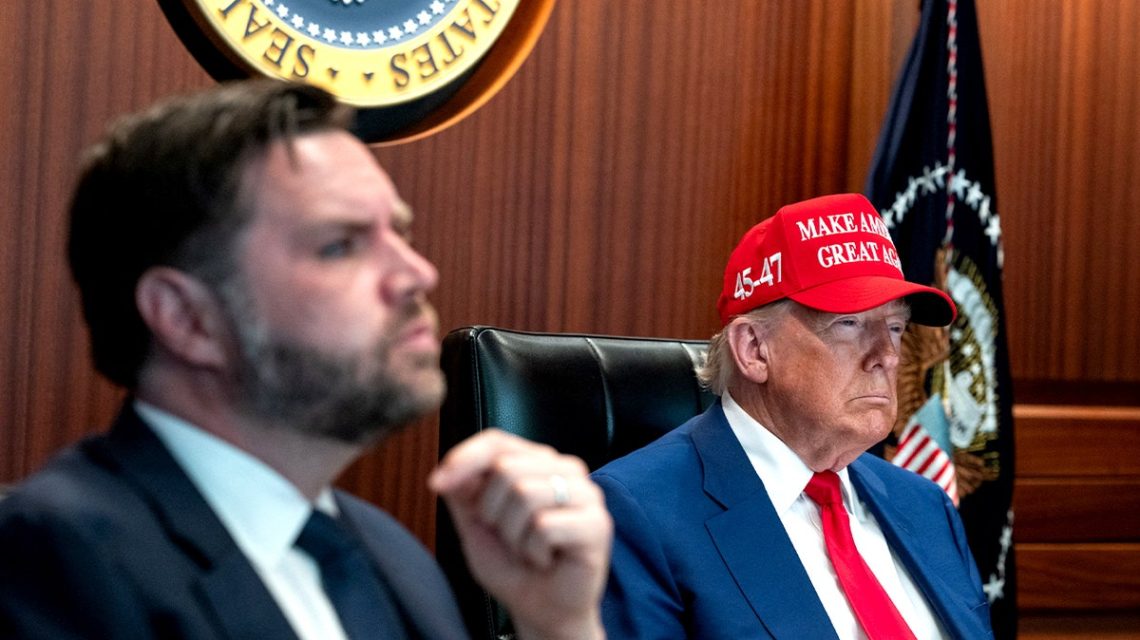
During the G7 Summit, President Donald Trump shared details of a new Iran peace agreement. He warned of serious consequences if Iran breaks its nuclear promises. Vice President JD Vance explained that Iran will not get American money. The country now has a weaker military and industrial base, stopping its ability to make or buy nuclear weapons.
Vance countered claims that the current agreement is similar to the one made by President Barack Obama. Critics say Vance defended the reopening of the Strait of Hormuz for economic benefits. The agreement, they argue, is similar to the 2015 JCPOA, which Trump and Vance opposed. Vance believes the comparisons are incorrect. The new deal offers rewards only after Iran meets specific nuclear requirements.
On ‘The Five,’ Vance mentioned, “The U.S. benefits regardless. Either Iran gets nothing, and we dismantle their nuclear efforts, or they change substantially.” Host Jesse Watters noted the deal is the opposite of Obama’s framework.
Most of Iran’s missiles and industrial assets are destroyed, leaving them with no significant military threat to the U.S. According to Watters, Iran cannot enrich uranium, as only the U.S. can manage the remaining uranium dust.
Obama once defended the JCPOA, describing it as a test to solve the issue peacefully. He claimed future powers would have stronger positions if Iran breached agreements. Vance highlights that under Trump’s orders, Iran’s stockpiles were significantly reduced.
Critics remain cautious of the new deal, despite Trump’s previous objections to the JCPOA for offering economic relief with minor concessions. Senator Mark Kelly expressed reservations, stating the deal would not have Trump’s support if made by Obama or Biden.
Iranian security expert Behnam Ben Taleblu warned some experts view the Trump-Vance deal as problematic. He remains concerned about agreements with Iran and noted the U.S. under Trump left the JCPOA for giving more than it received in nuclear concessions. Taleblu suggests releasing the deal’s text to allow a thorough comparison with past agreements.
Taleblu also cautioned the public’s tolerance for economic impacts from international deals. He emphasized the need for clearer communication about Iran’s ongoing conflicts with the U.S. since 1979 to assure public support. He also underscored the greater economic risks of conflict with China.
The agreement includes waivers for Iranian oil exports and a plan for $300 billion in economic development. Officials told Fox News Digital that Iran would gain these benefits only after complying within 60 days. Negotiations would cease immediately if Iran appears to stall or deceive.
 Inside the Secret Deals Powering the President’s Push to Deport Migrants to Countries Not Their Own
  Navigating the Challenges of Third-Country Deportations
  Midair Altercation on Bangladesh to London Flight
  Ukraine Missile and Drone Barrage Hits Russia Amidst Elections
  U.S. Strategic Goals Remain Unmet Amid Prolonged Conflict
  New Photos Reveal Damage from Iranian Strikes in the Middle East