Kyiv, Ukraine (AP) — Ukraine continued its intense drone assault on Russia, setting fire to a major oil refinery in the country’s south. Russian President Vladimir Putin acknowledged a “certain deficit” of fuel and pledged to enhance protection of oil facilities and boost fuel production.
In recent months, Ukraine has notably increased long-range attacks on Russian military industries and energy facilities. The objective is to cut Moscow’s revenue from the invasion, which has lasted over four years, and make Russians feel the consequences. “Our ‘long-range sanctions’ impacted two oil refineries in Russia,” wrote Ukrainian President Volodymyr Zelenskyy on Telegram. “Each attack means a reduction in the resources that feed the Russian war machine, and another step towards peace.”
The campaign has constrained Russian fuel supplies, causing widespread shortages and long lines at gas stations nationwide. Authorities in many regions have implemented fuel rationing. Western analysts say these actions have hindered Moscow’s battlefield efforts, increasing pressure on the Kremlin to engage in negotiations.
Putin: Ukrainian attacks aim to divide Russian society
Speaking to a reporter from Russian state television, Putin described Ukrainian attacks on oil refineries as an attempt to “provoke a division in Russian society and compel Russia to halt, even temporarily, the advance of our troops along the contact line, creating conditions favorable for negotiations.” He asserted, “We will not give them that opportunity.” Putin added that “attacks on our infrastructure, wherever aimed, have absolutely no effect on the situation at the front, on the contact line.”
Putin stated for the first time that Ukraine proposed a halt on deep attacks, suggesting Kyiv made the offer because Russian strikes deep into Ukrainian territory are more powerful and devastating. The Russian president noted Kyiv offered to limit combat to the four regions Russia annexed but never fully captured: Donetsk, Luhansk, Kherson, and Zaporizhzhia. He rejected the proposal, arguing it would allow Ukraine to relocate its forces fighting Russian troops elsewhere to focus on repelling Russian attacks in the southeastern regions.
Ukrainian drone attack ignites major Russian refinery
Ukrainian drone debris caused a fire at the Slavyansk-na-Kubani refinery, located in Russia’s Krasnodar region east of Crimea, according to Governor Veniamin Kondratyev. Authorities reported the incident killed one person in Slavyansk and injured another in a nearby village. The Slavyansk complex is a key refinery in southern Russia, processing approximately 4 million tonnes of crude annually.
It serves as a crucial source of petroleum products for export through Black Sea ports, offering items like fuel oil, naphtha, and marine fuel. Zelenskyy mentioned a second Russian refinery in the Yaroslavl region, located about 700 kilometers from the Ukrainian border, was hit during overnight attacks. There were no reported cases from Russian authorities regarding the Ukrainian attack on the Yaroslavl refinery. Local Governor Mikhail Evraev reported temporary road closures between Moscow and the regional capital, Yaroslavl, due to “enemy attack by Ukrainian drones.”
Fuel shortage in Russia; Putin announces plan adjustments
For months, Ukraine has intensified attacks on energy facilities deep within Russia. Despite Western sanctions, Moscow remains a leading global exporter of oil and natural gas. Recently, Ukraine has attempted to disrupt fuel deliveries to Crimea, the Black Sea peninsula Moscow annexed illegally in 2014. Last weekend, Kremlin-installed officials in Crimea suspended gasoline sales to civilians after Kyiv’s attack on supply routes sparked the region’s worst energy crisis since annexation.
In a meeting focused on the fuel situation, Putin admitted the country is “going through a challenging period” but insisted Moscow will “fulfill all its social obligations” to citizens. Shortly after, Putin announced on state television the country’s arms industries will swiftly increase production of air defense systems to counter Ukrainian attacks. He stated Russia plans to import more fuel and expedite repairs on oil facilities to end the “temporary deficit.” “All damaged facilities are being restored quite rapidly, and the arising problems are not critical,” he assured.
Putin specifically pledged to quickly address the fuel shortage in Crimea, saying fuel deliveries to the Black Sea peninsula by land and sea will increase, expressing confidence in completing this task. As the fuel shortage spread across Russia, the governor of Siberia’s Irkutsk region, Igor Kobzev tabled limits on fuel purchases to 50 liters per vehicle daily at state-run Rosneft gas stations in the province. Other gas stations may set lower limits.
Russian Vice Premier Alexander Novak reported Moscow actively reviewing fuel export agreements to prevent domestic needs from being compromised.
Drones, bombs, and missiles target more regions
Additionally, on Sunday, a Russian aerial bomb killed two people in Zaporizhzhia, a southern Ukrainian city, and injured 16 others, including two children, reported regional administration head Ivan Fedorov. In the Russian border region of Belgorod, earlier Sunday, Ukrainian drone strikes claimed one life and injured another, reported acting Governor Alexander Shuvayev. The Russian Defense Ministry stated their forces shot down 213 Ukrainian drones overnight, including devices over Russia, Crimea, and the Black and Azov seas.
Meanwhile, Russia launched 142 long-range attack drones and eight missiles overnight, according to Ukraine’s Air Force. Among them, 125 drones and seven missiles were intercepted, the Air Force noted.
 Don McCullin’s Final Book: A Pioneering War Photographer’s Legacy
  Rep. Alexandria Ocasio-Cortez Defends Macklemore Amid Tour Controversy
  Google Fined for Breaching EU Privacy Rules
 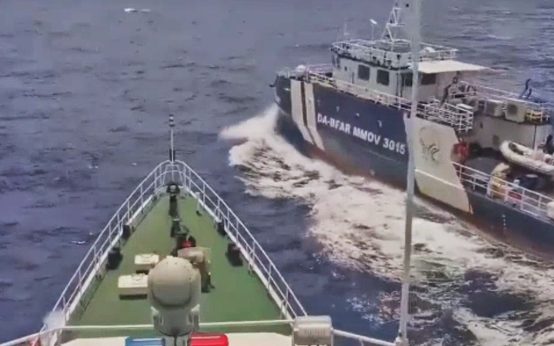 South China Sea Tensions Rise after Collision between Chinese and Philippine Ships
  North Korea’s Hypersonic Weapon Test Amid Global Tensions
  Austin Tice: A Search for Answers