U.S. Strategic Petroleum Reserve Reaches New Low
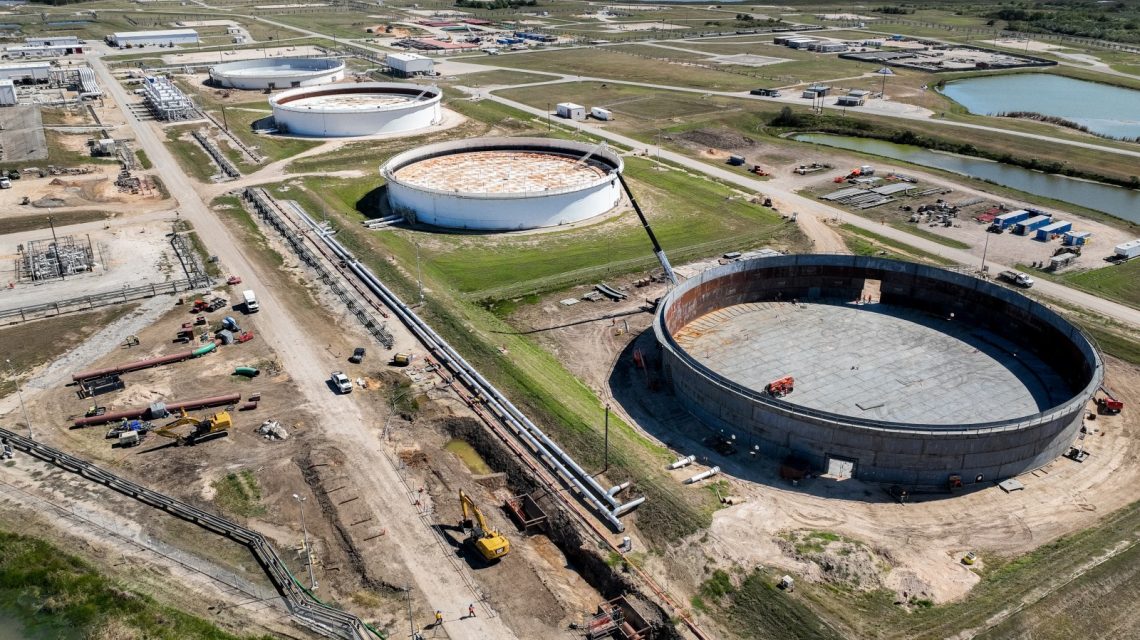
Crude oil stocks in the U.S. Strategic Petroleum Reserve (SPR) have plummeted to 340.3 million barrels, marking the lowest level since 1983. This drop highlights tightening supplies as the United States and Iran make strides toward resolving months of conflict. According to data released by the Department of Energy on Monday, the emergency stockpile decreased by 8.9 million barrels in the latest week. This ranks among the steepest drawdowns on record. The plan to release 172 million barrels aims to temper fuel costs that have soared to multi-year highs.
U.S. crude inventories have seen sharp declines, driven by strong refining demand and rising exports countering supply disruptions caused by conflict involving Iran. The storage levels at the Cushing, Oklahoma hub are approaching operational lows, raising concerns about tightening supplies.
Gas Prices: Current Trends and Future Outlook
Recently, gas prices have shown signs of easing with the announcement of a U.S.-Iran deal. This has sparked expectations that oil flows through the Strait of Hormuz will resume, which has led to a decrease in crude prices. As of Monday, the national average for regular gasoline was roughly $4.06 per gallon, a drop from highs surpassing $4.50 in May.
However, analysts caution that any sustained decrease in gas prices is contingent upon the pace of global supply recovery. Reopening the strait fully could further reduce prices, yet it may take time to revert to pre-conflict levels.
Progress and Challenges in the U.S.-Iran Deal
The United States and Iran have arrived at a preliminary agreement to conclude their nearly four-month conflict. A formal signing ceremony is anticipated on Friday in Switzerland, post technical discussions. Despite marking a significant step towards de-escalation, the agreement still lacks clarity on crucial aspects such as enforcement mechanisms, sanctions, and nuclear negotiations.
Status of the Strait of Hormuz
The Strait of Hormuz remains partially non-operational even amidst plans for reopening under the pending deal. Complete operational status awaits the formal signing of the agreement, and its implementation can be time-consuming. Shipping has restarted partially in certain areas, yet mine clearance and restoring confidence among insurers and tanker operators might delay normal traffic resumption.
Overview of the Strategic Petroleum Reserve
Established in 1975 by President Gerald Ford, the SPR was a response to shortages and increased prices during the 1973 Oil Crisis. The reserve, scattered across underground facilities along Texas and Louisiana’s Gulf Coasts, is praised as an “emergency response tool” by the Department of Energy. Past releases have buffered available crude amounts and curbed price spikes during significant supply disruptions threatening the U.S. economy.
Historical releases have occurred during scenarios like Operation Desert Storm in 1991, Hurricane Katrina in 2005, Libya’s civil unrest, and the energy crisis following Russia’s invasion of Ukraine in 2022.
The latter release under President Biden, at about 180 million barrels, remains the largest single drawdown in the reserve’s half-century history. This move faced opposition from Republican legislators and former President Trump, who criticized Biden’s depletion of emergency stocks.
Prior to the conflict involving Iran, the administration pledged to “refill and repair” the SPR after Biden allegedly depleted it for political gains. Yet, renewed SPR reliance surfaced as oil and gas prices surged globally.
Reasons Behind Declining Emergency Stockpile
In March, the Trump administration proclaimed it would release approximately 172 million barrels from the SPR across 120 days, contributing to a global campaign to “lower energy prices.” This initiative aligns with commitments from other International Energy Agency (IEA) affiliates, who collectively vowed to release 400 million barrels from their reserves.
Although recent emergency releases have drained reserves rapidly, the SPR’s volume has waned over the years. Bob McNally, president of Rapidan Energy Group, highlighted that refilling the SPR will demand congressional allocations and several years.
McNally explained that as crude is returned to the SPR, it could induce “upward pressure” on prices. He suggested that a gradual replenishment could alleviate this impact. Oil market analyst Thomas Kloza noted that the drawdown may attract “lots of criticism” and emerge as a “political liability” for Trump. Still, it has played an essential role in suppressing crude oil price increases.
Andy Lipow, the Lipow Oil Associates president, commented to CNBC on the global release’s effect, stating it assisted in averting crude from reaching $150 per barrel as some had anticipated. Lipow cautioned that the U.S. is edging towards the “minimum operating level” of 240 million barrels. Kloza also mentioned to Newsweek concerns about SPR integrity as levels fall below 300 million barrels.
 Federal Authorities Arrest California Lawmaker’s Aide for Visa Overstay
  Hasan Piker Addresses Controversial Comments and Political Involvement
  Lukashenko and Putin Share Light Moments While Strengthening Ties
  Kamala Harris on Possible 2028 Run Highlights Midterm Importance
  Lawmakers Urge End to U.S. Military’s Drug Boat Strike Campaign
  Investigation into Far-Left Groups Organizing Protests