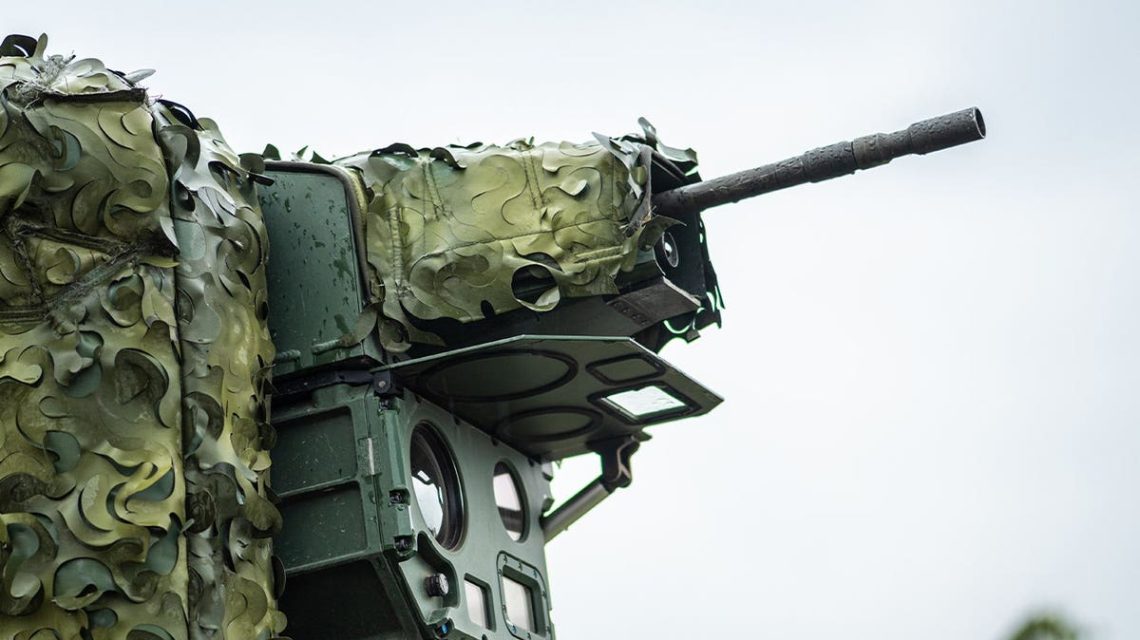
The American military has traditionally focused on combating enemies abroad to prevent conflicts from reaching the homeland. However, advancements in drones, cyberattacks, and long-range weapons are changing the landscape. These developments are prompting Army leaders to anticipate attacks even before forces deploy overseas.
Gen. Christopher LaNeve, the Army’s acting chief of staff, stated that assumptions from past conflicts in Iraq and Afghanistan must be re-evaluated. In those wars, American forces could rely on secure bases and supply lines at home. Now, the situation is shifting.
If we’re going against a pacing threat, power projection will be contested.
This statement comes amid rising threats of infrastructure disruption. Experts warn that cyber capabilities positioned by adversaries in U.S. infrastructure could hinder military mobilization in a conflict.
Recent incidents involving drone incursions over domestic military installations highlight these concerns. Joint Base Langley-Eustis in Virginia and Picatinny Arsenal in New Jersey experienced such events, though no public attribution to specific countries has occurred.
The Army is implementing a new operational framework called How the Army Fights. This framework focuses on ensuring the forces can deploy and maintain operations under threat. It underscores the importance of being able to operate when communications and infrastructure face disruptions.
Gen. LaNeve explained that the Army aims to keep fighting even with compromised communications. The strategy includes developing the ability to reconnect operations once conditions allow.
Additionally, the Army is enhancing homeland protection efforts. The Joint Interagency Task Force 401 collaborates with federal and local law enforcement to improve drone defense around critical sites.
Counter-drone measures are tested, particularly near the southern border, providing real-world experience for soldiers. Beyond drones, the Army is also preparing for biological threats. Officials plan to integrate responses to biological incidents in standard training to ensure mission continuity during outbreaks or attacks.
Air Force Secretary Troy Meink discussed the increasing challenges posed by surveillance technology. He indicated potential advancements in adversarial tracking capabilities, suggesting enemies could soon pinpoint forces globally regardless of location. This surveillance technology could emerge within five years.
In response, the Pentagon develops autonomous systems to enhance survivability in hazardous environments. Meanwhile, some criticisms emerged regarding the Pentagon’s pace under the current administration in responding to technological advancements, including hypersonics and space weaponization.
Despite technological reliance, Gen. LaNeve emphasized the enduring importance of soldiers. Their fundamental skills remain crucial, enabling them to complete missions without advanced systems when needed.
 US Airman’s Rescue from Iran and the Brutality of the Battle of Mogadishu
  Kushner’s Diplomatic Role and Travels Under Scrutiny
  Understanding American Politics from a Chinese Perspective
  Hurricane Trudy Advances Toward Mexico
  ADL Criticizes Wikipedia Over Unaddressed Biased Edits
  Sally Rooney’s Books Pulled from UK Amid Controversy