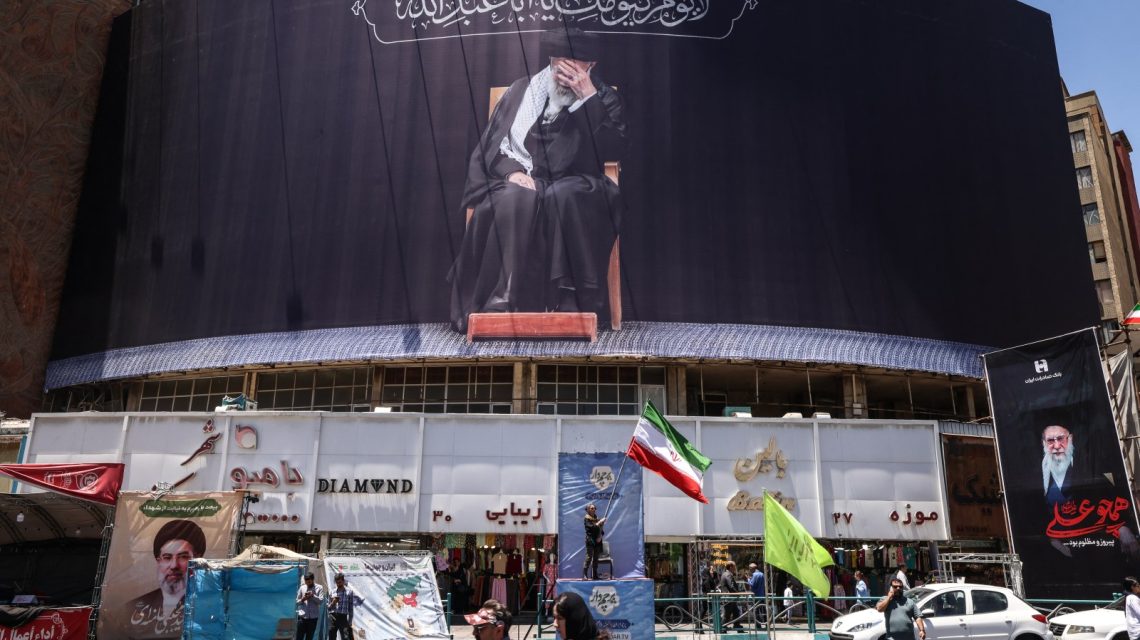
The United States and Iran have achieved a pivotal step to resolving their conflict. Both nations are emphasizing their perceived achievements in a war that has greatly impacted the Middle East and disrupted global markets. The memorandum of understanding (MoU), set to be signed on Friday, doesn’t guarantee lasting peace yet.
Despite the challenges, Iran has met its primary goal, demonstrating resilience against the combined efforts of the U.S. and Israel. Tehran has shown its ability to influence oil and gas trade through the Strait of Hormuz, affecting Gulf Cooperation Council states such as Saudi Arabia and the United Arab Emirates. This situation is further linked to Hezbollah’s confrontation with Israel.
The White House’s Actions
The U.S. has effectively eliminated key Iranian leaders, notably Supreme Leader Ayatollah Ali Khamenei, and has severely weakened Iran’s military capabilities. President Trump celebrates these victories, though concerns continue about Iran’s strengthened regional position under Khamenei’s successor, Mojtaba.
According to Sina Azodi from George Washington University, Iran’s demonstrated ability to simultaneously confront the U.S. and Israel might lead to increased confidence in regional dealings. Alternatively, continued skirmishes might cause further damage to Tehran without easing pressures on Washington.
I think the primary objective is to end the war and for good and avoid further escalation that is increasingly becoming a norm, Azodi said.
Deal Details
While U.S. and Iranian officials interpret the agreement differently, it mainly addresses current conflicts rather than long-standing U.S.-Iran tensions. The MoU includes a 60-day ceasefire extension and resolves the blockades of the Strait of Hormuz. It remains unclear whether Iran’s nuclear program or aid to allies like Hezbollah are part of the agreement.
U.S. Vice President JD Vance stated that Iran agreed to reduce support for non-state partners, potentially leading to sanctions relief from the U.S. if long-term commitments are met. However, specific details are lacking, and Iran has not confirmed these commitments.
President Trump referred to the deal as a “WALL TO NO NUCLEAR WEAPON” for Iran, contrasting it with the 2015 Joint Comprehensive Plan of Action (JCPOA), which he criticized for facilitating nuclear weapon development.
Iranian officials continue to deny nuclear weapon ambitions, although they increased uranium enrichment after Trump’s 2018 withdrawal from the JCPOA. Amid attempts at a new deal, the U.S. joined Israeli operations targeting Iranian nuclear facilities in what was termed the 12-Day War.
Future Negotiations
President Trump mentioned a future deal allowing uranium enrichment at lower levels, which couldn’t be used militarily. The MoU’s signing in Switzerland may commence these negotiations.
Iranian leaders, including President Masoud Pezeshkian, view the MoU as a win against external aggression and a step toward dialogue.
Mara Rudman from the University of Virginia’s Miller Center suggested that real outcomes depend on resumed Hormuz traffic and progress on the nuclear issue. She noted the U.S. depleted resources and positioned itself less favorably than before.
The U.S. has now expended extraordinary military might, and accompanying resources, only to end up poised to negotiate to reduce or eliminate Iran’s nuclear enrichment capabilities for an extended period—a negotiating position in which the U.S. would have had a far stronger vantage point, and three more years to get it done [until 2030], had the president not unilaterally exited the prior agreement in 2018, Rudman told Newsweek.
Ceasefire Prioritization
The U.S. and Iran aim to extend the ceasefire while delaying a comprehensive deal. Ali Vaez from the International Crisis Group described this approach: “The immediate objective for both Washington and Tehran is to stop the bleeding without healing the wound.”
Vaez emphasized regional benefits and risks, highlighting fear over trust as a driving factor. “Regionally, even a modest deal could calm the Gulf, reopen maritime commerce and create space for a broader security dialogue; failure, by contrast, would likely bring back conflict with fewer guardrails and more appetite for escalation,” Vaez said.
Shifting Dynamics
Masoud Rezaei from the Center for Middle East Strategic Studies presents a doctrine of “mutually assured vulnerability” which characterizes U.S.-Iran relations post-war. Iran’s ability to strike U.S. and Israeli targets leads to negotiations rather than regime change efforts.
Iran seeks peace despite limitations in its asymmetric warfare capabilities against superior opposition. Rezaei views the agreement as a strategic step beyond the current impasse.
From the perspective of the political elite of the Islamic Republic, a fragile peace accompanied by intermittent low-intensity confrontation has been fundamentally disadvantageous to Iran, Rezaei said.
Strategic Strait Use
Iran’s military circles perceive sanctions as no longer one-sided. Iran’s influence on the Strait of Hormuz may offer leverage in future talks, potentially altering the dynamics of sanctions relief.
Rezaei noted a growing belief among Tehran’s military that influencing maritime transit through the strait could compel external actors to negotiate on sanctions.
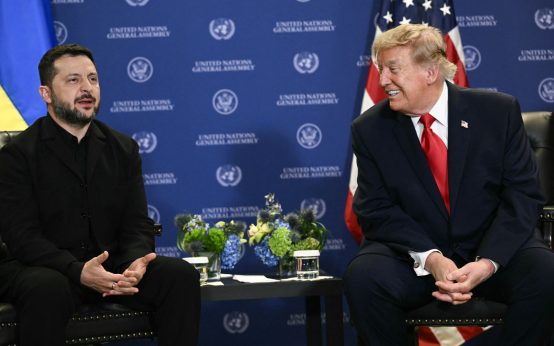 Trump’s Engagements at the UN: Focus on Ukraine and White House Developments
  Trump Administration to Admit 17,500 Afrikaner Refugees from South Africa
 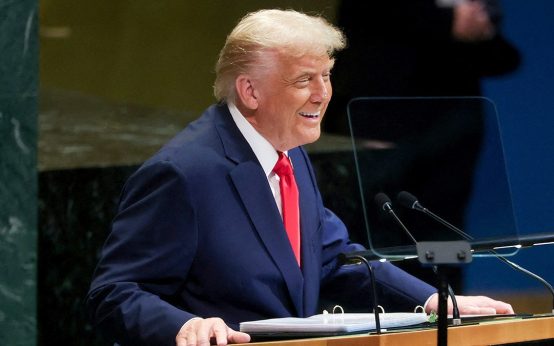 Trump’s Vision for Global Security: Iran, AI, and the Role of the U.S.
  Concerns Raised Over Canadian Assisted-Dying Program
 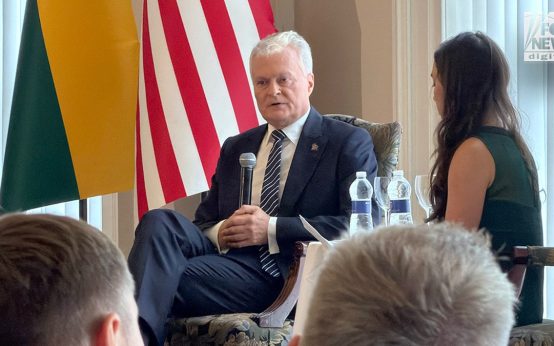 Lithuanian President Urges U.S. to Maintain Military Presence Amid NATO Challenges
  Italian PM Giorgia Meloni Skips UN General Assembly Amid U.S. Tensions