U.K.’s Innovative Torpedo Test
The United Kingdom has successfully conducted a torpedo test using an uncrewed undersea vessel, marking a significant milestone for Euro-Atlantic security and NATO’s naval capabilities. This follows remarks by the U.K.’s First Sea Lord, General Sir Gwyn Jenkins. He emphasized the need for more warships and drones to secure the Atlantic, citing Russia as the current major security threat. Jenkins highlighted the advancements in Russian submarines, which possess long-range precision weapons and deep-water systems, making them harder to track.
XV Excalibur and The Test
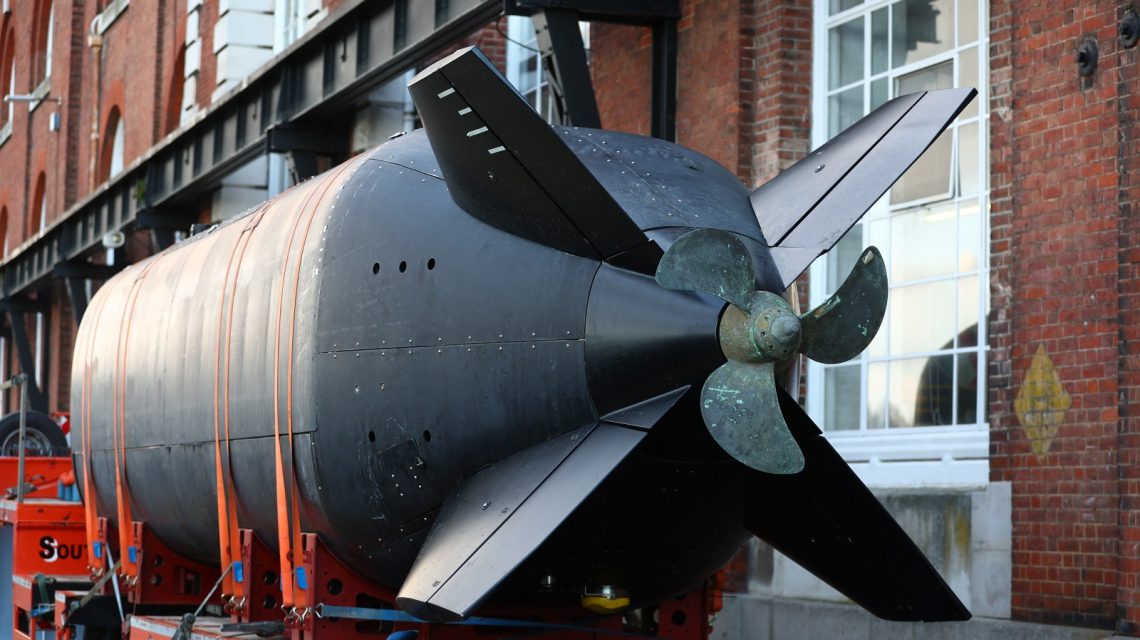
On Monday, the Ministry of Defence (MOD) confirmed the test firing of a heavyweight torpedo from the British-made undersea drone XV Excalibur, which is 40 feet long.
Significantly, this was the first time either the U.K. or the U.S. launched a torpedo from an uncrewed underwater vessel. This demonstrates the technological collaboration among the U.S., U.K., and Australia through the AUKUS alliance. The MOD further revealed plans for a new fleet of innovative attack submarines and autonomous undersea systems.
“This is a really important moment in our journey toward building a hybrid navy.”
Details regarding the test remain undisclosed. However, U.K. Minister of State for Defence Luke Pollard mentioned on radio station LBC that it occurred at a testing range north of Scotland. Speculation by Navy Lookout suggests the trial may have been conducted at the British Underwater Test and Evaluation Centre (BUTEC).
Understanding XV Excalibur
Previous reports indicate XV Excalibur was at Kyle of Lochalsh, reinforcing assumptions about the test location. Pollard reinforced the importance of combining crewed ships with uncrewed vessels to secure the North Atlantic against hostile threats.
The MOD classifies Excalibur as an Extra-Large Uncrewed Underwater Vehicle (XLUUV). Built by Plymouth-based MSubs, this 12-meter vessel displaces 19 tonnes, making it the largest uncrewed underwater vehicle tested by the Royal Navy. Under Project Cetus, Excalibur was unveiled in May 2025 at Devonport, ahead of extensive sea trials.
In 2025, the U.K. and Australia undertook joint testing of Excalibur during Exercise Talisman Sabre. The vessel was remotely controlled from Australia, showcasing interoperability with Australian systems.
Even though Excalibur lacks torpedo tubes, it features a large central payload bay. During recent trials, speculation suggests the Mk 48 torpedo, which is too lengthy for standard payload bays, may have been launched from an auxiliary cradle beneath the vessel.
AUKUS Partnership
The MOD highlights the Excalibur trial’s significance for NATO’s undersea capabilities and the collaboration under the AUKUS defense partnership. Established on September 15, 2021, AUKUS promotes security and defense alignment between Australia, the U.K., and the U.S. in response to China’s perceived threats in the Indo-Pacific.
Pillar 1 involves nuclear-powered submarine acquisition by Australia. Pillar 2 focuses on joint initiatives like undersea capabilities, artificial intelligence, and electronic warfare. On May 30, AUKUS unveiled its first Pillar II project to create payloads and systems for uncrewed underwater vehicles.
 Irish Athletes Urge Boycott of Matches Against Israel Amid Growing Tensions
  Amateur Archaeologist Uncovers Largest Roman Coin Treasure in Germany
  The Rise and Controversy of Automated License Plate Readers
  UN General Assembly and Middle East Diplomacy Amid Rising Tensions
  U.S. Secures New Greenland Security Agreement
  Crisis in Yemen Amid Renewed Conflict