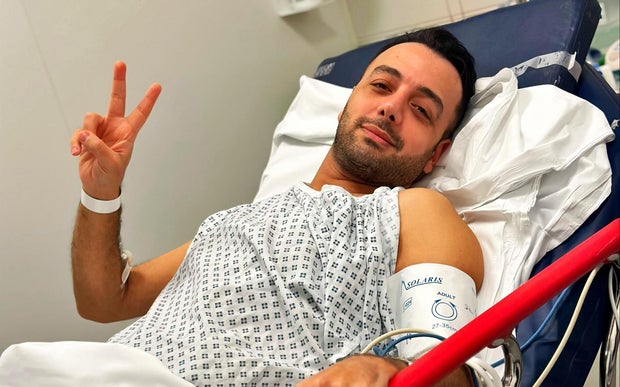
The U.K. government has taken a significant step to counter threats from Iran’s Islamic Revolutionary Guard Corps (IRGC) by formally prohibiting support for the organization. This decision brought relief to Pouria Zeraati, a British-Iranian journalist, who has faced personal danger for years.
Zeraati’s primary concern is not the punishment of Romanian nationals charged in the 2024 attack on him, but rather targeting the root problem—the Iranian regime and the IRGC itself. According to him, the new measure empowers law enforcement to address the true source of threats.
This is a huge step that gives huge leverage to law enforcement to track, monitor, and counter the main source of the threat, which is in Tehran,
Zeraati expressed to CBS News. With Parliament’s approval, the IRGC is identified as a “national security threat,” a quick move by outgoing Prime Minister Keir Starmer’s administration.
Under the new law, aiding the IRGC is criminalized, aligning support for it with designated terrorist organizations. Acts of sabotage could lead to life imprisonment.
Zeraati and Threats Facing Iranian Journalists
Persian-speaking journalists outside Iran, along with their families back home, endure threats and intimidation from the regime. Zeraati, formerly an anchor for Iran International—a critic of the Islamic Republic, was no stranger to such threats.
His image appeared on Iranian billboards with accusations against him as a child killer. Threats forced Iran International’s operations from London to Washington, D.C., following credible warnings necessitating armed police presence.
In March 2024, Zeraati was assaulted en route from his home in London. Two men attacked him, one restraining him while the other stabbed him multiple times before fleeing. Despite severe injuries, Zeraati resumed work shortly thereafter.
The goal was to silence me, but it wasn’t successful because, since that day, I am more determined to continue,
he remarked, now remotely anchoring his show for safety reasons.
British prosecutors linked surveillance and communication data to the state-sponsored attack. Financial records showed external funding for the attackers’ expenses. Sentences were handed to Romanians involved in the assault, while a third remains in legal processes in Romania.
Iran’s Activity on U.K. Streets
MI5 documented over 20 Iran-related plots within the U.K. up to October 2025. These incidents, alongside attacks targeting the Jewish community, influenced IRGC’s proscription.
The IRGC is closely tied to Iran’s military and answers to the supreme leader. With a history of targeting dissidents, its Quds Force manages operations abroad like the one against Zeraati.
Alongside the IRGC, the U.K. banned the Islamic Companions of the Right (IMCR), responsible for attacks on Jewish sites, including an arson attack on ambulances of United Hatzalah in London.
British officials now recognize IMCR as directed by the IRGC’s Quds Force.
Designation Controversies
The U.S., Canada, and EU previously designated the IRGC as a terrorist entity. Yet, the U.K. hesitated due to diplomatic concerns regarding Iran. A former policing head, Neil Basu calls the U.K.’s move a crucial internal and international political gesture.
Basu explained, It says we’re not worried about the diplomatic consequences,
adding the new crimes aid law enforcement against state-sponsored recruiting.
Zeraati endorses this deterrence, noting that while IRGC activities might persist, the decision may impact proxy actions.
Assessing safety for returning to the U.K., Zeraati sees potential improvement. As soon as I see myself — in terms of the transnational repression threat — safer residing in the U.K., I wouldn’t hesitate to go back,
he anticipates.
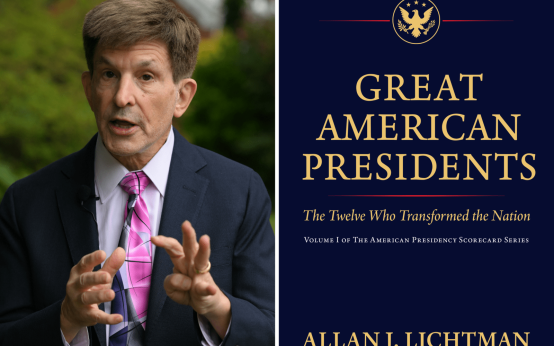 Allan Lichtman’s Framework for Assessing Presidential Greatness
 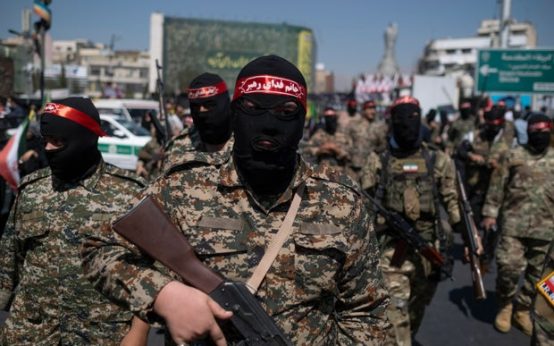 Tensions Escalate in Iran Conflict as Global Leaders Weigh Options
 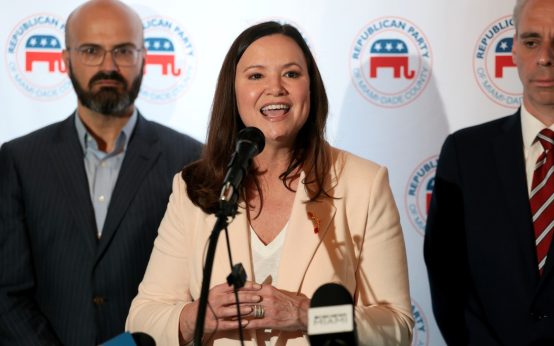 Florida Senate Race Tightens as Recent Polls Show Dead Heat
  Ethics Complaint Targets Colorado Representative Lauren Boebert
  White House Approves F-35 Sales to Saudi Arabia Amidst Regional Tensions
  Ken Paxton’s Campaign Funding and Polls