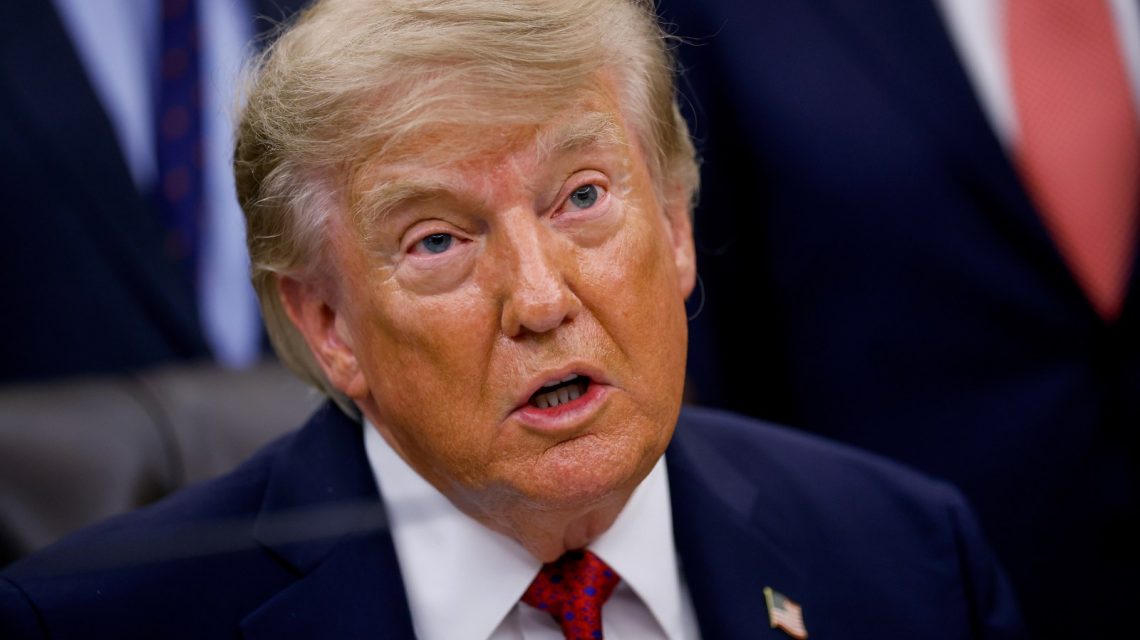
President Donald Trump’s approval rating has reached a historic low, according to a new poll by the University of Massachusetts Amherst released on Monday. This decline poses significant challenges for the Republican Party, especially as it defends key races in the upcoming midterms that could determine control of the House of Representatives and the Senate.
Trump’s popularity has decreased since he resumed office last year, largely due to voter discontent with the economy, inflation pressures, and the unpopular conflict in Iran. Historically, low approval ratings for a president lead to losses for their party in midterm elections, as seen in 2018 when Republicans lost seats during Trump’s first midterm. Democratic strategists believe that Trump’s decreasing support might allow them to gain ground even in traditionally conservative states like Texas.
Disenchanted Trump Voters
The UMass poll indicates that 84% of those who voted for Trump would support him again in a hypothetical election, compared to approximately 94% of those who backed Democratic former Vice President Kamala Harris. However, only a small fraction of disillusioned Trump voters are inclined to switch allegiance to Harris. Just 2% would vote for the former Democratic candidate, while 7% would choose a third-party candidate, and another 7% would abstain from voting.
Among individuals who did not participate in the 2024 election, only 20% would vote for Trump if given another chance, in contrast to 27% favoring Harris and 14% opting for a third-party candidate. A significant 40% would still refrain from voting, the poll observed.
Decline in Approval Ratings
Trump’s net approval rating has fallen to a record low of -32 points as per the poll, with 32% approval against 64% disapproval. This marks a drop from previous polls, which recorded a net approval of -29 in March 2026, and -20 in July 2025. Tatishe Nteta, provost professor of political science at UMass Amherst, emphasized in a memo the urgency for Trump and the GOP to address the nation’s critical issues to prevent further declines and potential losses in the House and Senate.
The UMass Amherst poll surveyed 1,000 respondents from August 21 to 26, 2026, with a margin of error of ±3.5 percentage points.
Comparative Polling Results
Other polling reflects a similar trend of Trump’s waning popularity. A Morning Consult poll indicates a net approval of -14 points, showing 41% approving and 55% disapproving of his performance, surveying 2,203 registered voters with a ±3.5 percentage point margin of error.
A Quantus Insights poll depicted a net approval of -15 points, with 42% approval and 57% disapproval, conducted among 1,200 likely voters within a ±3.2 percentage point margin of error. Similarly, YouGov and The Economist reported a -21 point net approval, with 36% approving and 57% disapproving in a poll of 1,536 adults.
Additionally, a Reuters/Ipsos poll found Trump’s approval at -32 points, capturing 65% disapproval versus 33% approval based on 1,215 adults surveyed.
Trump’s Reaction and Economic Impact
Trump has criticized the declining poll numbers, describing them as misleading tactics orchestrated by the media. On August 30, he posted on Truth Social denouncing what he called “FAKE POLLS” used to demoralize Republicans.
Economic dissatisfaction contributes to Trump’s declining approval. CNN analyst Harry Enten highlighted that inflation initially contributed to Trump’s election but has now become a liability. Current polling from Ipsos shows a substantial decline in trust regarding Trump’s handling of inflation among independents. The UMass poll noted that only 22% believe Trump managed inflation well.
On employment, 31% expressed some approval of Trump’s performance, though 63% remain dissatisfied. Economic confidence is waning, with 39% of Americans trusting Democrats more on economic matters versus 32% for Republicans, according to YouGov and The Economist. Moreover, 57% feel the economy is deteriorating, with only 14% seeing improvement.
Rising gas prices have also compounded economic concerns, driven by disruptions in the global oil supply related to the Iranian conflict, contributing to Trump’s declining approval.
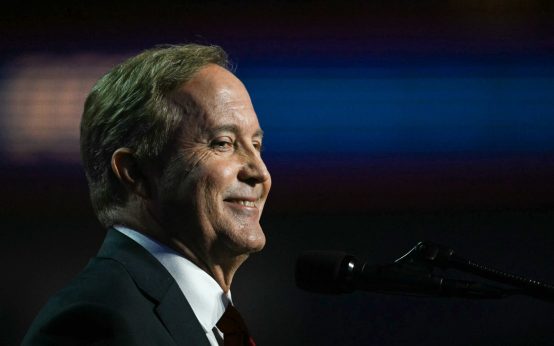 Ken Paxton’s Campaign Funding and Polls
  Inside the Secret Deals Powering the President’s Push to Deport Migrants to Countries Not Their Own
  Independence of Research from Political Agendas
 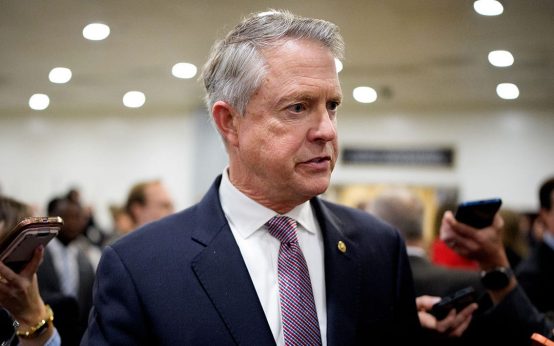 Sen. Roger Marshall Denies Allegations of Political Attack
  Concerns About Food Safety Reach Critical Levels
  Court Blocks Trump’s Mail-Ballot Rules Ahead of Elections