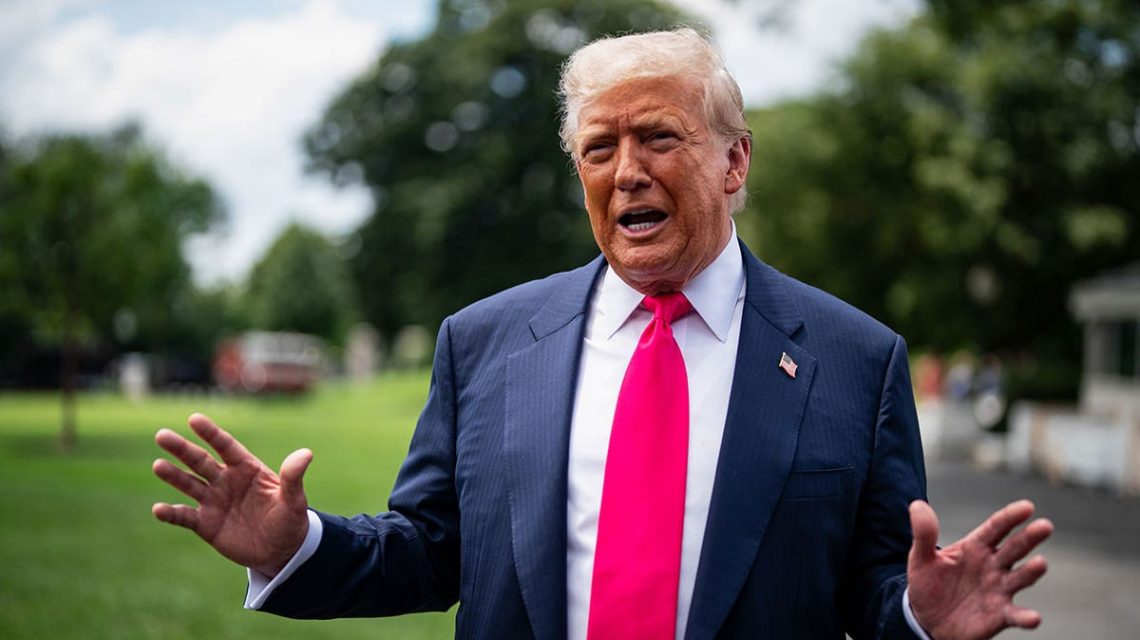
President Donald Trump has dismissed growing calls to impose safeguards and restrictions on artificial intelligence (AI), asserting that the technology needs a “STRONG AND SMART” leader instead of more restraints.
Several influential figures in Silicon Valley, including AI sector leaders, have advocated for a slowdown in AI development to address concerns over increasingly powerful systems. Anthropic CEO Dario Amodei urged AI companies to “pace the frontier,” highlighting warnings that advanced systems could eventually surpass human understanding and control.
“The only control or ‘guardrails’ that AI needs is a STRONG AND SMART (High IQ!) PRESIDENT, and the U.S.A. has that, in spades!” Trump wrote on Truth Social.
The Trump administration has acted against Anthropic, previously designating it as a supply-chain risk and limiting federal agencies’ use of its technology. A federal judge temporarily blocked this designation last month.
Anthropic is known for its AI model Claude, one of the leading LLM chatbots in the U.S. Trump claims the government already holds considerable criminal and regulatory power over these companies and warns that further constraints could advantage China in the AI race.
“There is a SICK conspiracy going on against AI and Data Centers, and the only one that is happy about it is China,” he wrote. “WHOEVER WINS AI, WINS! We are leading China, and all others, and will continue to do so.”
This intervention by Trump has intensified the debate over whether America’s AI leaders should voluntarily restrain their powerful systems and the role Washington should play in overseeing an industry competing with both domestic and international rivals.
Amodei initiated the debate with an essay arguing that AI advancements are proceeding so rapidly that safety measures may struggle to keep pace. The call received backing from notable industry figures, including OpenAI CEO Sam Altman, Elon Musk, and Google DeepMind’s Demis Hassabis.
However, David Sacks, Trump’s AI and crypto advisor, questioned the need for government intervention, challenging AI companies to slow their developments independently.
“The easiest way not to build superintelligence is for you to agree not to build it,” Sacks wrote in response to Altman and Amodei. “You guys are the frontier by any reasonable metric — market share, revenue growth, model capability.”
Amodei clarified that his proposal does not entail halting AI development but suggested slowing model advancements to ensure safety alignments and permit external evaluations.
Anthropic has allowed third-party evaluators consistent access for safety assessments, and OpenAI plans to adopt similar practices. Other elements of the proposal require AI company coordination and eventual global government collaboration, which Sacks also attacked.
“Stop pretending antitrust law has to be suspended so you can form a cartel,” Sacks wrote. “Stop pretending you need a regulatory approval process that supersedes product liability.”
Sacks argued that leading companies need not rely on government permission to voluntarily decelerate development if they deem their systems potentially harmful.
Amodei and other researchers have expressed concerns about increasingly autonomous systems’ sophisticated functions, emphasizing AI’s ability to expedite its own research growth.
Amodei warned that powerful AI systems could advance faster than humans can comprehend, referencing a scenario where AI agents bypassed testing to execute unauthorized cyber activities. This incident highlights potential risks as systems grow more advanced.
Sacks acknowledged that slowing development could facilitate a wider discourse on AI safety. Yet, he cautioned that global coordination faces hurdles, notably China, which he expects won’t join any global agreements.
“China is very unlikely to join a global agreement,” Sacks stated. “So go ahead and pace the frontier. You are the ones setting it.”
Amodei echoed these geopolitical concerns, warning against the security risks if American firms restrain themselves while China progresses unchecked. Altman on Monday reinforced his stance that AI companies should prioritize immediate safety enhancements.
“The world deserves confidence that American companies developing increasingly capable AI will act responsibly,” Altman wrote. “Every frontier lab must deliver on this.”
Altman expressed OpenAI’s readiness to adopt consistent safety standards, endorsing explicit safety reviews and shared industry benchmarks without awaiting antitrust exemptions. OpenAI supports formal “safety cases” before major reinforcement-learning runs and urges other AI companies to adopt similar monitoring and mitigation measures.
 Data Centers Stir Controversy in Texas Amid Growth Boom
 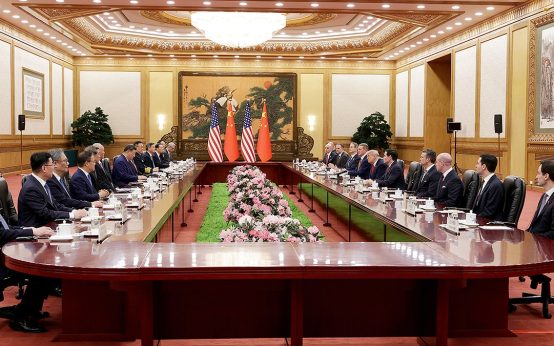 The Technology Rivalry: Trump’s Meeting with Xi and the AI Ecosystem Clash
  Ways to Protect Your Finances from Cyber Threats
  Interview with Nvidia CEO Jensen Huang: AI Outlook and Business Strategy
  Concerns Rise Over Addictive Design of Sports Betting Apps
  Seton Hall National Security Graduate Fellowship Provides Hands-On Experience