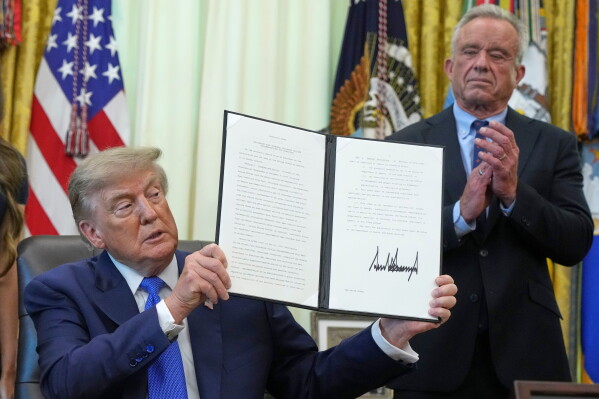
President Donald Trump claims his administration has pivoted to financial measures against Iran, believing another economic squeeze can halt Iran’s nuclear ambitions.
The Trump administration hopes that continuous bombing alongside economic pressure will push Iran into compliance, especially concerning its nuclear program and reopening the Strait of Hormuz for oil and natural gas tankers.
Financial Hardships and Negotiations
On Monday, President Trump noted that Iran seeks compensation in peace talks, so he intends to demand similar terms for the U.S. He argues that Iran’s economy is nearing collapse due to accumulated sanctions, viewing this financial distress as leverage despite decades of similar sanctions often serving as long-term strategies.
Trump asserts, “They have no money. Iran is broke, totally broke. They’re not paying their soldiers. They have inflation of 300%.” However, U.S. administration estimates present a more reserved inflation rate. The potential for a prolonged conflict could inflate costs elsewhere, including the U.S.
Global Energy Implications
Crude oil prices rose on Monday amid fears that Trump’s comments signify fewer shipments through the critical Strait of Hormuz, exacerbating the global energy supply problem. Before the conflict, the strait handled about 20% of the world’s oil supplies.
The ongoing conflict has intermittently restricted access, turning the strait into a bargaining chip for Iran during negotiations. Iran appears unfazed publicly by further sanctions, emphasizing American reliance on sanctions as a fallback when diplomacy falters.
“Whenever Washington proves incapable of diplomacy, it resorts to sanctions,” said Esmail Baghaei, Iran’s Foreign Ministry spokesperson.
Operation Economic Fury
The White House terms its intensified sanctions against Iran as Operation Economic Fury, initiated on April 16. Treasury Secretary Scott Bessent likens this financial offensive to a bombing campaign, targeting nations conducting oil trade or banking with Iran.
Richard Nephew from Columbia University suggests that sanctions lack immediate impact compared to the disruption of the Strait of Hormuz. He criticizes Trump for unclear strategic objectives and an inconsistent approach in articulating goals.
Economic and Military Leverage
Despite criticisms, sanctions coupled with U.S. naval blockades afford the U.S. leverage, as noted by Juan Zarate, former deputy national security adviser. Zarate cautions that tightening sanctions hinges on America’s resolve to induce economic changes in Iran.
Trump’s stance marks a shift from prior criticism of sanctions used by past presidents, asserting they were inadequate in curbing Iran’s nuclear and military endeavors.
Impacts of the Conflict
The Iranian economy continues to suffer, witnessing a 5.4% contraction according to the International Monetary Fund. Inflation reportedly stands at 88.6% annually, with oil loading significantly reduced since conflict onset.
The U.S. economy grows, albeit slowly, as inflation rises alongside borrowing costs, affecting Trump’s popularity. A senior official asserts the U.S. military setbacks on Iran’s oil production and transport are effective components of their strategy.
Defense Secretary Pete Hegseth emphasized U.S. economic power, stating, “When you’ve got a motivated treasury secretary who can pull a lot of levers…you can put a lot of pressure on adversaries.”
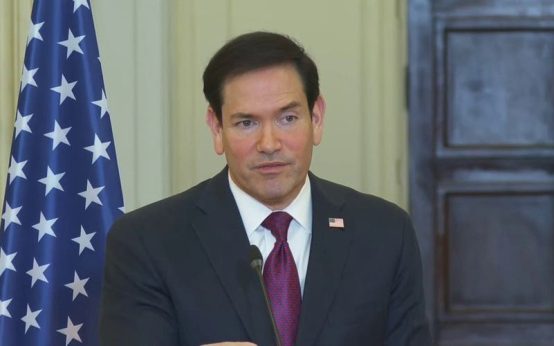 Secretary of State Warns About Iranian Economy in Greece Visit
 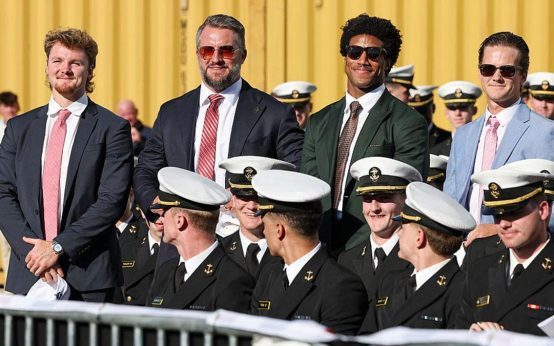 Trump Meets Baltimore Ravens Players at Tradepoint Atlantic Event
  Labor Unions and Faculty Groups Sue Trump Administration Over Immigration Policies
  Collins and Jackson Face Off in Key Maine Senate Debate
  California’s Demographic Shifts: A Closer Look
  Israel Marks Tragic Anniversary Amid Political Turmoil