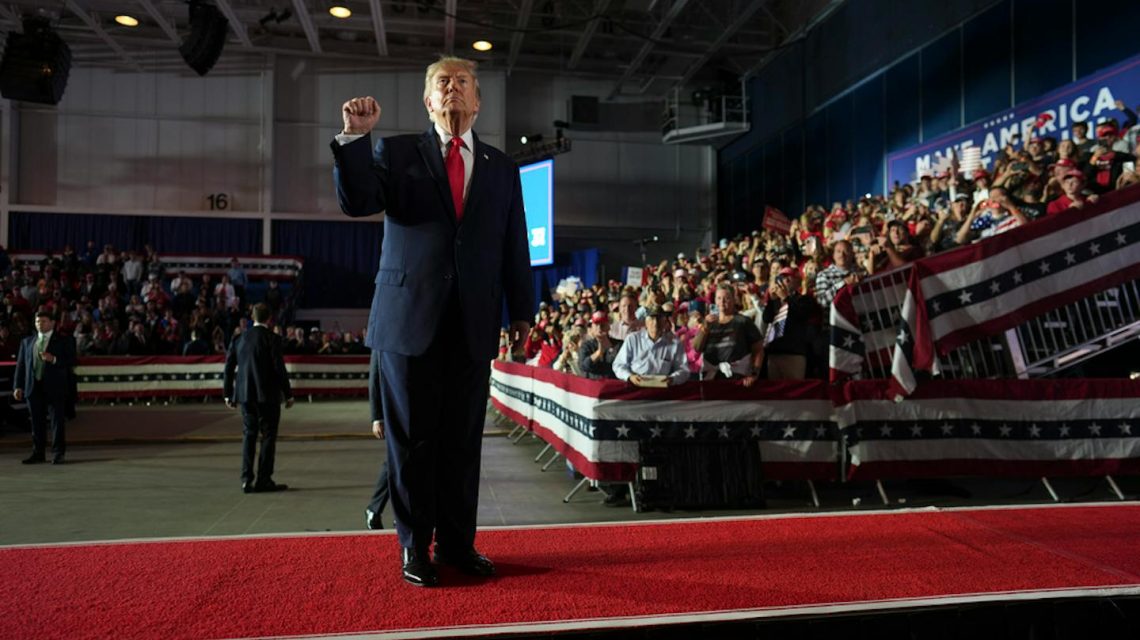
In this week’s midterm elections, President Donald Trump faced significant electoral setbacks, even in strongly Republican states. The outcome suggests that Trump has lost a considerable grip on the coalition that twice propelled him to the presidency.
Throughout the campaign season, Trump encouraged voters to ‘pretend I’m on the ballot,’ repeating the phrase 47 times. Many did approach the vote this way, but not in the manner he envisioned. The election results were a clear sign of dissatisfaction with Trump’s presidency.
More than any other president, Trump framed the midterms as a personal referendum. This gamble resulted in a notable Democratic surge, reflecting public discontent over several issues. Trump’s handling of economic and foreign policy, particularly the war with Iran and rising gas prices, coupled with allegations of corruption, contributed to a shift in voter sentiment.
“It’s basically a repudiation of Trump and the Republicans and what they’ve done for the last two years,” said Douglas B. Sosnik, a former White House political director.
According to estimates by The New York Times, the Democrats led the national vote for House seats by about 13 percentage points, the largest margin in a congressional election since 1976. Despite gerrymandering making fewer seats available, the Democratic victory suggests dissatisfaction with Trump’s administration.
Trump insisted the loss was not a rejection of him, citing his absence on the ticket. Yet, the campaign centered heavily around his influence, including his decision to start the conflict with Iran, affecting energy markets and campaign strategy.
The defeat of Trump-backed candidates in deep red states like Texas and South Carolina highlighted the effects of his political involvement. His aggressive approach to immigration and tariff policies did not sit well with many voters, leading to an overall rejection of his party by those who once backed him for change.
While Trump remains president for two more years, his hold on power appears weakened. His political future and the stability of his influence are under question. Some Republicans believe aligning with traditional principles could aid recovery by 2028.
There is a tendency to view such a significant election outcome as a deep ideological shift, akin to historical swings. Lynn Vavrek of UCLA notes that high gas prices were a major election issue, rather than a broad ideological shift.
The Republican Party has transformed under Trump’s leadership, focusing on issues like trade and military spending neglected in the past. Former advisers and political analysts foresee ongoing debates about the party’s direction, with Trumpism enduring, though adapted to emerging challenges.
“We’re still in Trump’s party, regardless of what happens tonight,” said Joe Grogan, a former Trump policy adviser.
Democrats, celebrating their victory, face internal deliberations. They must determine whether their win was bolstered by progressive energy or appeals to disaffected Republicans. The strategic decisions made now could shape American politics following Trump’s term.
James Blanchard, former governor of Michigan, argues the country cannot revert to pre-Trump politics and must look forward. Despite his presence, the Trump era is shifting, indicating the end of a distinctive political chapter.
 Trump Dismisses Third Impeachment Prospects
 Custody Dispute Involving Rep. Max Miller Delayed
 Attorney General Addresses Post-Midterm Democratic Threats
 Senator Elizabeth Warren and the Future of Crypto Regulation
 Bipartisan Opportunities in Foreign Policy
 Political Shifts and Concerns Post-Midterms