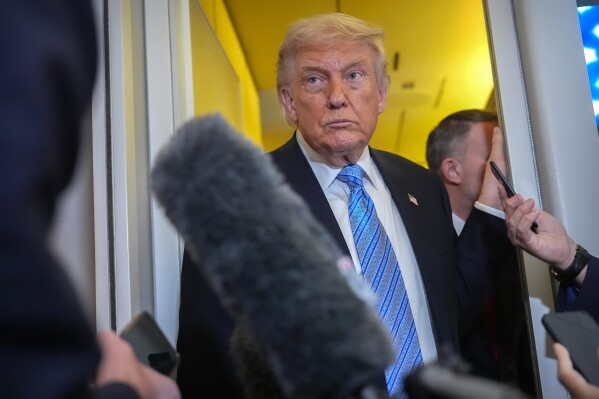
The Trump administration is under scrutiny as it processes millions of voter registrations through federal databases to verify their eligibility. This move, challenged in courts by Democratic officials, could potentially remove valid voters from rolls ahead of the November elections.
Over 67 million registrations, mainly from Republican-led states, have been verified through a U.S. Department of Homeland Security (DHS) program. Thousands of these registrations, flagged as possible noncitizens or deceased individuals, face immediate suspension or require quick proof of eligibility.
Critics argue that this initiative is part of President Trump’s broader strategy to federalize election functions, echoing his claims of noncitizen voting, despite its rarity. Voting and civil rights groups caution that the system can incorrectly flag eligible voters. Freda Levenson from the American Civil Liberties Union of Ohio highlighted the risk of voters being removed without timely correction, potentially missing their chance to vote.
“If a voter is wrongly removed, by the time they learn about it and correct it, they may miss their opportunity to vote in that election.” – Freda Levenson, ACLU
An example of this is Anthony Nel, a South African native and U.S. citizen for over a decade, who was mistakenly flagged as a noncitizen in Texas. His registration was temporarily suspended while he awaited a new passport. Nel expressed frustration, believing the system should have recognized his citizenship status.
This action is part of Trump’s push for a federal list of verified voters. The Department of Justice (DOJ) has pressured states to provide unredacted voter data for checks through the DHS’s Systematic Alien Verification for Entitlements (SAVE). Existing voter roll maintenance by states is supplemented by the expanded use of SAVE, which aims to prevent government benefits from reaching noncitizens. Since April 2025, at least 25 states have used SAVE to review voter rolls, including North Carolina’s recent 7.4 million checks.
According to U.S. Citizenship and Immigration Services, this system helps prevent voter fraud. During a congressional hearing, Kansas Secretary of State Scott Schwab described SAVE as crucial for verifying voter data, despite previous skepticism about noncitizen voting risks.
From the 60 million checks, Citizenship and Immigration Services found around 24,000 potential noncitizens. U.S. Assistant Attorney General Harmeet Dhillon noted that checks revealed about 350,000 deceased individuals, though these figures are small percentages of total registered voters.
Errors have emerged, such as the case of Domingo Garcia, a 68-year-old lawyer in Dallas, who had his registration canceled with no explanation, despite consistently voting for 50 years. Garcia queried his inclusion on any ineligibility lists.
Legal actions have been taken against SAVE checks, highlighting errors in voter flagging. Anthony Nel is one of the plaintiffs in a lawsuit against the DOJ, claiming the administration seeks unauthorized access to voter data.
Republican officials defend the SAVE system as an initial investigative tool. Schwab’s office in Kansas is still examining flagged registrations, with recent state laws requiring suspense statuses until resolved. Flagged voters can vote provisionally.
In Texas, flagged registrations have a 30-day challenge period. North Carolina mandates hearings for challenged registrations. Ohio’s Secretary of State Frank LaRose stated that proving citizenship promptly restores voter status, though ACLU lawyer Levenson criticized this approach as premature.
 Rep. Alexandria Ocasio-Cortez Defends Macklemore Amid Tour Controversy
  Influence Concerns Surround California Political Donors
  Michigan Senate Race Sees Influences from Soros-Linked Funding
  Trump Seeks Diplomatic Success at the U.N. Amid Challenges
  North Carolina Senate Race Influenced by Abortion Policy Messaging
  Trump Pressures Republicans on Filibuster Threat