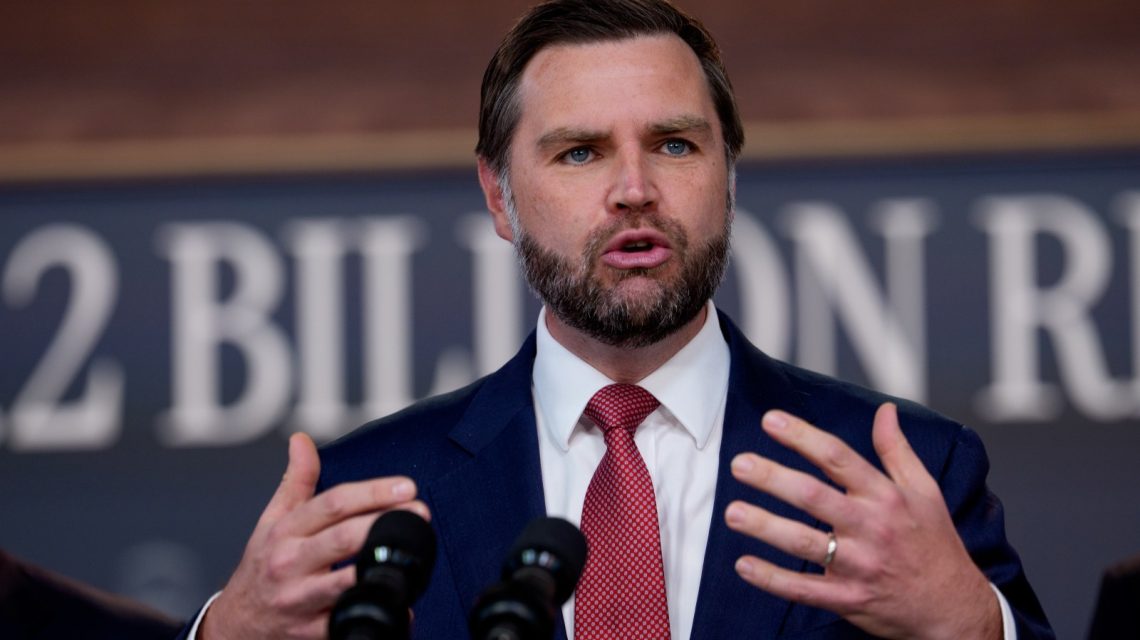
The Trump administration seeks to curb companies from dismissing American employees while employing the H-1B visa program to hire foreign workers. Vice President JD Vance indicated that the administration is focusing on strengthening restrictions on employment-based immigration. Vance, designated by Trump as the administration’s ‘fraud czar,’ mentioned that officials are closely examining layoffs reported by employers as part of efforts to prevent companies from using H-1B visas to replace U.S. workers with lower-paid foreign labor.
During a discussion on the ‘All-In Podcast,’ Vance remarked, ‘We are looking at various strategies to challenge companies that use H-1B visas to lay off American workers.’ He expressed surprise over firms claiming a desperate need for workers under the H-1B program while having histories of significant layoffs. Vance stated, ‘I find it shocking when companies say they can’t find workers and yet have laid off 5,000 people.’
The administration has introduced multiple changes to the H-1B visa program to increase control over the immigration system. The program, used extensively in tech, healthcare, and engineering, permits U.S. employers to hire foreign workers for specialized roles. Recent amendments include a new selection system favoring higher-paid positions, increased biometric and security fee requirements for large employers, and proposed elimination of a rule allowing foreign workers a 60-day grace period after job loss.
On September 18, President Trump signed an executive order prompting federal agencies to scrutinize H-1B petitions where U.S. workers might be displaced. The order directs departments of State, Labor, and Homeland Security to assess employers’ layoff records during H-1B application reviews. As scrutiny intensifies, federal officials have taken action against several employers. The Labor Department’s inspector general has suspended Cognizant’s ability to file new applications while investigating alleged fraud and halted H-1B processing for Cloudera. Additionally, five companies are currently banned from participating due to disqualification or debarment.
The Department of Homeland Security (DHS) suggested a $103,265 surcharge on cap-subject H-1B petitions, besides existing immigration fees. DHS assumes the fee won’t deter employers from filing about 85,000 petitions annually, given these companies typically have resources to afford it. This proposed charge differs from the $100,000 payment required, as per a 2025 Trump proclamation, for certain H-1B beneficiaries entering the U.S. A federal court labeled this requirement unlawful, though the administration appealed. Despite this, Trump extended the requirement for another year, effective until September 2027.
The administration argues that these measures will align the H-1B program with its intent of enhancing the domestic workforce by hiring highly skilled foreign talent rather than displacing American workers. Lauren Bis, a White House spokesperson, told Newsweek, ‘This fee prioritizes American workers and prevents their replacement by cheaper foreign labor.’ She elaborated that there is ample American skill available to support workforce growth, reflecting the administration’s commitment to utilizing that potential.
Employers’ use of the H-1B program faces varied perspectives. Tech companies and other sectors seek specialized foreign workers, whereas opponents contend that some employers exploit the program against U.S. workers. Former DHS official Adam Klein indicated that employers might consider moving roles overseas if international talent becomes difficult to recruit domestically.
Vance highlighted the legal boundaries limiting the administration’s actions without Congress, stating, ‘We are working within legal limits.’ Congress remains divided on the H-1B program’s future. While some lawmakers advocate for tightening eligibility and abuse prevention, others propose restricting or abolishing the visa. Some support its role in enabling U.S. employers to attract highly skilled foreign talent.
Vance concluded, ‘The H-1B should not exist to replace American workers with low-wage foreigners. It should exist to enrich the American economy, and we are ensuring it fulfills that role.’
For story queries, contact Newsweek editors John Fitzpatrick and James Debens.
 Kansas Senate Race: Hamilton Criticized for Climate Views
  Controversy Over Proposed MLB Stadium in Grand Teton National Park
  The GOP’s Shift Toward Big Government
  Foiled Attack Near RAF Fairford Raises NATO Tensions
  Heightened Risks at U.S. Military Bases in U.K. Amid Iran Conflict
  AOC Event at Cornell University Sparks Controversy