The Treasury Department has announced sanctions against three far-left international networks aimed at curbing politically motivated violence. This move is part of the Trump administration’s broader efforts to combat political terrorism.
Targets of the Sanctions
The Treasury Department’s Office of Foreign Assets Control acted against Autistici Inventati, a nonprofit based in Italy. It also targeted Palestine Action, a U.K.-based organization, designating it as a terrorist group. Furthermore, Masar Badil, based in Spain, allegedly operates as a front for a group already sanctioned, the Samidoun Palestinian Prisoner Solidarity Network.
Treasury Secretary Scott Bessent emphasized the commitment to eliminating financial support for these groups, stating, “Far-left extremists, their fronts, and their enablers should be on notice.” He added that political terrorism has no place in society.
Impact and Controversy
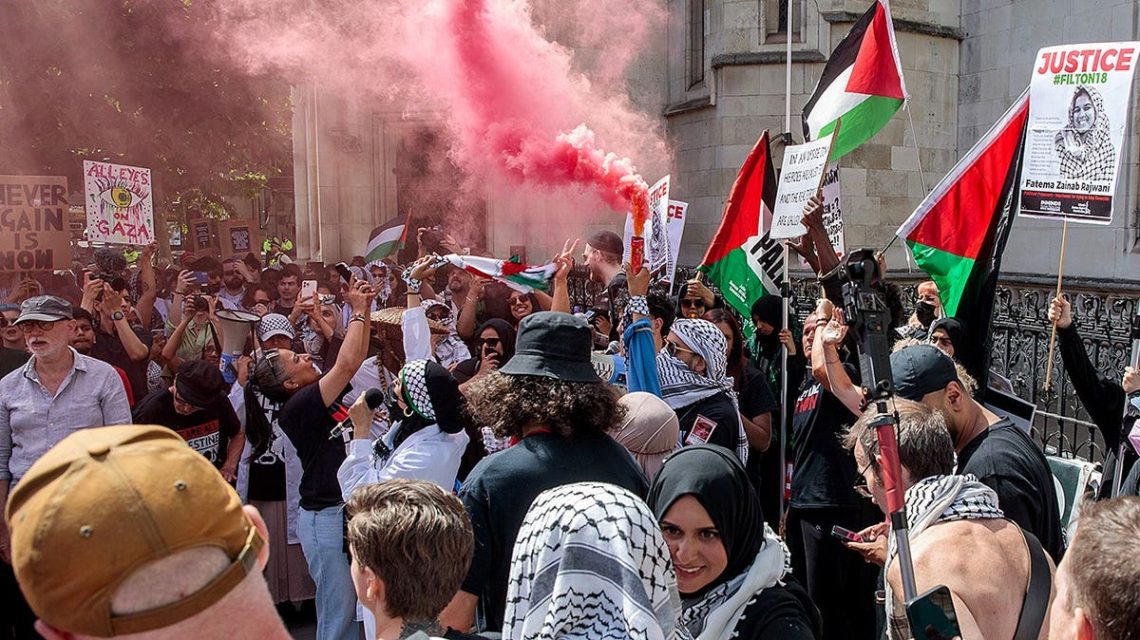
Pro-Palestinian activists gathered outside the Royal Courts of Justice in London as co-founder Huda Ammori fought a legal hearing concerning the proscriptive decision under the Terrorism Act 2000 on July 4, 2025.
Activists such as Hasan Piker and CodePink co-founders have been investigated for allegedly violating sanctions against Cuba. These individuals have denied any wrongdoing and have not faced criminal charges.
Further Developments
The sanctions are part of coordinated efforts against far-left groups. The State Department reported that Autistici Inventati provided services to overseas terrorist groups and violent agitators, fueling chaos in American cities. Portland-based Rose City Antifa is mentioned as one group that used these services.
Spanish authorities arrested wealthy financier Fergie Cox, connected to Cox cable TV, following allegations of funding organizations like Palestine Action. His extradition to the U.S. is under investigation.
Sanctions and Their Effects
The sanctions block access to any properties or financial accounts in the U.S. and restrict American citizens from engaging in transactions with these groups. Notably, the U.K. government criminalized involvement or support for Palestine Action last year.
Founded in 2020, Palestine Action aggressively campaigns against defense companies it claims support Israel, causing substantial damages.
Reactions and Statements
Palestine Action co-founder Huda Ammori expressed disbelief over the terrorist label from a country that she claims destroyed her homelands.
The Treasury described Masar Badil as a front for an international fundraiser for the Popular Front for the Liberation of Palestine, a designated Foreign Terrorist Organization. People such as Charlotte Kates defended Palestine Action and Masar Badil.
Wider Implications
Reports from George Washington University’s Program on Extremism link Masar Badil to unrest following attacks in the Middle East. Police have intervened in student demonstrations at universities tied to these issues.
Between Palestine Action, Masar Badil, and Autistici Inventati, these sanctions highlight groups posing threats through services like encrypted email and remote hosting.
The Treasury warned of organizations operating under the guise of charity or activism to mask potentially violent intentions.
Former FBI agent Lara Burns stressed the importance of government action against pro-terror agendas in nonprofit organizations.