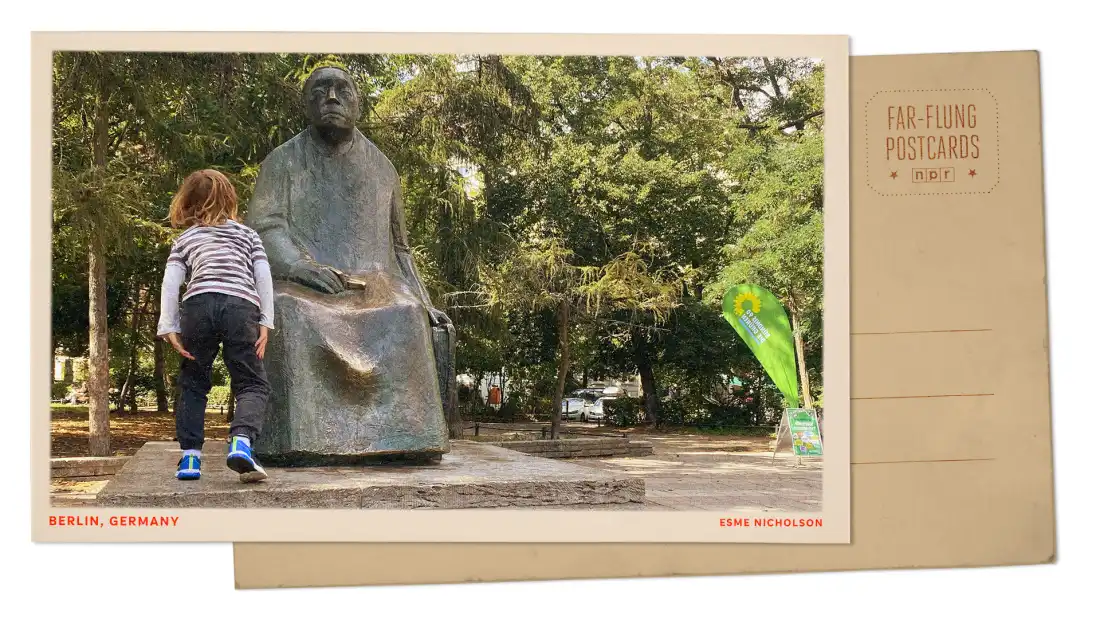
Children play gleefully around the bronze statue of Käthe Kollwitz in a square named after the artist. Known for her compassionate depictions of children affected by the aftermath of World War I, Kollwitz’s bronze likeness observes the joyful scene.
Located in Berlin’s Kollwitzplatz, near where the influential German expressionist once lived, this area holds historical significance. It is likely that Kollwitz’s own children played in this vicinity at the turn of the 20th century.
Kollwitz’s artwork is characterized by lithographs, woodcuts, and sculptures focusing on the pain and senselessness of war. Her pieces often portray mothers cradling their underfed and frightened children, with visible anguish etched into their features. A notable piece, The Grieving Parents, stands in Belgium to commemorate her son Peter, who perished at 18 during the war.
As I capture a photo of the statue, a playful scene unfolds. A young boy leaps onto the statue’s pedestal during a game of hide and seek, quickly discovered by his friend. The children’s merry chase circles Kollwitz, seemingly drawing them into her embrace, like the figures in her lithographs.
The statue exudes tranquility, depicting Kollwitz with charcoal, ready to sketch the cheerful sounds of children in a peaceful city. Despite this serene moment, the proximity of conflicts and Germany’s return to military conscription provoke a protective sentiment. It echoes Kollwitz’s own instinct to protect her children.
 Rescue of Neglected Animals from Washington Home
 Tee Higgins Pays Tribute to Beloved Hippo with Fiona Shirt
 Celebrity Homes Targeted in Surge of Suspected Break-Ins
 Controversy Surrounds Plans for George Washington Statue
 Community Gathers for 50th Annual Turkey Trot in Lincolnwood
 Fiona the Hippo Remembered at Macy’s Thanksgiving Parade