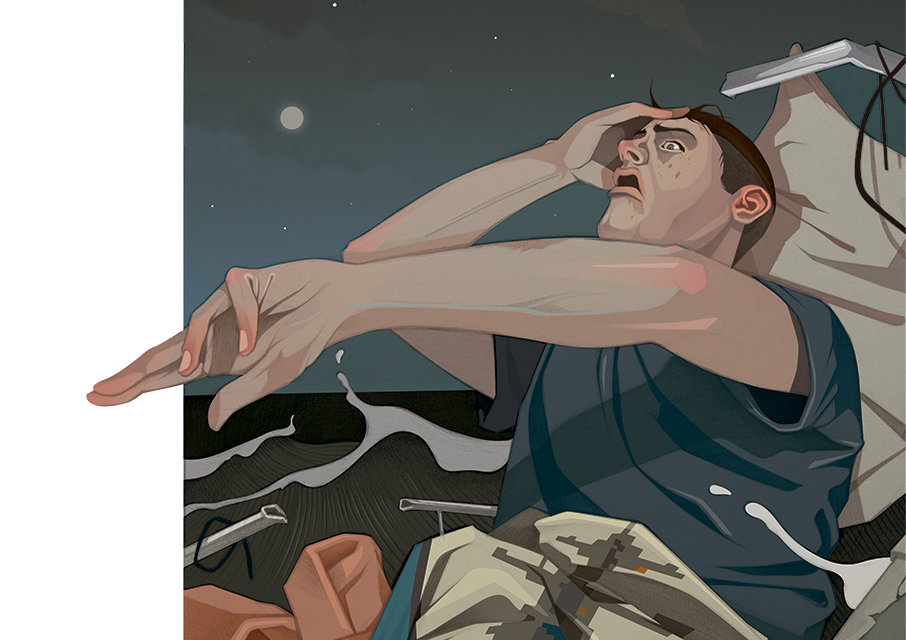
Early in the morning of June 17, 2017, a disaster unfolded on the Navy destroyer USS Fitzgerald. Petty Officer First Class Alexander Vaughan, among others, was abruptly awakened as cold seawater flooded their sleeping quarters. The shock of an accident at sea became evident. The Fitzgerald, stationed 12 miles off Japan’s coast, had sustained a massive intrusion into Berthing 2, where Vaughn and 34 other sailors slept.
The collision with the 30,000-ton cargo ship MV ACX Crystal had torn the Fitzgerald’s steel hull, flooding the berth with tens of thousands of gallons of seawater and pushing the destroyer into an uncontrolled 360-degree spin. In the ensuing chaos, sailors like Vaughan and Joshua Tapia desperately worked to save themselves and others amidst the torrent and flotsam.
As Vaughan himself yelled, “Get out, get out,” he pulled fellow sailors towards the safety of an upper deck.
Sailors from diverse backgrounds occupied Berthing 2, comprising young enlistees from cities and towns across the United States, working in roles from sonar operators to gunners’ mates. Tragically, some of them, like Seaman Dakota Rigsby, just 19 and newly engaged, would not survive the calamity.
The Lead to Disaster
The Fitzgerald was not alone in its misfortune. Only months after its wreckage, the USS John S. McCain collided with another vessel, resulting in more fatalities. These back-to-back incidents challenged the Navy’s credibility and prestige.
How these technologically advanced, $1.8 billion destroyers failed to avoid collisions with commercial vessels broadcasting their positions on international networks became a contentious inquiry. The aftermath exposed shortcomings in navigation and onboard readiness.
Inside the Fitzgerald
At the Fitzgerald’s helm was Bryce Benson, a dedicated captain with a strong résumé as a surface warfare officer. Prior to the accident, Benson had doubled permissible course deviation without officer consultation while navigating dense maritime traffic. The night of the collision, he was resting in his cabin.
Despite a seasoned career, the decision to entrust the night watch to a young crew with limited experience and to allow the ship to speed through crowded waters was a risky gamble.
The night crew, like Officer of the Deck Coppock, watched in dread as an unidentified cargo ship bore down on them, illuminated like a “Christmas tree,” marking the approach too late. The Crystal crashed into the Fitzgerald before evasive maneuvers could achieve their effect.
Training and Equipment Deficiencies
Complicating the tragedy was a technological stalemate. The Fitzgerald lacked the requisite radar tracking and AIS data integration needed to identify threats in real-time. Instead, its systems were plagued with operational inconsistencies, such as needing frequent manual refreshing—hindrances the fatigued crew could hardly overcome.
Inherently, the ship was inadequately prepared. Decommissioned equipment, forgotten fixes, and redundant certification processes left it more vulnerable than its mission-oriented prestige suggested.
Response and Aftermath
In the face of disaster, critical damage control was executed. Vaughan and Tapia bravely worked to rescue their fellow sailors against surging waters. Breau implemented emergency protocols to counterbalance flooding, while Schrimsher adeptly maneuvered the vessel to keep it afloat despite setbacks to the main navigational systems.
Ultimately, yard repair estimates to restore the Fitzgerald reached upwards of $330 million. Legal liabilities ensued as multiple officers faced scrutiny—culminating in numerous dismissals, forced retirements, and the difficult charge of negligent homicide against Bryce Benson, although subsequently dismissed.
Lessons Learned
Nascent indicators of risk, such as overworked sailors and unfulfilled maintenance, fell to commanders’ oversight. The Navy’s struggle to balance operational demands with crew safety and ship readiness begs attention. As Benson remarked, “A terrible thing happened” and he vowed to honor those lost through unyielding commitment.
In a moving conclusion, Dora Hernandez, speaking before the survivors, embraced them as the miracle Alexander Vaughan spoke of that day. Her words, amplifying shared courage and sacrifice, resonate long after the tumultuous day the Fitzgerald marked its entry back to port.