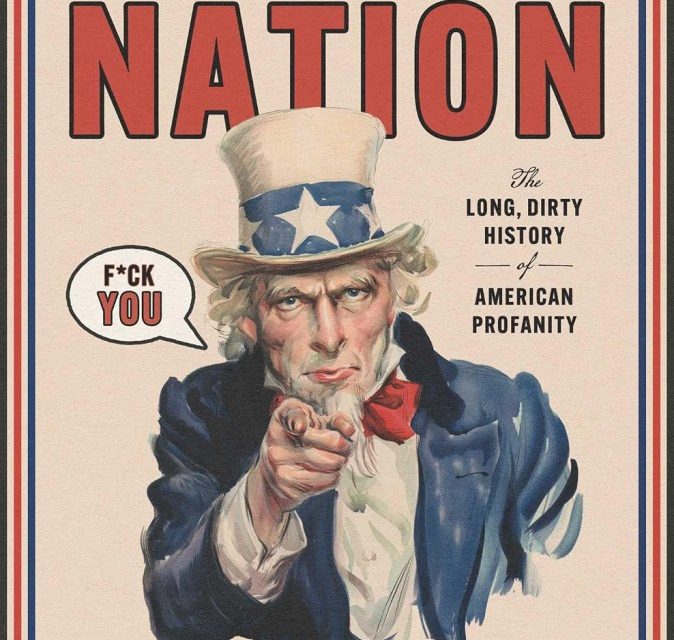
In 1665, John Porter Jr., the son of a Puritan farmer, appeared before the Quarterly Court in Essex County, Massachusetts. He faced charges for not honoring his parents. Historian Steven H. Jaffe discusses this case in his book, “Four-Letter Nation: The Long, Dirty History of American Profanity.” Porter’s crime involved insulting his father by calling him a “s–t-a-bed” and his mother a “ram bugger.” His father wanted him executed, but his mother requested clemency, saving his life.
The court fined John Porter Jr. two hundred pounds, equivalent to about $50,000 today, and ordered him to stand at the gallows with a rope around his neck for an hour as a lesson in humility and fear. Jaffe’s book explores the history of swearing in America, highlighting that the nation was built with both aspiration and profanity, and ongoing efforts to control it.
According to Jaffe, profanity arrived with the earliest American colonists from England in the 17th century. They brought earthy and provocative words for various purposes including expressing shock, defiance, disgust, intimacy, joy, and lust. The Puritans frowned upon such language, associating it with irreligion and impropriety. For many Americans, pure language reflected godliness, decency, and social order, and this belief persists today.
An example occurred in 1662 when English immigrant Thomas Baker faced court in Charles County, Maryland. He had made graphic descriptions of his neighbors’ genitalia, causing public outrage. To atone, he had to ask for forgiveness on bended knee and pay all legal costs.
Over time, America adopted and evolved its use of profanity. For instance, during the Civil War, phrases like “kiss my ass” became popular. Capt. William Cronan of the 7th Vermont Infantry used similar phrases, as did Lewis Jones of Ohio in correspondence. Even President Abraham Lincoln used profanity, remarking in 1865 that the Southern Confederacy “can kiss my ass.” New expletives emerged too, with a notable instance in 1888 when “motherf–ker” was first recorded in Texas.
In the early 20th century, curse words shifted from being merely crude to elements of rebellion and style. Jaffe remarks that “dirty words became part of an irreverent new American style in self-presentation and conversation.” This revitalized expression and authenticity.
For centuries, cursing seemed mostly a male domain, but women participated as well. Though historically quieter, women increasingly embraced profanity over the last century. As exposure to swearing grew, resistance to profanity diminished. Prior to the 1960s and 1970s, many now-common curse words would have caused shock and outrage, but attitudes have since relaxed.
Jaffe raises an essential question: does widespread cursing still matter today? He suggests that despite prevalence, curse words retain their power, especially in specific contexts. Younger generations, particularly Gen Z, continue to innovate with new profane slang on social media, ensuring that swear words remain impactful.
 Notable Chicago Figures and Their Impact
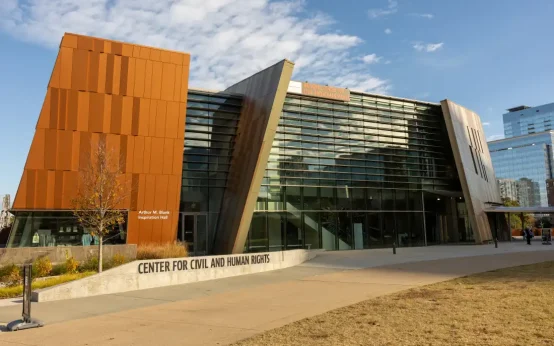 Martin Luther King Jr.’s Speech Draft Displayed in Atlanta
 Exploring The Sixth Floor Museum at Dealey Plaza
 Holiday Celebrations in Evanston, Glencoe, Skokie, Wilmette, and Winnetka
 Miss Universe Vietnam 2026 Nguyen Quynh Anh Loses Title
 Arnold Schwarzenegger’s Unique Journey from Austrian Tank Operator to Hollywood Star