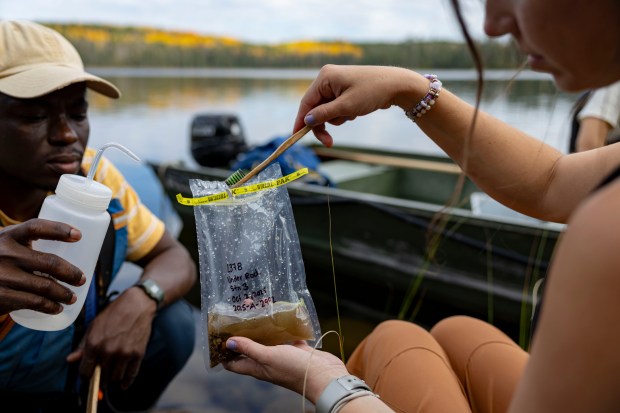
In Ontario’s boreal forest, scientists experiment with pollution in isolated lakes to study its effects. Since the late 1960s, researchers have tested various pollutants to understand environmental impacts.
Historical Experiments
In the 1960s, researchers blanketed sections of lakes with different fertilizers. Their studies led to banning phosphorus-rich detergents, reducing algae blooms in the Great Lakes.
Later, they showed how mercury from coal plants affects fish and documented acid rain caused by fossil fuel emissions. They also studied the spread of bitumen oil after spills.
Recent Microplastics Research
Currently, led by University of Toronto biologist Chelsea Rochman, researchers are experimenting with microplastics in Lake 378. Over the past three years, they introduced microplastics to replicate urban storm pollution.
The study tracks microplastic behavior, noting some sink while others wash ashore. Graduate students dissect fish to see if microplastics move from stomachs into filets. Findings aim to influence United States and Canadian policies on Great Lakes pollution.
“Great Lakes fish have some of the world’s highest microplastic levels,” Rochman said. “These particles are also in our drinking water.”
Researchers shifted from ocean plastics to freshwater microplastics, emphasizing discrepancies in contamination between different Great Lakes.
Plastic Pollution in Great Lakes
An estimated 22 million pounds of plastic enter the Great Lakes annually. Microplastics come from various sources—breakdown of bottles, fibers from synthetic clothing, tire wear, and industrial pellets. Microfibers in laundry can add significantly to this, bypassing sewage treatments to enter lakes and rivers.
“Plastic chemicals are manufactured and disposed of here,” said Andrea Densham. “They pollute at every stage.”
Microplastics: Global Perspective
Microplastics are present from Canada’s industrial areas to remote parts of the lakes. In regions such as Lake Superior, microplastics affect local wildlife and are a concern for people relying on fishing.
Environmentalists push for a global treaty or classification of microplastics as “chemicals of mutual concern,” which would lead to regular contamination checks.
Addressing Plastic Waste
While microplastics remain mostly unregulated, individual states like Illinois and Michigan are taking steps to address the issue. Illinois requires polluters to report plastic spills, and Michigan is monitoring microplastic levels in tributaries.
On a larger scale, there are calls for a global treaty to reduce plastic usage and production.
Health and Environmental Impacts
The production of plastics has long-term health and ecological impacts. Sarnia, Ontario, is a noted industrial area for plastics, facing significant air pollution challenges.
Pressure from local tribes has led some companies to halt operations due to health risks from pollutants like benzene.
Research continues to understand the wide-ranging impacts of plastics, especially on human health and the food chain in Great Lakes.
 Communities Continuing Recovery from Hurricane Helene Explored through Graphic Novel
  Fat Bear Week 2026 Highlights: Meet the Competitors
  Annual Fat Bear Week Begins at Katmai National Park
  Understanding Hurricane Development
  California Prepares for El Niño-Fueled Storms with Emergency Declaration
  California’s Growing EV Adoption: Challenges and Benefits