
Every morning at the Temple of Heaven in Beijing, hundreds gather to practice tai chi. With one arm raised and the other lowered, they move gracefully like birds spreading their wings. This ancient practice, developed over 300 years ago, continues to resonate in China today.
Ye Guirong, 64, praises the environment, remarking on the trees that surround them. Most practitioners are retirees in their 60s or older. Some exercise in groups with relaxing music, while others move silently alone.
Ye discovered tai chi in 2010, shortly after retiring. During walks in the city, she spotted a group that she now leads. “It looked good, so I started practicing,” Ye said.
Once new members join a group, they learn basic moves from the leader. Their progress is periodically reviewed and corrected.
Basic tai chi movements include “White Crane Spreads Its Wings” with raised and lowered arms, and “Part the Wild Horse’s Mane,” a fluid sequence requiring weight shifts and gentle arm openings. “The movements have been passed through generations,” Ye stated.
Ye’s group, Cypress Grove, comprises around 30 people and recently welcomed newcomer Zu Hong, 59. After learning a 24-movement routine in a month, Zu is ready for the next set. “Tai chi looks beautiful,” Zu said. “I wanted to exercise, so I came here.”
The Temple of Heaven, founded in the 15th century by a Ming dynasty emperor, symbolizes the relationship between heaven and earth. Its iconic Hall of Prayer for Good Harvests, once a ceremonial site for emperors, serves as a tourist attraction today.
Tai chi encompasses both Taijiquan, the martial art, and Taiji, the philosophy. A key concept is qi, or vital energy, thought to flow through body meridians connecting organs and limbs. Traditional Chinese medicine focuses on this flow.
“Practices like tai chi and qigong improve qi flow,” said James Miller, professor at Duke Kunshan University. Qi is believed to exist in nature, animating mountains and rivers.
Several tai chi styles have distinct forms. Ye’s group practices Yang-style at 7:40 a.m., rotating through movement sets, some using swords or fans. “Through exercising, everyone’s health has improved,” Ye said. “Our spirits are especially good.”
Chen-style, recognized as the oldest form, originated in the 17th century. Its founder, Chen Wangting, shifted from military commander to spirituality, developing tai chi after experiencing enlightenment.
“The martial art and philosophy work together,” said Tai Chi master Chen Haitao. The movements provide a method, while the philosophy adds meaning.
“Taijiquan is suitable for everyone,” Chen Haitao added. “Correctly learn principles and maintain alignment to benefit.”
AP video journalist Wu Jia contributed to this report.
Associated Press religion coverage receives support from The Conversation US, funded by Lilly Endowment Inc.
 Converse Apologizes and Withdraws Controversial Ad Amid Criticism
  Lucas Museum of Narrative Art Unveils in Los Angeles
 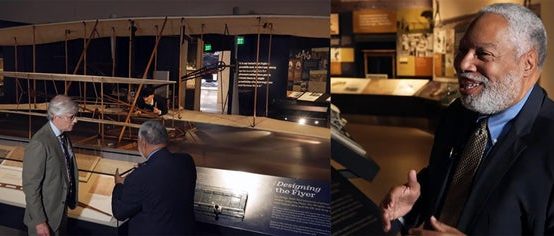 Lonnie G. Bunch III Reflects on His Legacy at the Smithsonian
  A Decade of Impact at the National Museum of African American History and Culture
  Urgent Archaeological Efforts in Quinhagak Stay Ahead of Erosion
 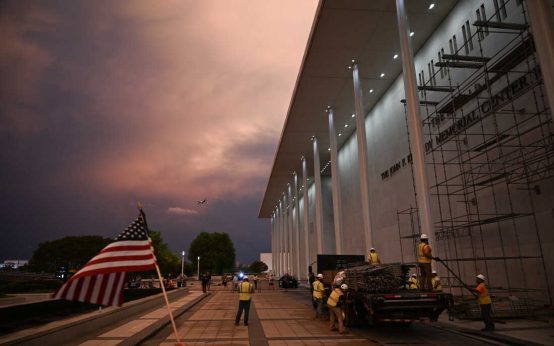 Kennedy Center Faces Potential Bankruptcy and Closure Amid Controversies