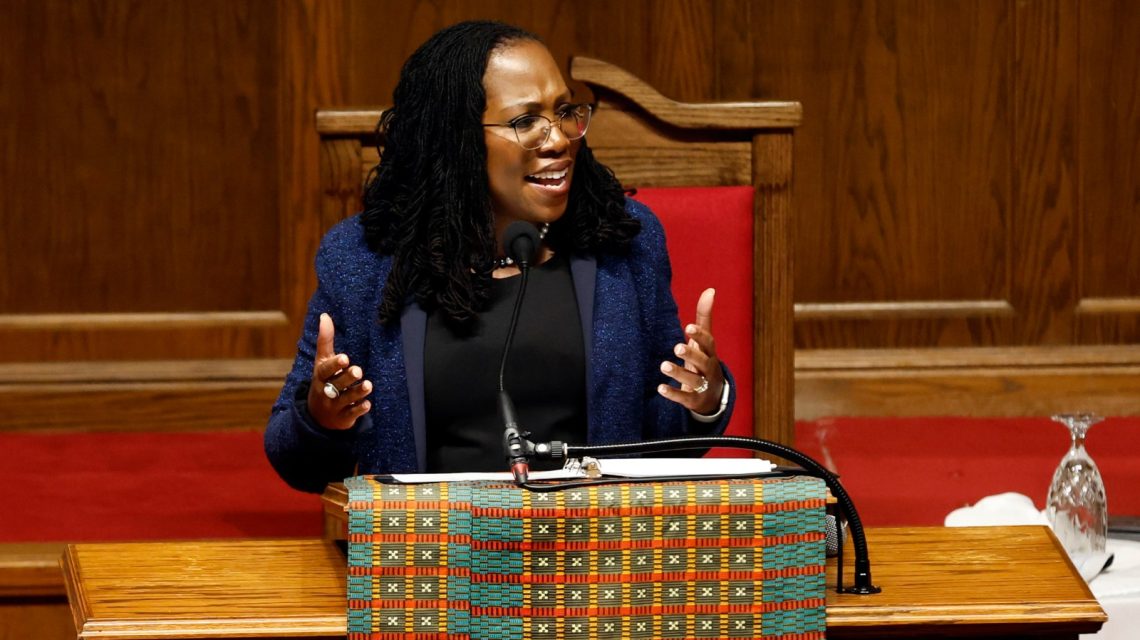
The Supreme Court sharply restricted federal prisoners from using the ‘compassionate release’ statute to contest their convictions. The ruling was met with strong dissent from Justice Ketanji Brown Jackson. The court decided that challenges to the legitimacy of a conviction should be pursued through the traditional habeas corpus process, not through sentence reduction motions citing ‘extraordinary and compelling reasons.’
The Court’s Decision
The decision, led by Justice Amy Coney Barrett, prevents prisoners from bypassing the strict procedural constraints Congress outlined for post-conviction challenges. Barrett emphasized that allowing such claims through compassionate release could undermine these procedural limits.
Jackson, in her dissent, argued that the decision restricts judicial discretion without textual support from the statute. She views the compassionate release law as a vital ‘safety valve’ for addressing unjust sentences. The ruling, she warned, could block deserving claims for relief. She criticized the majority for establishing an ‘atextual rule’ that disallows courts from examining conviction-related claims.
The Case of Joe Fernandez
The case focused on Joe Fernandez, who is serving a life sentence for a murder-for-hire plot in the Bronx, New York City, in 2000. Fernandez was sentenced in 2013 and has continually contested his sentence. A trial judge had released him on compassionate grounds due to doubts over key testimony; however, the Supreme Court’s decision reversed this outcome. The Court reinforced a clear division between legal challenges to convictions and sentence-reduction mechanisms, which are usually applied for reasons like illness or age.
Majority’s Perspective
The Court’s conservative majority, with Barrett at the helm, stated that prisoners cannot use compassionate release motions to question their convictions. Instead, such claims need to follow the habeas process. The majority’s stance highlights preserving the integrity of federal habeas law. They pointed out that Section 2255 petitions come with explicit deadlines and limitations on repeated filings. These restrictions could be diluted if similar arguments were permissible under the more adaptable compassionate release process.
Making conviction-related claims through compassionate release might lead to continuous relitigation, even after cases are deemed final.
Views of Justices Sotomayor and Kagan
Justice Sonia Sotomayor, along with Justice Elena Kagan, concurred with reversing the lower court’s decision on Fernandez, yet disagreed with the majority’s broader legal rationale. In her opinion, Sotomayor argued the Court unnecessarily expanded limits on compassionate release without statutory backing. She proposed a more focused test, considering new circumstances since sentencing. Sotomayor emphasized that compassionate release is aimed at handling developments making continued imprisonment unfair, not revisiting trial or appeal issues.
Applying this to Fernandez’s situation, Sotomayor ruled relief was unjustified due to a lack of new evidence or changes since his sentencing. Issues around witness credibility and prosecution weaknesses had been assessed multiple times. For her and Kagan, denying relief stemmed from these facts, not a broad restriction on compassionate release claims.
Potential Broader Implications
Justice Jackson expressed concern over potential broader consequences of the ruling, particularly in cases hinting at innocence. She stressed courts should have discretion when new evidence significantly questions guilt. By eliminating this option, Jackson believed the majority detracted from a tool designed to guarantee ‘just treatment of defendants.’ The ruling, she noted, poses challenges in distinguishing between compassionate-release and habeas claims moving forward.
As a result, Fernandez’s compassionate release claim stands invalid, and he stays incarcerated for his conviction.
 Rep. Alexandria Ocasio-Cortez Defends Macklemore Amid Tour Controversy
  Influence Concerns Surround California Political Donors
  Michigan Senate Race Sees Influences from Soros-Linked Funding
  Trump Seeks Diplomatic Success at the U.N. Amid Challenges
  North Carolina Senate Race Influenced by Abortion Policy Messaging
  Trump Pressures Republicans on Filibuster Threat