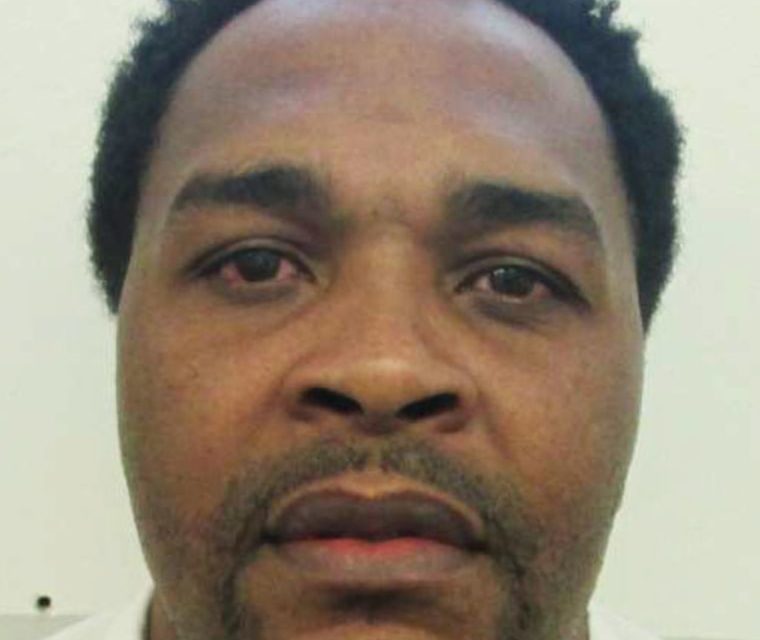
The Supreme Court recently denied Alabama’s attempt to use nitrogen gas for executing Jeffery Lee, following two lower court rulings that identified the method as violating the constitutional ban on cruel and unusual punishment. Alabama filed for an emergency order hours before the scheduled execution, but the Supreme Court’s decision has postponed Lee’s execution by nitrogen. Justices Clarence Thomas, Samuel Alito, and Neil Gorsuch dissented, expressing they would overturn the lower court rulings.
Jeffery Lee was convicted in 2000 for the murder of two individuals during a 1998 pawnshop robbery. While he won’t face execution through nitrogen, Alabama can explore other execution methods. The timeline for these alternatives remains uncertain.
Image courtesy of Alabama Department of Corrections.
A key part of Lee’s legal challenge addressed whether execution by nitrogen gas complies with the Eighth Amendment. Initially, a federal district judge deemed the method constitutional. However, Lee’s legal team appealed, and the 11th U.S. Circuit Court of Appeals reversed this decision, suggesting nitrogen executions likely violate constitutional rights, and recommended exploring the feasibility of a firing squad.
After the district and appeals courts favored Lee, Alabama sought an emergency Supreme Court order. Previously, the court supported other execution methods like lethal injection, electrocution, and firing squad, but nitrogen hypoxia has faced significant legal debates since Alabama pioneered its use in early 2024.
The nitrogen hypoxia process requires the inmate to breathe in nitrogen gas through a mask while strapped to a gurney, depriving them of oxygen. Alabama described the method as ‘humane, painless, effective, and reliable,’ but critics, including death penalty opponents and the American Thoracic Society, argue it causes intense and inhumane suffering.
Witness accounts depict distressing scenes: individuals shaking, straining against restraints, and gasping for air. Media reports from a prior execution describe a 30-minute duration before death was declared. Justice Sonia Sotomayor strongly dissented in that case, supported by Justices Elena Kagan and Ketanji Brown Jackson, arguing nitrogen hypoxia does not live up to its presented attributes.
Though Alabama executed seven individuals with nitrogen, and Louisiana one, lethal injection remains Alabama’s primary method. However, drug sourcing challenges persist. Lee has requested death by firing squad, though it’s illegal in Alabama.
Lee expressed remorse for his actions while on death row, turning to religious faith. In a prison interview, he stated, ‘God is still working, not only on my behalf, but on the other brothers facing this situation.’
State Attorney General Steve Marshall is determined to carry out Lee’s execution, emphasizing justice for the victims. Meanwhile, Lee’s legal team has urged Alabama Governor Kay Ivey to commute his sentence, noting a 2000 judge-imposed death sentence occurred despite a jury majority favoring life without parole. The practice of ‘judicial override’ was banned in Alabama in 2017, after Lee’s case, but previous cases remain unaffected.
Governor Ivey’s office declared her readiness to proceed with the scheduled execution.
 Spotlight on Grieving Father in Lindsay Clancy Case
  Veteran Customs Agent Found Guilty of Attacks on Sex Workers
  Juror in Lindsay Clancy Case Retains High-Profile Lawyer
  Florida Plastic Surgeon Faces Trial for Allegedly Murdering Attorney
  Lindsay Clancy Trial Juror Mistrial Sparks Legal Scrutiny
  Grand Jury Declines Indictments in Nolan Wells’ Case