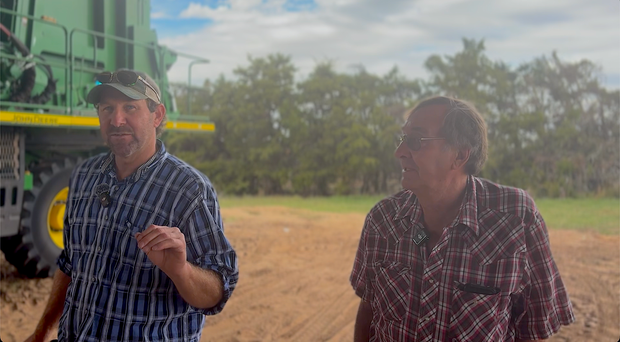
Many Kansas farmers express frustration with politicians, including Republican Sen. Roger Marshall and former President Trump. Jeff Preisser, a Kansas farmer, shared his family’s financial challenges with CBS News, citing an increase of $737,375 in farm operating costs from 2025 to 2026. The Iran conflict contributed to this rise with $514,625 more for fertilizer and $187,000 more for diesel. An additional $10,000 in part costs stems from steel tariffs.
Drought has reduced crop yields by 20%, further complicating matters. Commodity prices remain low, and trade wars diminish agricultural exports. As a result, Preisser’s revenue fell by $325,000 from 2025 to 2026. The Midwest farming community faces hardships, with Kansas losing 700 farms between 2024 and 2025. Farm bankruptcies rose by 70% during the same period, worsening financial pressures.
Jeff Preisser is uncertain whether his 6,500-acre farm will endure beyond this year. This situation prompted his father, Larry Preisser, to support Democrat Adam Hamilton, a pastor seeking to become Kansas’ first Democratic senator since the 1930s. Disillusioned with Republican leadership’s failure to pass the Farm Bill, Larry expressed hope for bipartisan cooperation under Hamilton. He recalls with regret the absence of arguing in politics during his childhood.
Other farmers, like Mandi Sieren, voice their distrust in political candidates, questioning whether to vote at all. However, Tracy Chambers, a fellow farmer, emphasizes the importance of voting. She was impressed by Hamilton’s moderate stance and willingness to engage with Republicans, noting his background as a former Republican.
Nearby, soybean farmer Mick Roush shares similar concerns but remains loyal to Marshall. He views Hamilton as too liberal and expresses apprehension about losing Republican control of the Senate. Despite the hardships caused by the Iran war, some see it as a necessary measure to prevent Iran from developing nuclear arms.
A survey by Farm Journal found that farmers generally trust Republicans more than Democrats on key agricultural issues. Nonetheless, 73% feel elected officials do not understand their realities. Additionally, one in five farmers distrusts both parties on economic matters.
President Trump introduced policies to lower diesel prices, announcing an $8 billion relief program outside Wichita. Yet, the Preissers deem it inadequate for addressing deeper systemic issues. Farmers struggle with escalating input costs, unstable markets, and unpredictable weather. Jeff Preisser criticizes temporary fixes and highlights the need for sustainable solutions.
Larry Preisser was compelled to sell land held by his family for 140 years, lamenting the endless cycle of financial strain from taxes and other inputs. The Preissers fear a grim future for American farming.
Jeff Preisser, who has farmed all his life, sees his equity exhausted. Refinancing has delayed his financial goals. “You think you’d be done after 30 years,” he says, “but you’re refinancing and stuck for longer.” With limited options, securing bank loans becomes difficult.
The precarious state of farming extends nationwide. Farm bankruptcies increased 46% in 2025, marking the second consecutive year of rising failures. USDA forecasts farm debt will reach a record $624.7 billion in 2026.
A coalition of 56 agricultural groups warned Congress of potential threats to the food supply and rural economy. Some farmers question the wisdom of advising the next generation to follow in their footsteps. According to the 2022 Census of Agriculture, the average U.S. farmer was 58.1 years old, with nearly 40% over 65.
“The fun’s gone,” Larry Preisser says, resigned to the challenges. “But you have to keep going until you’re broke. What else do you do? I can’t retire.”
 Statewide Races Explored in 2012
 Investigation Ordered in Alaska Senate Race Amid Controversy
 Starlink Controversy Highlights Musk’s Global Influence
 Key Updates from Thursday’s Campaign Trail
 Impact of Pennsylvania Congressional Races on House Majority
 Alaska Governor Launches Investigation into Senate Campaign