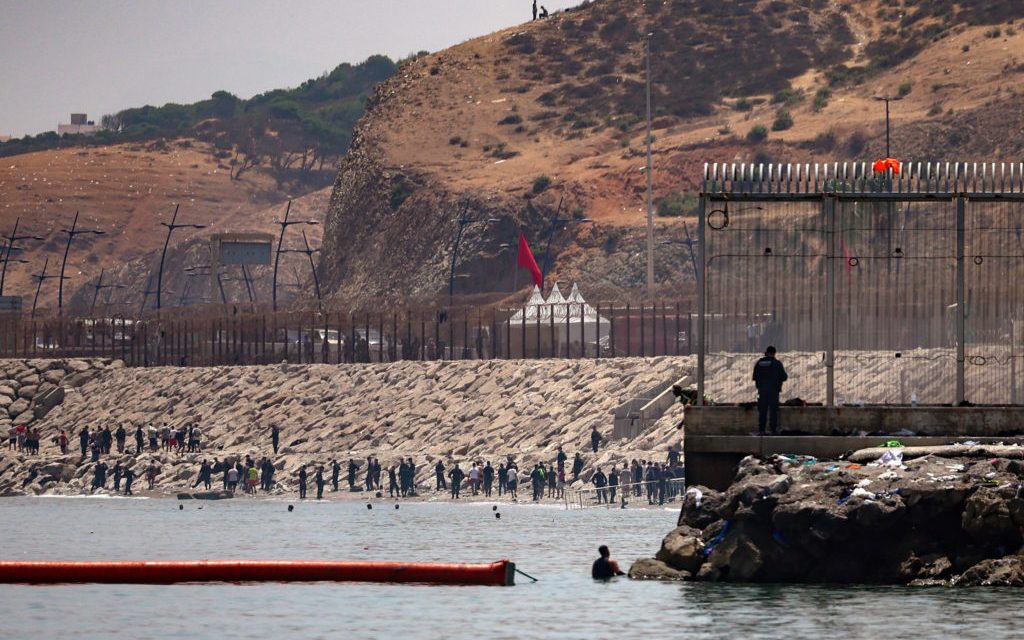
Spain has decided to install a containment barrier on the sea border between Ceuta and Morocco. This follows a significant breach by 50,000 to 60,000 migrants. The barrier will be 500 meters long. The Spanish government reported a death toll of 67, attributing deaths to drownings and a stampede.
Prime Minister Pedro Sánchez criticized some EU leaders who suggested Spain’s suspension from the Schengen zone. He called these reactions prejudiced and uninformed. Exhausted migrants arriving at Ceuta’s Tarajal beach were returned by soldiers.
The Spanish Interior Ministry stated that most migrants had returned to Morocco. Minister Fernando Grande-Marlaska defended Morocco, denying it poses a threat. He stressed collaboration that reversed the situation in 24 hours.
EU’s Call for a United Response
Leaders from 22 EU countries demanded a coordinated response. In a letter, the leaders requested an urgent meeting of EU interior ministers. They emphasized that uncontrolled crossings damage confidence in migration policies.
Spain’s Prime Minister also urged for a common EU response. He highlighted the shared responsibility of border security. Sánchez criticized some EU countries for attacking Spain and suggesting exclusion from the Schengen Area.
Italian Premier Giorgia Meloni threatened to reinstate border checks for travelers from Spain. Sánchez remarked that the EU cannot afford divisive reactions.
Migrants Returning to Morocco
Hundreds of migrants returned to Morocco, describing harsh conditions in Ceuta. They reported sleeping in forests and struggling to find food. Moroccan police observed as migrants crossed back, the majority being Moroccan and some from sub-Saharan Africa.
Some migrants expressed frustration, mentioning abusive treatment. Ouail Lamzeiz shared hardships faced during an eight-day stay in Ceuta. Migrants battled for survival, occasionally lacking basic necessities.
The road to Fnideq showed signs of unrest with burned-out vehicles. Ceuta’s President Juan Jesús Vivas noted disruptions and emphasized ongoing returns. Meanwhile, Tangier’s railway station was crowded with people heading back from the border.
Despite challenges, some migrants remained determined to stay in Ceuta. Mohamed Hatri, a young Moroccan, expressed resolve to remain, even faced with shortages. For them, returning to Morocco remained an unviable option.
Oubachir reported from Fnideq, Morocco, with contributions from Renata Brito in Barcelona and Elena Becatoros in Athens.
 U.S. Strategic Goals Remain Unmet Amid Prolonged Conflict
  New Photos Reveal Damage from Iranian Strikes in the Middle East
  Assassin of Chilean Diplomat Orlando Letelier Faces Deportation 50 Years After Assassination
  Gorillaz and Macklemore Respond to Controversy Over Israel-Palestine Statements
  Investigation into Lion Deaths in Tanzania
  Merz Stays Resolute Amid Electoral Shifts in Germany