On October 12, 2026, confusion among first responders and Tennessee prison officials delayed emergency help for Christa Pike after her failed lethal injection. This information comes from 911 dispatch recordings obtained by The Associated Press.
The first call for assistance was made at 8:40 p.m. on September 30. An official stated, “We’ve been carrying out an execution tonight. We’ve administered 10 grams of pentobarbital. The person is not yet deceased. That started approximately 1 hour ago. And we’re calling for an ambulance.” However, the caller lacked a verification code required by the dispatcher, causing delay.
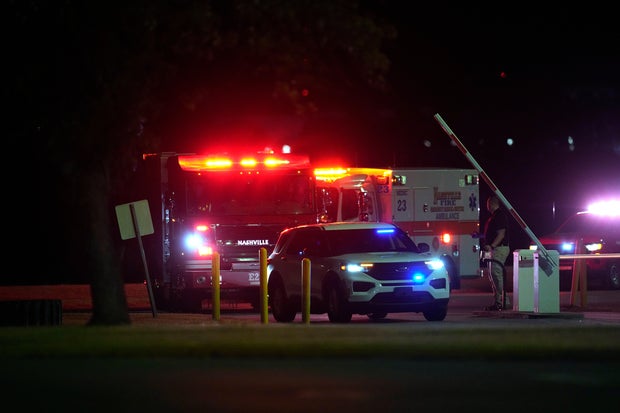
The Nashville Department of Emergency Communications (DEC) received several calls involving the Nashville Fire Department, the Metropolitan Nashville Police Department, the Tennessee Highway Patrol Dispatch, and the Tennessee Department of Correction Central Control in an effort to confirm the emergency at Riverbend Prison. Emergency vehicles reached the Riverbend Maximum Security Institution after Christa Pike’s execution was halted on September 30, 2026.
Approximately 30 minutes passed before prison officials confirmed the emergency call’s legitimacy, allowing responders to enter the prison. Initially, a call was received at 9:03 p.m. indicating the situation was false, but by 9:07 p.m., prison Central Control confirmed the call was genuine, and at 9:11 p.m., responders were permitted entry.
Christa Pike, 50, survived the attempted execution, having received two doses of pentobarbital for her role in the 1995 murder of classmate Colleen Slemmer. Pike was subsequently hospitalized, placed on a ventilator, and not expected to survive. However, she ultimately regained consciousness, spoke, walked with assistance, and was discharged back to the Debra K. Johnson Rehabilitation Center, where she had been imprisoned for 30 years.
Pike is the first person known to survive an execution attempt in the U.S., according to the Death Penalty Information Center. The Tennessee Department of Correction has yet to explain the failure in the execution, with experts suggesting an IV line problem may have hindered the drug’s entry into her bloodstream.
Pike’s execution proceeded after the Supreme Court declined to halt it, marking her as the first woman potentially executed in Tennessee since 1820. Her future remains uncertain following the failed execution.