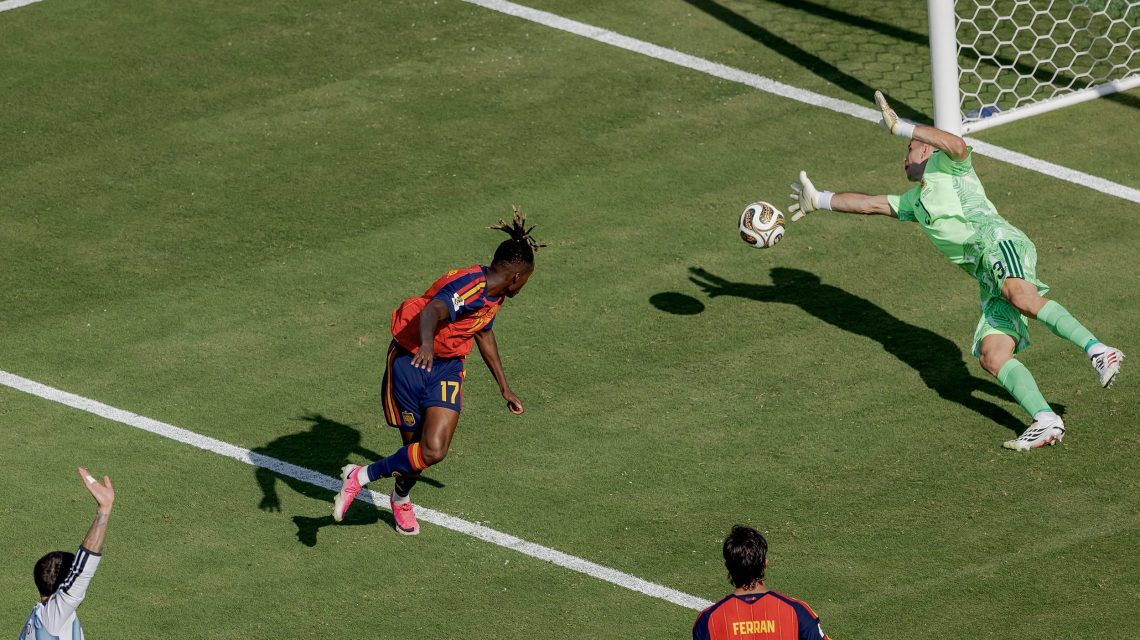
Spain clinched its second World Cup title, mimicking the dramatic essence of its 2010 victory. The decisive moment came with Ferran Torres scoring in the 106th minute. This victory took place in New Jersey, as Spain defeated Argentina 1-0, marking Torres as only the second substitute to score a winning goal in a World Cup final.
Potential for Back-to-Back Titles
With Argentina’s defeat today, a trend continues; no country has claimed consecutive World Cup titles since Brazil achieved it in 1958 and 1962. This result opens an opportunity for Spain to attempt this feat in the 2030 tournament. After winning in 2010, Spain experienced disappointment in 2014, exiting during the group stage.
Messi’s Final World Cup?
Lionel Messi has indicated this World Cup would be his last due to his age, as he would be 43 by the 2030 tournament. Though he also hinted that the 2022 World Cup might have been his concluding appearance. There remains a possibility of him participating in the 2028 Copa America.
Spain’s Dominance in the Final
Spain showcased a dominant performance throughout the 2026 FIFA World Cup, culminating in an undefeated run. In the final match, Spain controlled the game against Argentina, not surrendering a single shot on target. The Spanish defense was exceptional, conceding only one goal during the entire tournament. Ferran Torres secured the lone goal in extra time, capitalizing on Argentina’s disadvantage of having only ten players. This result ended Argentina’s chance to win back-to-back titles and possibly concluded Messi’s international career on a sour note.
Chances Missed by Argentina
In a game filled with immense tension, Argentina had its moments. During a match corner, a last-minute volley from Giuliano Simeone missed the target, sailing over the goal. This was emblematic of Argentina’s day, where opportunities were few and far between.
Spain’s Winning Moment
The breakthrough for Spain came post-water break in the second extra time period. A passed ball found Nico Williams, who then set up Torres for the goal that determined the outcome. Despite a commendable defensive strategy from Argentina, Spain’s persistence paid off.
Argentina’s Defensive Strategy
Argentina’s game plan focused on a strong defensive structure, aiming to take the match to penalties. This was reflected in a tactical shift where defender Marcos Senesi substituted forward Alvarez, enhancing defensive cover. Despite their resilience, Ferran Torres eventually breached their defense.
Contentious Officiating Moments
The final match was not devoid of controversy. An apparent goal by Spain’s Nico Williams was ruled out due to a foul in the buildup. The referee decided Mikel Merino had fouled an Argentinian player beforehand, a decision that could have been pivotal if not for Torres’s later goal.
Record-Setting Performance by Emiliano Martínez
Throughout the match, Argentina’s goalkeeper Emiliano Martínez delivered an impressive performance, making a record 11 saves in a World Cup final. His outstanding saves kept Argentina in contention, especially during the latter stages of the game.
Reflecting on the Match
The match’s progression highlighted Spain’s offensive prowess against Argentina’s defensive resilience. Key moments, such as Torres’s late goal and Martínez’s remarkable saves, defined the competitive nature of the final. As Spain celebrates their victory, the world turns its eyes to the next opportunity for glory.
 Rookie Quarterbacks Shine in NFL Preseason Hall of Fame Game
  Chicago Cubs Triumph in an 11-Inning Thriller Against Toronto Blue Jays
  Mike Tomlin Advocates for Hines Ward’s Hall of Fame Induction During NBC Debut
  Barion Brown Stands Out in New Orleans Saints Training Camp
  LeBron James Joins Philadelphia 76ers for 24th NBA Season
  Red Sox Triumph in Thrilling 13-Inning Battle Against White Sox