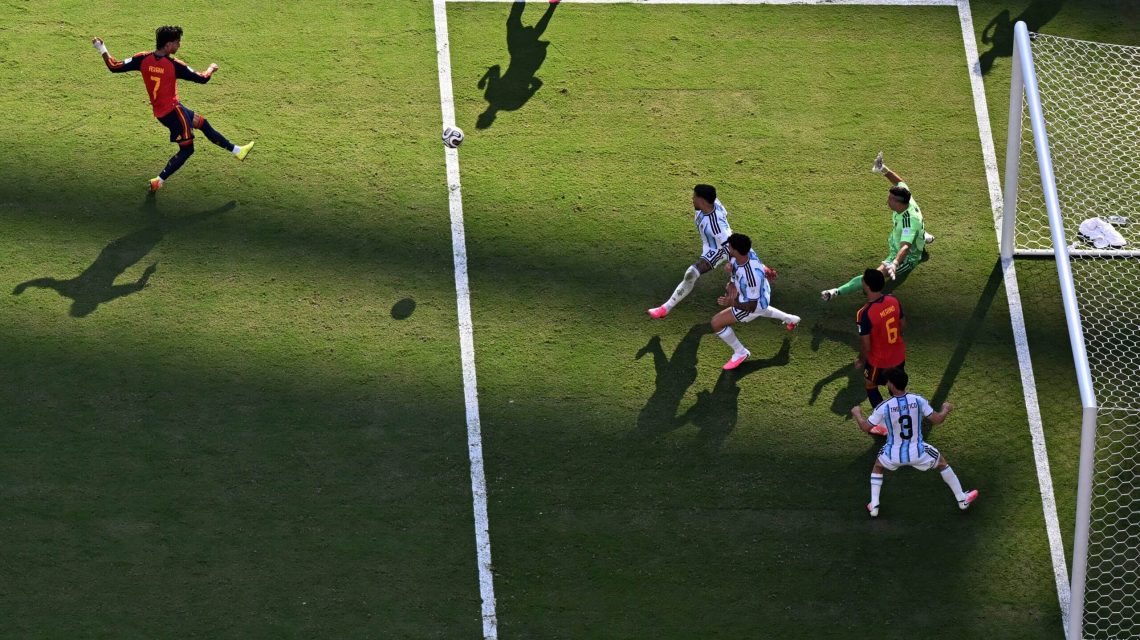
Spain’s victory at the 23rd men’s World Cup culminates in the nation’s superior possession-based strategy, brilliantly showcased in the tournament’s final moments.
Spain’s Dominance in Possession Football
Spain has established itself as a powerhouse in international football, drawing on a strategic shift toward possession-based play. This approach has led to unprecedented success, including three European Championships and two World Cup titles over the last 18 years.
The recent World Cup finale exemplified the efficacy of their method. Spain faced Argentina in a riveting match, where they maintained possession with precision and composure, aspects of their strategy that have consistently frustrated opponents.
A Match Defined by Control Versus Aggression
Throughout the tournament, Spain’s style contrasted sharply with Argentina’s aggressive play. Spanish supporters echoed throughout the stadium with cries of “Ole!” as their team executed an intricate passing game reminiscent of a training-ground rondo, provoking Argentina’s players as the possession game stifled their attempts to regain control.
Spain’s mastery was on full display as they dominated the semi-final against France with a 2-0 victory, later overcoming Argentina 1-0 in the final. Ferran Torres’ decisive goal in extra time showcased the team’s ability to remain calm under pressure and exploit their well-honed skills.
“Spanish football needed to ‘decide if it wants to be the bullfighter or the bull.’” – Cesar Luis Menotti
Remarkable Cohesion and Player Development
Spain’s triumph underscores the value of cohesive team development. Central to their strategy is the cultivation of talent aligned with a clear playing philosophy. Notable individual contributions during the World Cup came from captain Rodri, who received the FIFA Golden Ball award for his outstanding performance, and Pau Cubarsi, who claimed the young-player award for his pivotal defensive role alongside Aymeric Laporte.
Effective development extends beyond players to coaching. Spain’s national team coach, Luis de la Fuente, has cultivated a seamless transition from youth squads to the senior team, demonstrating the effectiveness of long-term investment in player and coach progression.
Lessons From International Football
The tournament highlighted crucial distinctions between team strategies. While some nations relied on quick-fix solutions, Spain benefited from an approach dedicated to building consistency and identity. Despite fluctuations in form and challenges, the Spanish team steadily moved forward, culminating in domestic and international triumphs.
Their victory is a testament to a collective spirit, wherein methodical preparation and consistent playing style overcame more volatile and emotion-driven tactics.
Spain’s Golden Era in Football
With their triumph in the men’s World Cup, Spain joins an elite group as reigning champions of both the men’s and women’s tournaments. Their emphasis on teamwork and development of players like Lamine Yamal indicates sustained excellence in the years ahead.
Luis de la Fuente’s leadership symbolizes the enduring legacy of Spanish football—a commitment to planning and execution that transcends mere individual brilliance, fortified by players ready to seize the moment when history beckons.
 Chicago Bears Struggle After Caleb Williams’ Injury
  Jayden Daniels Suffers Elbow Injury; Marcus Mariota Set to Start
  Significant Events in Chicago History on September 21
  Patriots Rookie Gabe Jacas Shines Against Aaron Rodgers
  Pittsburgh Steelers Face Offensive Struggles in Post-Tomlin Era
  CeeDee Lamb Leads Dallas Cowboys to Victory Over Washington Commanders