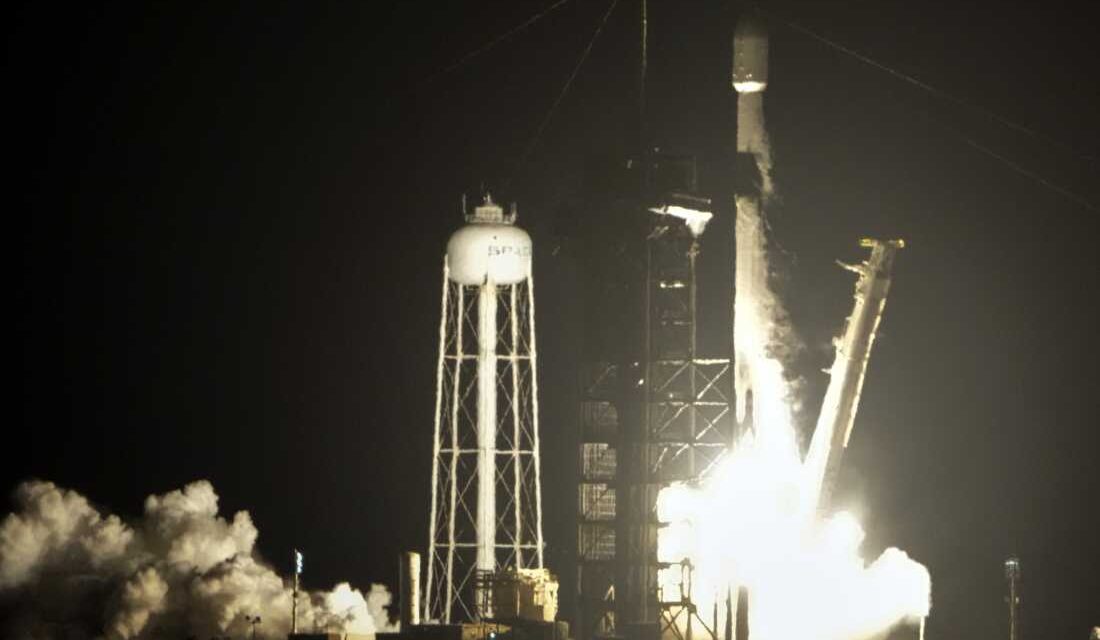
A section of a SpaceX Falcon 9 rocket is predicted to collide with the moon, as reported by scientists. The debris is expected to make contact on Wednesday at 2:35 a.m. ET, traveling over 5,000 miles per hour. This prediction comes from Bill Gray, who creates software for tracking space objects.
The debris, about the size of a five-story building, originates from the Falcon 9 rocket that transported two lunar landers and various scientific instruments in January 2025. The impact site is anticipated to be on the moon’s sunlit side that faces Earth, specifically near the Einstein Crater in the northwest portion. According to Gray, this collision could result in a crater at least 17 meters wide.
SpaceX did not plan for this defunct piece to strike the moon. Despite reaching out, NPR has not yet received a comment from SpaceX. NASA’s Lunar Reconnaissance Orbiter (LRO) project scientist, Brent Garry, indicated that the orbiter would pass over the region both before and after the impact to assess surface changes. “After the impact, we might better identify the location, allowing for targeted observations about a week later,” Garry mentioned during a NASA discussion.
Though the impact might not be visible, some researchers suggest a dust plume or rocks ejected by the collision could be detected with sensitive telescopes. Bill Gray expressed on his website, “As with much in science, the answer is ‘we don’t know; let’s find out.’ Rocks might create a visible plume against the dark background once they leave the moon.”
Ben Fernando, a researcher at Los Alamos National Laboratory, encourages interested individuals to take a deliberate look, acknowledging the rarity of such events. “This isn’t visible by simply using binoculars, but with the correct equipment and timing, it’s worth observing,” Fernando advised.
 Animal Self-Medication Insights
  Carlo Rovelli’s Perspective on Physics and Ultimate Reality
  Department of Defense Legal Waiver Promotes UAP Disclosure
  NASA’s Challenges Amid Goddard Space Flight Center Relocations
  Ancient Ring Offers New Insight on Pontius Pilate’s Authority
  Lost City Linked to Jesus Discovered Near the Sea of Galilee