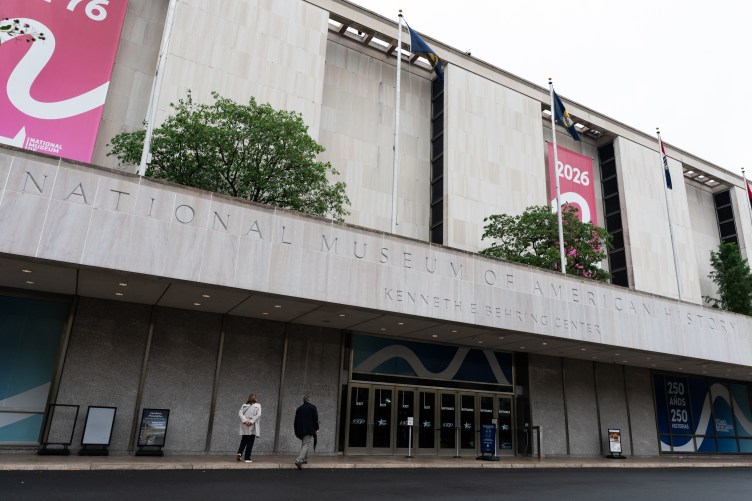
The Smithsonian’s National Museum of American History is at the center of a heated debate over its representation of American history. The controversy stems from accusations of ideological bias, with President Donald Trump attempting to influence the museum’s narrative. This scrutiny has raised questions about how history is presented and the museum’s role in education.
Exhibit Controversies
The museum has faced criticism for certain exhibits, such as one about Benjamin Franklin’s electrical experiments. Speculation suggested that Franklin might have used enslaved individuals in these experiments. While no concrete evidence exists, this conjecture provoked concern among some critics. Another criticized display featured a “crotch harness” associated with sadomasochistic practices. These exhibits stirred debate over the museum’s focus and intent.
“Benjamin Franklin’s remarkable scientific accomplishments were, in part, enabled by slavery.”
This statement, part of an exhibit, highlighted the complexities of Franklin’s history, suggesting the intertwining of scientific progress with darker historical realities.
The White House Report
In July, the White House released a scathing report. It accused the museum of being ideologically driven. The report questioned the museum’s focus and argued that it caused division rather than unity. Critics suggest that the museum should concentrate on traditional narratives, emphasizing America’s achievements rather than its failures.
For decades, the Smithsonian has been a bipartisan institution, praised for its educational value. Occasional controversies have arisen, such as during the planned Enola Gay exhibit in 1995, yet the institution has maintained its standing. However, the report has put this reputation at risk.
Political Influence
President Trump signed an executive order in March 2025, claiming that the Smithsonian had embraced divisive ideologies. He proposed placing warning signs outside the museum. His administration’s stance has led to significant tension between the museum and government officials.
The Smithsonian operates independently, governed by a board of regents, but it relies heavily on federal funding. This dependency makes it vulnerable to political influence. Concerns about budget cuts have added pressure to the institution’s ongoing challenges.
Historical Context and Criticism
Debates over the museum’s focus are not new. Critics have long contended that the museum lacks a cohesive narrative. In 1999, a critic argued that the museum ignored major historical events and figures. In response, the Smithsonian formed a commission, urging a clear narrative structure that balances positive achievements with failures.
The museum’s space and curatorial expertise have contributed to its fragmented presentation. Efforts to create a cohesive story have faced resistance from curators and external historians wary of triumphalist interpretations.
Museum’s Response and Future
The museum has attempted to create subject-focused narratives, covering areas such as business, democracy, immigration, and wars. These efforts faced challenges, including objections from donors and pressure from veterans groups. Curators emphasize the value of presenting complex, multifaceted stories.
Despite ongoing disputes, the museum’s exhibits still captivate visitors with significant artifacts like Jefferson’s drafting desk and Lincoln’s top hat. Yet, its identity crisis remains unresolved.
With the upcoming 250th anniversary of the Declaration of Independence, the Smithsonian is at a crossroads. Discussions continue over its mission and the balance between comprehensive storytelling and ideological neutrality. The institution’s leadership changes and redefined priorities will shape its future.
 Minnesota Lynx Coach Cheryl Reeve Voices Support for Transgender Community Amid Controversy
  Supreme Court Reaffirms Missouri’s Congressional Districts for Midterm Elections
  Talarico’s Tight Lead in Texas Senate Race
  Rep. Steve Cohen Introduces New Impeachment Articles Against Trump
  Susan Collins’ Independent Stance Examined in Maine Senate Race
  Debate Over Iran War and Future Settlements