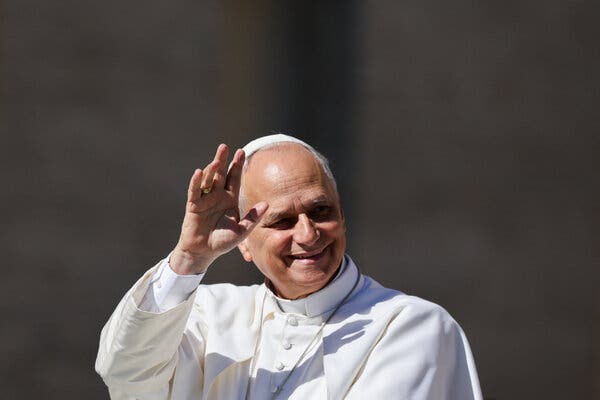
Pope Leo XIV has placed a strong emphasis on artificial intelligence during his first year as the pontiff. He has chosen to express his perspectives through a centuries-old form of papal communication known as an encyclical.
On May 25, 2026, Pope Leo XIV put forward his views on safeguarding human dignity in the age of artificial intelligence. The encyclical titled “Magnifica Humanitas” or “Magnificent Humanity,” marks his inaugural encyclical, penned shortly after becoming pope the previous year.
Encyclicals, written by the pope, generally address the entire church and convey authoritative teachings on moral or social issues. Although they don’t have the legal force akin to a papal bull, which is a formal declaration of faith or moral law, encyclicals still guide Catholics in their decisions and lifestyles.
Pope Leo XIV personally attended the presentation of his first encyclical at the Vatican, a departure from established tradition where popes usually do not attend. He was joined by Christopher Olah, a founder of Anthropic, a prominent A.I. developer, and several Catholic prelates and theologians.
The tradition of writing letters to the faithful dates back to the early days of the church. However, it was Pope Benedict XIV, who reigned from 1740 to 1758, who is credited with defining the encyclical in the way it is known today.
Below are five notable encyclicals that have made a lasting impact.
1. On Workers’ Rights: “Rerum Novarum”
Issued on May 15, 1891, by Pope Leo XIII, this encyclical laid the groundwork for Roman Catholic social teaching.
 U.S. and China to Discuss AI Transparency
  Fraud Investigation of Autism Center Raises Questions for Minnesota Senate Candidate
  Gen Z Voters and Their Impact on the 2026 Midterm Elections
  Rep. Alexandria Ocasio-Cortez Defends Macklemore Amid Tour Controversy
  Influence Concerns Surround California Political Donors
  Michigan Senate Race Sees Influences from Soros-Linked Funding