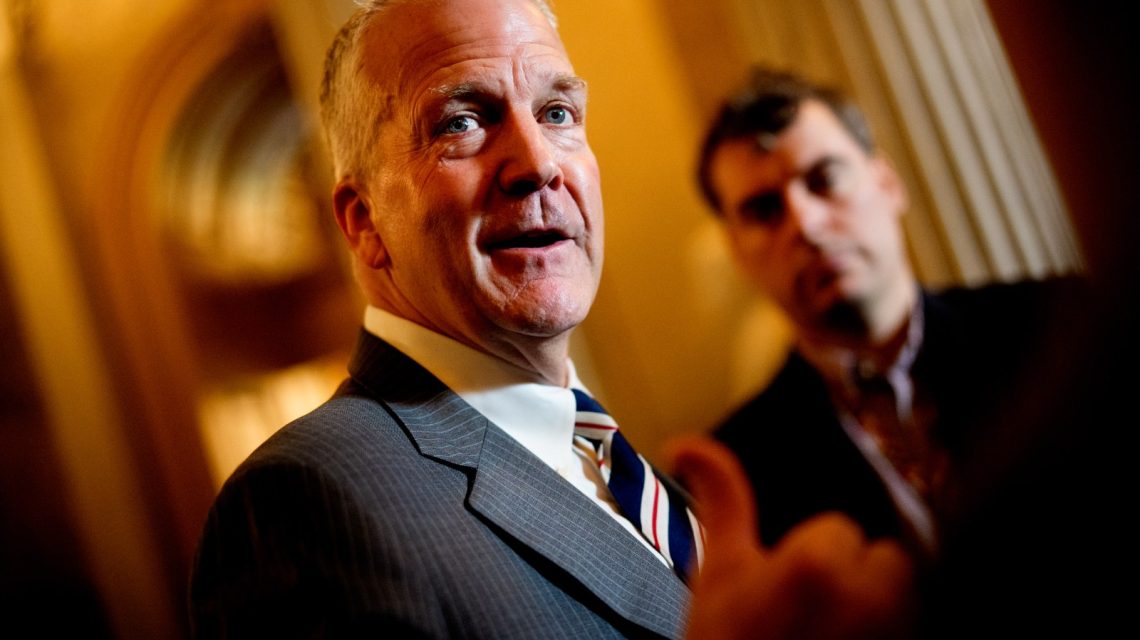
Alaska Republican Senator Dan Sullivan is advocating for a temporary stop to U.S. diesel exports due to a surge in fuel prices. This call comes a few weeks after gasoline prices in a remote village in Alaska exceeded $26 per gallon. President Donald Trump expressed support for the idea on Tuesday, as his administration explores the feasibility of such a restriction.
Sullivan suggested the moratorium remain until the conflict in Iran ends and energy exports through the Strait of Hormuz resume. He argues that retaining more American diesel should help rebuild reserves before winter and reduce costs. He stated, “American fuel should stay home with Americans. The cost of diesel is just too damn high.”
According to AAA, diesel reached a national average of $6.53 per gallon on Tuesday, with Alaska seeing a rise to $6.67. The nationwide average increased by nearly 31 cents over the week, as noted by GasBuddy. Patrick De Haan, head of petroleum analysis at GasBuddy, reported that diesel prices rose in every state, with five states experiencing increases over 50 cents per gallon. Strikes on Russian oil refineries coupled with regional refinery issues have tightened global diesel supplies, adding pressure in areas like the Great Lakes.
The future of diesel prices highly depends on international developments, with tensions such as new Houthi attacks and U.S.-Iran conflicts leaving the outlook uncertain, De Haan commented. On August 26, Newsweek reported drivers in Shungnak, Alaska paid $26.82 per gallon. Financial expert Michael Ryan attributed the extreme price partly to local transportation issues, with fuel being flown in due to low water levels preventing barge access to the community. The village has faced high fuel costs for years, including gas reaching $14 per gallon in 2022.
When questioned about Sullivan’s proposal, Trump mentioned he had similarly called for halting diesel exports. He remarked, “I’ve called for that too. I’ve said, ‘Let’s not send out the diesel.’ We make a lot of diesel.” However, he noted such actions could slightly impact regular gasoline due to the flow balance.
Treasury Secretary Scott Bessent, sitting nearby Trump, noted the administration was considering the feasibility of an export restriction, examining overall refining capacity and whether a partial or full ban would be effective. Trump and Bessent indicated that decisions on restrictions would be made swiftly.
The American Petroleum Institute (API) warned restricting U.S. diesel exports might worsen refining issues and harm consumers further. API President and CEO Mike Sommers commented, “Americans are hurting from rising diesel costs driven by an unprecedented disruption to global refining capacity.” He emphasized that restricting U.S. energy exports could intensify the problem, suggesting instead increased supply and flexibility over new restrictions.
Gulf Coast refineries reportedly produce more diesel than consumed in the region, making exports crucial to maintaining high production levels. Limiting exports might force refiners to cut production across diesel, gasoline, and jet fuel lines, further tightening supplies.
Several Republicans have backed the proposal this week. Iowa Representative Ashley Hinson, running for U.S. Senate, advocated for the immediate return to work on halting diesel exports, suspending the gas tax, and focusing on relief programs for truckers and farmers. Senator Chuck Grassley of Iowa also called for a temporary embargo, urging action to assist family farmers. Senate Majority Leader John Thune suggested an export ban might effectively address rising diesel prices, though reopening the Strait of Hormuz remains optimal.
Republican Senate candidate Mike Rogers supported Sullivan’s idea, urging an embargo on diesel exports, emphasizing the need to end the war in Iran to reduce costs. “Here’s what we can do now: place a temporary embargo on Diesel exports. American energy should provide relief to American families first,” Rogers stated on Monday.
The push for this temporary embargo emerges as global energy supply disruptions tied to the U.S.-Israeli conflict with Iran continue to affect oil and fuel markets. The Strait of Hormuz, a vital route for global oil shipments, has confronted severe disruptions since the conflict’s onset, contributing to rising global energy prices.
Contact Newsweek editors on this story: Edward T. Cummins.
 Investigation into Far-Left Groups Organizing Protests
  Deadly Dispute Over Beach Chairs in Greece
  Couple’s Fortunate Detour Saves Them from Himalayan Disaster
  Senator Criticizes Planned White House Welcome for Xi Jinping
  Potential Russian Incursion in Estonia Tests NATO’s Resilience
  Senators Urge Action for American Journalist Detained in Iran