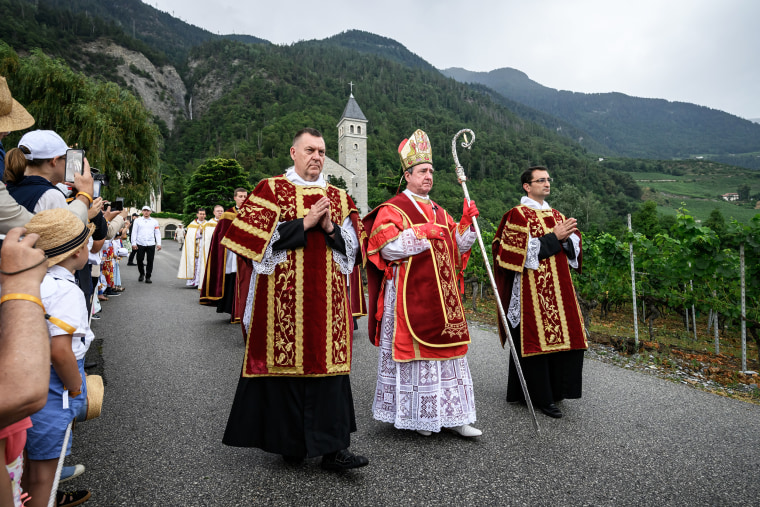
On July 3, 2026, a ceremony in Econe, Switzerland, set the stage for a significant schism within the Catholic Church. The Society of St. Pius X (SSPX), known for its ultraconservative stance, consecrated four new bishops. This act defied the Vatican’s canon law and Pope Leo XIV’s call for unity.
The Ceremony and Vatican’s Response
The SSPX conducted a five-hour ceremony attended by around 15,000 people, including hundreds of robed priests. The event was live-streamed worldwide. The newly consecrated bishops include Pascal Schreiber from Switzerland, Michael Goldade from the U.S., Michel Poinsinet de Sivry, and Marc Hanappier from France. Bishop Alfonso de Galarreta performed the rituals, recalling the traditional appointment by Jesus Christ of his apostles.
Consecrating bishops without papal approval is a grave violation under canon law and causes automatic excommunication. Pope Leo XIV urged SSPX to reconsider, highlighting the potential deprival of sacraments’ reception. Despite the warning, SSPX proceeded with the ceremony.
Society of St. Pius X: Foundation and Beliefs
Founded in 1970 by French Archbishop Marcel Lefebvre, SSPX opposes the modernizing reforms of Vatican II, which convened from 1962 to 1965. The Council revolutionized the Church’s relations with other faiths and permitted Mass in local languages. SSPX favors the traditional Tridentine Latin Mass, claiming it sustains mystery and formality.
Lefebvre objected to Vatican II as a move towards modernism and Protestant inclination. Following his unauthorized consecration of bishops in 1988, Lefebvre and the bishops faced excommunication.
SSPX’s Current Standing
SSPX boasts over 750 priests, 264 seminarians, and operates in various nations despite Vatican suspension. Recent bishops’ consecration signals no reconciliation attempts from SSPX.
Gemma Simmonds from Margaret Beaufort Institute of Theology remarks SSPX has chosen a path contrary to Church teachings, preferring outdated methods instead of accepting new guidelines.
Attempts to Reconcile
Pontiffs, including Pope Benedict XVI, aimed to reconcile SSPX. Benedict permitted their bishops to be welcomed back briefly but faced backlash due to controversial comments from Bishop Richard Williamson.
Pope Francis gave SSPX priests limited authority for confessions and marriages. However, following SSPX’s recent actions, the Vatican revoked these provisions.
Pope Leo recognized SSPX’s decisions and expected them to accept consequences of their stand.
Historical Schisms in the Church
This is not the first schism in Catholic history. The East-West Schism of 1054 separated the Catholic and Eastern Orthodox churches. Another was the Reformation in the 16th century, led by Martin Luther and John Calvin, initiating Protestantism.
 Ukraine Missile and Drone Barrage Hits Russia Amidst Elections
  U.S. Strategic Goals Remain Unmet Amid Prolonged Conflict
  New Photos Reveal Damage from Iranian Strikes in the Middle East
  Assassin of Chilean Diplomat Orlando Letelier Faces Deportation 50 Years After Assassination
  Gorillaz and Macklemore Respond to Controversy Over Israel-Palestine Statements
  Investigation into Lion Deaths in Tanzania