The global financial environment has become tougher for the U.S. government to secure loans, pushing interest rates up. This rise affects affordability, hampers economic growth, and poses challenges for Republicans in the upcoming midterm elections in November.
The hike in energy prices, triggered by the conflict with Iran, has influenced the cost of bonds that support Donald Trump’s administration. The interest rates on a 10-year U.S. Treasury bond have exceeded 4.44%, up from 3.95% before the conflict began at the end of February. Mortgage rates have reached their highest in nine months, and car sales are dropping.
This issue is not isolated to the U.S.; interest rates have increased globally as the world adjusts to higher inflation expectations. There are also concerns over public debt sustainability and a significant rise in investments in artificial intelligence.
President Trump has reassured Americans about plans to reduce the annual budget deficit, which is roughly $1.8 trillion. He has mentioned potential income from tariffs and visa programs, government efficiency efforts, and faster economic growth. Last week, he highlighted that efforts led by Vice President JD Vance against fraud could yield massive savings.
“If they do really well, we could have a balanced budget without needing to do much,” Trump stated.
However, economists are skeptical. Jessica Riedl from the Brookings Institution observed that servicing national debt costs have tripled since 2021, now exceeding $1 trillion annually. She noted Trump’s tax cuts could add $5 trillion to the deficits over a decade, with tariffs covering only a small portion of these costs.
Deficits are expected to increase, with future costs for Social Security and Medicare outpacing tax revenue. The U.S. 10-year Treasury rate hit 4.67% in May, then eased as ceasefire talks with Iran progressed.
Kent Smetters from the Penn Wharton Budget Model estimates that 60% of the increase in 30-year Treasury bond yields is from anticipated U.S. borrowing trends, and 40% is due to Iran-related inflation and Trump’s tariffs.
Glenn Hubbard, a former White House economic advisor, expressed concern over diminished borrowing ability compared to past crises. He highlighted the lack of proactive solutions from Washington.
Interest Rates and Voter Concerns
Higher interest rates can be a critical point for Democratic candidates in elections impacting Congress control. Voters are already troubled by high food and gas prices. In Colorado’s 5th Congressional District, Democrat Jessica Killin emphasizes ongoing deficits and higher rates limiting access to affordable homes, new cars, and manageable credit card debt.
Joe Reagan, another candidate, focuses on fiscal responsibility, arguing for investment in infrastructure, education, and veteran services over interest payments. Both aim to unseat Republican Jeff Crank.
Trump promised future efforts to balance the federal budget, citing potential opportunities not realized in over two decades.
Fraud Reduction as a Deficit Strategy
The administration aims to steadily reduce budget deficits. Last year saw a smaller deficit relative to the economy, partly from tariff revenues now deemed illegal. Treasury Secretary Scott Bessent referenced a report highlighting potential $500 billion in fraudulent public spending that might be eliminated.
Bessent critiques inherited budget challenges from the previous administration, aiming to reduce the deficit to 3% of the U.S. GDP, presently near twice that ratio.
Investor confidence persists with U.S. stocks gaining value, but rising interest rates suggest national debt remains a concern. Economic markets might push for deficit solutions ahead of voter impetus.
Hubbard stressed that the bond market relies on trust in debt repayment, warning that this foundation remains stable until trust erodes.
 Talarico Gains Momentum in Texas Senate Race
  Trump’s AI Strategy Sparks Debate Amid Regulatory Concerns
  Wisconsin’s Budget Strategy: Lessons for Federal Government
  Intensified Scrutiny on ActBlue by House Republicans
 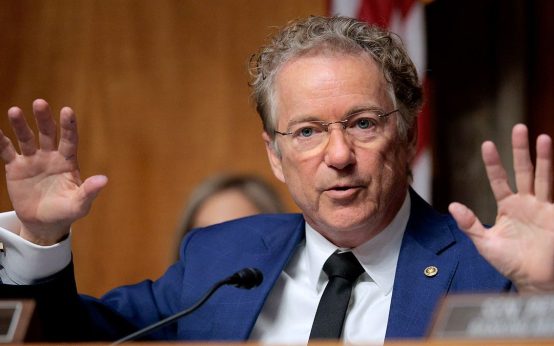 Sen. Rand Paul Criticizes Trump’s Proposed Financial Plan Amid Rising National Debt
  U.S. and China to Discuss AI Transparency