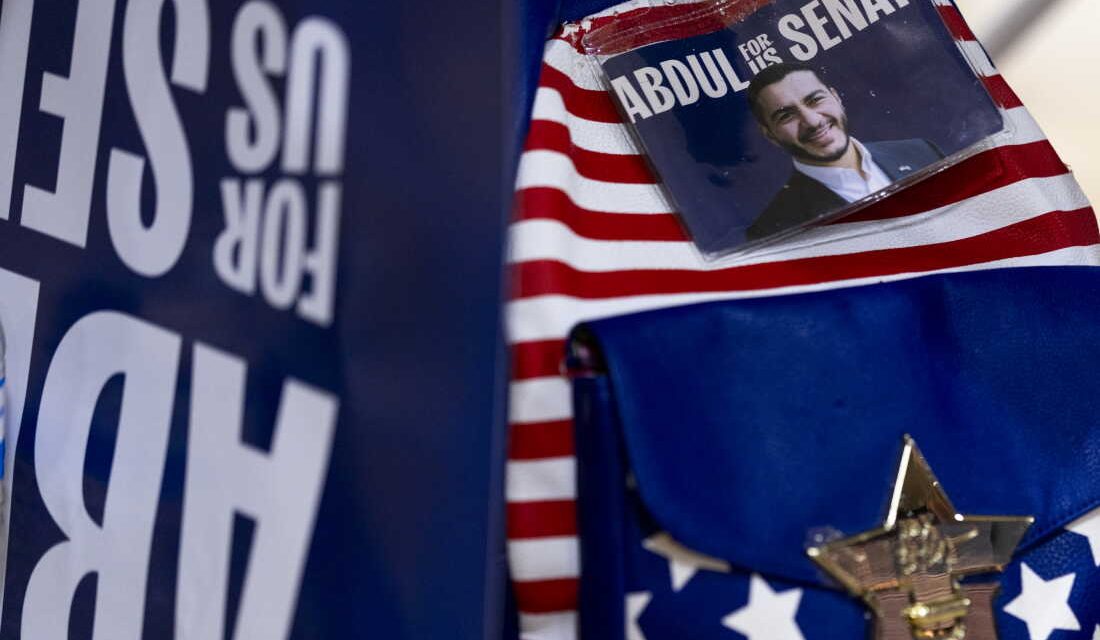
Expressions of support for Democratic candidate for Senate Abdul El-Sayed emerged during a town hall event on September 3, 2026, in Waterford, Michigan. After El-Sayed’s primary victory, anti-Muslim rhetoric surged, similar to the increase seen following New York Mayor Zohran Mamdani’s win the previous year.
Within hours of winning the Democratic Senate nomination in Michigan, Abdul El-Sayed faced offensive remarks from Sen. Tommy Tuberville, who labeled him a “terrorist.” Tuberville’s statement was consistent with his previous rhetoric and aligned with a broader narrative of anti-Muslim messaging from the political right over the past two years.
Professor Nazita Lajevardi of the University of Michigan noted the normalization of explicit racism in political discourse, remarking that such rhetoric no longer surprises people. Political ads across the nation have highlighted themes of combating “Radical Islam” and “Sharia law,” positing that “Islamic movements have taken a foothold.” Muslims represent a little over one percent of the U.S. population.
The Center for the Study of Organized Hate (CSOH) reported a surge in anti-Muslim sentiment following El-Sayed’s primary victory. Raqib Naik, CSOH’s executive director, emphasized the significant online spread of hostility, stating that over 1,100 posts from 46 GOP elected officials targeted Muslim Americans with bigotry and conspiracy theories between February 2025 and March 2026.
Naik highlighted that anti-Muslim sentiments have evolved to portray Muslims as a “civilizational threat” rather than a mere security issue. He cited statements from figures like Rep. Nancy Mace, who claimed Muslims in public office represent a “trojan horse.” President Trump has also suggested Democrats could elect “jihadists,” spreading this type of rhetoric further.
In Texas, Bo French, a candidate for a state position, spoke of an “Islamic invasion” in the context of the state’s numerous mosques. Such narratives have roots in the “great replacement” conspiracy theory, which suggests white populations are being replaced by nonwhite populations. This theory has been associated with several deadly attacks.
Naik pointed to efforts to block the East Plano Islamic Center’s construction in Texas as indicative of broader anti-Muslim sentiments. The state’s GOP platform includes resolutions against “Sharia law” advocates. Texas officials have opposed initiatives for Muslim communities, framing them as threats to American values.
Maya Berry, executive director of the Arab American Institute, explained that the anti-Muslim agenda is driven by political motives, aimed at creating viral moments and gaining campaign funds. She warned of the potential harm to young Muslims due to this kind of discourse.
Following Mamdani’s electoral win, some Republicans on Capitol Hill formed the “Sharia-Free America” caucus. Rep. Andy Ogles stirred controversy with comments about Muslims in American society. House Speaker Mike Johnson attributed this focus to “political Islam.” However, Berry noted a shift in tone, moving from rationalizations to outright exclusionary remarks against Muslims.
Lajevardi emphasized that this rhetoric might energize certain GOP supporters but could backfire in states like Michigan where GOP candidates need broader appeal. There is evidence that previous campaigns have successfully engaged Muslim and Arab American communities with direct appeals.
Republican consultant Vinny Minchillo expressed that while anti-Muslim messaging might mobilize some voters, the broader implications could undermine the GOP’s gains with Muslim and Arab American communities. He noted that concerns about the economy and inflation dominate voter priorities, suggesting GOP campaigns could benefit by shifting focus from divisive topics.
 State Department Enhances Passport Application Process
 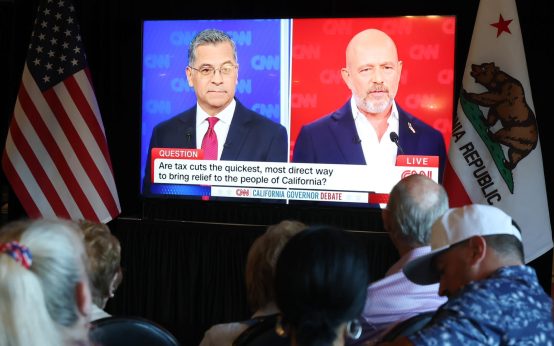 California Gubernatorial Debate: Becerra vs. Hilton
 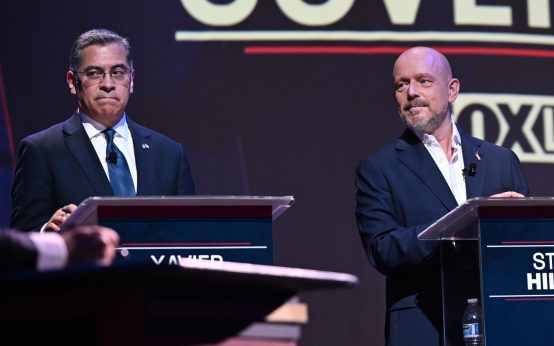 California Gubernatorial Debate: Becerra vs. Hilton
  California Gubernatorial Debate: Becerra vs. Hilton
 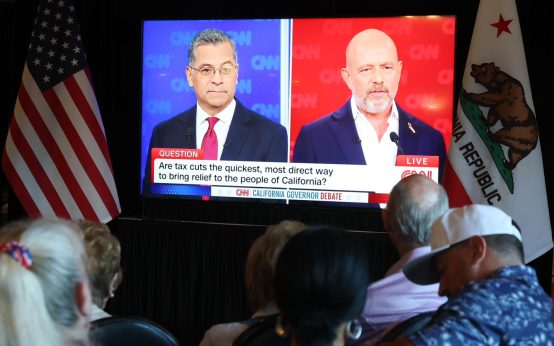 Key Moments and Insights from the Becerra-Hilton Gubernatorial Debate
 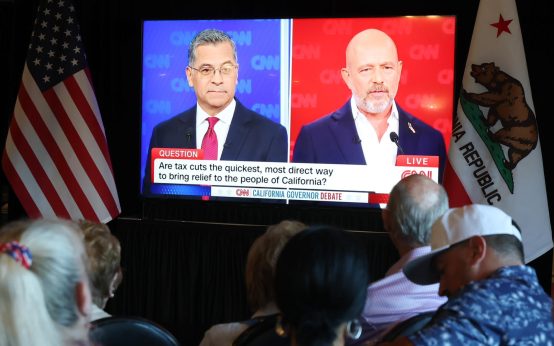 Becerra and Hilton Clash Over California’s Future in Heated Debate