
The U.S. faces a crucial question: Why fight another war against Iran if regime change is not the objective? This is something the Trump administration has yet to clarify. The cycle of military strikes, ceasefires, negotiations, renewed attacks, and pauses plays into the hands of the Islamic Revolutionary Guard Corps (IRGC). Each pause gives Iran the opportunity to rearm and adapt, putting Washington in a cycle of escalation and de-escalation without a clear definition of victory. This lack of a strategic vision is America’s first critical mistake.
The administration has not convincingly explained to Americans why confronting Iran enhances U.S. national security or what victory entails. Without a strategy, Americans question the rising energy prices, increased regional instability, and the risk of further engagement in the Middle East.
The second strategic error is assuming that transactional bargaining will work with an ideologically driven regime like Iran. The Islamic Republic believes it is on a divine revolutionary mission. The IRGC aims to expel the U.S. from the Middle East, eliminate Israel, and dominate neighboring Sunni Arab states. Understanding their ideological and religious motivations is key to negotiating effectively.
Despite these challenges, the U.S. has achieved noteworthy military success. Iran’s economy is faltering, and its military has weakened. However, continuing attacks on U.S. forces and commercial ships create the illusion that Tehran remains strong. Asymmetric warfare allows a weakened opponent to cause trouble without strategic success. Tactical victories are insufficient without a comprehensive political strategy.
Iran exploits America’s vulnerabilities: troop casualties and energy prices. It targets U.S. bases, Gulf partners, and shipping because it trusts American resolve will weaken before the Islamic Republic’s does. The American public, not fully informed about strategic issues like the Strait of Hormuz, gauges success or failure by U.S. casualties.
Analysts argue military actions against Iran only delay another conflict if the current regime persists. Americans compare a possible Iran confrontation to Iraq and Afghanistan because the administration hasn’t explained how this conflict would differ. Former National Security Adviser HR McMaster suggests supporting Iran’s opposition by organizing and equipping groups that resist the regime.
President Trump was persuaded by Turkish President Recep Tayyip Erdoğan to avoid backing a Kurdish-led uprising. This missed the chance for a broader resistance because Erdoğan prioritized Turkey’s interests over a pro-Western Iran that could shift regional power. History shows past successes, such as American support for Afghan resistance during the Soviet era, imposing costs and forcing withdrawal.
Unlike 1980s Afghanistan, many Iranians favor regime change and have shown pro-American sentiments. Regime change requires sustained pressure, coordinated support, and cutting off Iran’s leverage points like the Strait of Hormuz. The U.S. has prepped plans to reopen the waterway if Iran closes it. A coalition ensuring navigation freedom and economic sanctions could weaken Iran politically, economically, and militarily.
Such an endeavor would be lengthy and challenging. Policymakers must answer: If not regime change, how will the U.S. prevent Iran from rebuilding its military and nuclear goals, threatening the U.S., Israel, and Middle Eastern allies? Without a clear strategy, airstrikes leading to temporary solutions fail to address the core issues. Tactical wins alone can’t prevent future conflicts unless matched with thoughtful strategic planning.
Until policymakers outline a compelling strategic vision, America’s battle successes against Iran will only postpone inevitable conflict.
 Media Outlets Sue After White House Ban
  American Public Opinion on Press Freedom
  Media Lawsuit Against Trump Administration for White House Ban
  The Cost of Challenging Beijing
  Analyzing Midterm Elections and Party Dynamics
 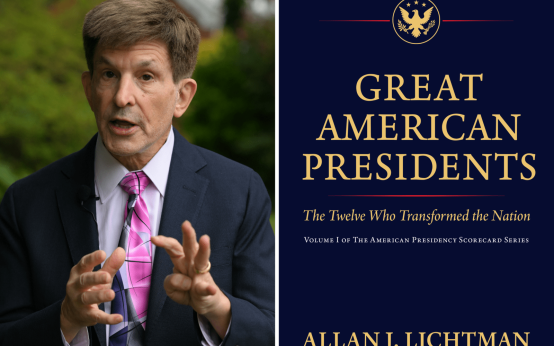 Allan Lichtman’s Framework for Assessing Presidential Greatness