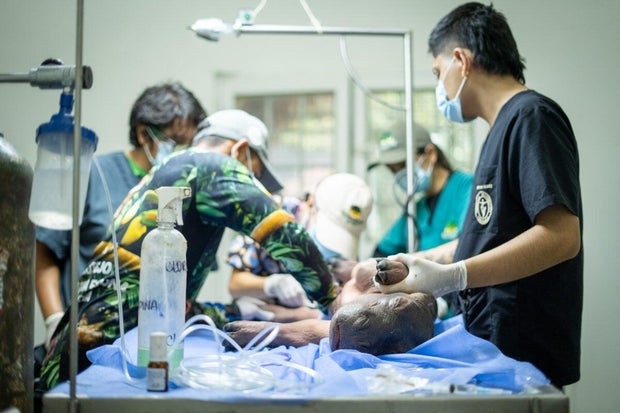
Authorities in northwestern Colombia have successfully rescued a newborn hippopotamus that was discovered alone by fishermen. The infant hippo, found on the banks of a river, showed significant signs of malnutrition. Colombia, known to have around 200 “cocaine hippos,” continues to manage this unique wildlife situation.
The Environment Ministry reports these hippos descend from a group initially brought to the continent by the notorious drug lord, Pablo Escobar. Fishermen found this young hippo separated from its mother, hidden among the bushes in the rural area of Puerto Nare municipality in Antioquia. Javier Valencia, head of the regional environmental authority, provided these details in a recent statement.
“Veterinarians addressed the hippo’s advanced dehydration and malnutrition,” Valencia stated.
After the animal’s condition stabilized, it was transported to a sanctuary for hippos at Hacienda Napoles. This estate, originally owned by Escobar, now functions as a theme park. The authorities emphasized the urgent rescue and treatment the baby hippo needed to survive.
During the 1980s, Escobar imported four hippos for his private zoo at the hacienda. Following his death in 1993, these animals roamed free, eventually settling near the Magdalena River. Their presence has disrupted the ecosystem, with reports of hippo attacks on residents.
Independent journalist Audrey Huse, residing in Colombia, explained that the hippos, without natural predators as found in Africa, have thrived. This growth threatens local species such as manatees, otters, and turtles. She mentioned that their substantial consumption of grasslands and waste production further poisons nearby rivers.
Recognized as an invasive species, these hippos destabilize native ecosystems. This has led the government to approve a culling plan, intending to remove around 80 hippos after sterilization efforts proved ineffective. Previous initiatives to transfer hippos abroad faced financial challenges, with costs reaching approximately $3.5 million.
Currently, this population forms the largest group of hippos outside their native Africa, posing ongoing challenges for Colombia’s environmental and wildlife management strategies.
 Family Seeks Answers Following Elderly Woman’s Death Under Canada’s Assisted Dying Program
  AI Fears Impact Trump-Xi Dialogue Amidst Challenges
  Fat Bear Week 2026 Highlights: Meet the Competitors
  Venezuelan Leadership Highlights U.S. Relations
  Controversy Surrounds Piers Morgan Following Claims in Earl Spencer’s Memoir
  Ontario Synagogue Shooting During Yom Kippur