For years, support for capitalism has been a core element of Republican economic philosophy. Emphasizing private ownership, competition, and free enterprise has been seen as crucial to achieving prosperity. However, recent polling indicates a shift in this outlook among Republicans.
Growing Doubts About Capitalism
A Fox News survey highlights this change, revealing a decline in Republican favorability toward capitalism. As of now, 61 percent of Republicans hold a favorable view, down from 72 percent in 2019. Those with a strongly favorable opinion dropped from 54 percent to 41 percent.
Despite remaining the strongest supporters of capitalism, Republicans are increasingly disenchanted with its current functioning. Many feel it disproportionately benefits the affluent while neglecting ordinary workers. This sentiment is linked to ongoing economic dilemmas such as affordability and inflation, which continue despite previous promises of improvement.
Poll Results and Economic Perceptions
The diminishing support is reflected across wider economic attitudes. In 2019, 57 percent of registered voters viewed capitalism favorably. Today, that favorability decreased to 50 percent, with a significant portion, 46 percent, viewing it unfavorably. The belief that the economic system primarily serves the wealthy now resonates with 65 percent of voters, up from 56 percent during Trump’s presidency.
Questions have arisen about whether Americans are shifting views on capitalism itself. Typically, capitalism involves private ownership and the freedom to produce, buy, or invest as sellers and buyers interact within markets. The government plays a limited regulatory role. However, concerns about corporate influence and economic inequalities are growing.
Public’s Call for True Capitalism
Republican sentiment has not entirely turned against capitalism. A majority still endorses it. Yet the system appears to be losing its appeal as voters perceive housing, wages, and daily expenses as unfairly managed. Consequentially, Republicans like Patrick Allocco suggest dissatisfaction stems not from rejecting capitalism, but from opposing what is perceived as ‘fake capitalism.’
Allocco emphasizes that Republicans call for authentically competitive capitalism, where small businesses thrive, and families can afford homes. They oppose systems favoring elites or corporations misusing power at the cost of ordinary Americans.
Shifting Economic Priorities
Republican voters display a shift toward populist views, showing suspicion of corporate-backed systems that offer scant security to workers. Inflation and cost of living are primary factors driving these concerns. Christopher Lee, a political advisor, notes that voters base economic evaluations on personal cost experiences, often differing from official inflation metrics.
He explains that voters have seen stagnant improvements in living expenses, contrary to election promises. The Trump administration’s assertions of reduced prices haven’t fully addressed these issues.
Evaluating Economic Policies
Affordability in the U.S. remained largely unchanged during Trump’s second term, despite his commitments to rectify it. Between late 2024 and mid-2026, overall prices rose 4.7 percent, while real earnings improved merely 0.8 percent. Essential costs like groceries, housing, and gas saw increases, particularly after a 2026 energy shock in the Middle East. However, recent price reductions have occurred.
While some of these economic shifts predate Trump’s leadership, others stem from his policies, like tariffs affecting imported goods costs, as per Federal Reserve estimates.
Tax deductions have aided specific households, yet the benefits are unevenly distributed. Lee suggests voters demand capitalism reform, not replacement. They desire the economy they were promised—fair wages, job opportunities, and an equitable tax system, absent of favoritism or manipulation.
 The Impact of Arts and Closure on Democracy
  U.S. Ambassador Comments on Iran War Duration Amid Political Concerns
  US-China Relations Under Scrutiny: Expert Warns of Escalating Tensions
  No Timeline for End of Iran Conflict
  German Chancellor Merz Vows to Pursue Reforms Despite Election Setbacks
 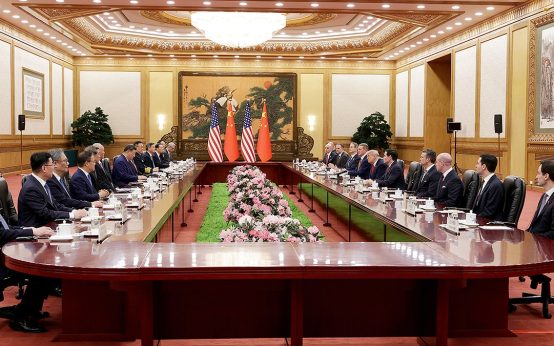 The Technology Rivalry: Trump’s Meeting with Xi and the AI Ecosystem Clash