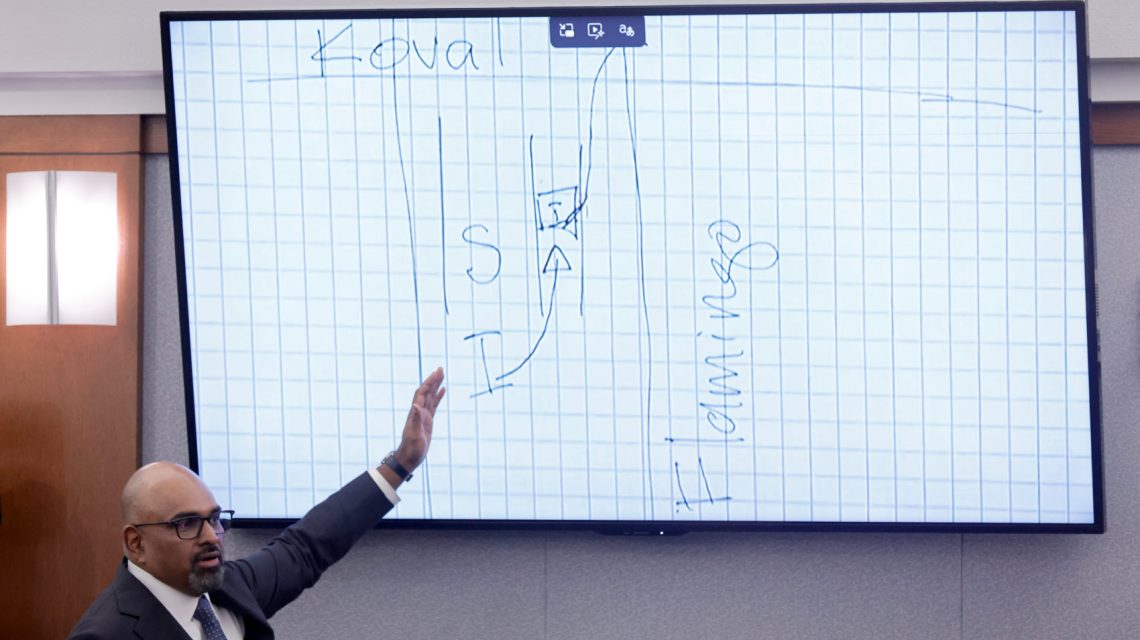
In the Las Vegas trial of Duane ‘Keffe D’ Davis, the prosecution urged jurors to convict him of first-degree murder for the 1996 killing of Tupac Shakur. Chief Deputy District Attorney Binu Palal argued that Davis’ own admissions and substantial circumstantial evidence confirmed his role in planning the drive-by shooting.
Prosecution’s Argument
Palal explained that Davis obtained a weapon and pursued Shakur and Marion ‘Suge’ Knight after they attacked Davis’ nephew. Although Davis’ accounts of the killing have changed, Palal emphasized the consistency in Davis placing himself in the white Cadillac involved in the shooting.
“The core facts remain. The material facts remain,” stated Palal.
Jurors were informed that they did not need additional evidence if they believed Davis’ statements. The rivalry between South Side Compton Crips and Mob Piru, and the altercation with Orlando ‘Baby Lane’ Anderson, were noted as circumstantial evidence.
Prosecutors claim Davis was responsible for the murder because he supplied the weapon and directed the attack, not necessarily firing the gun himself.
Trial Developments
The court heard from 24 prosecution witnesses and three defense witnesses over nine days, with the trial initially expected to involve 35 to 45 witnesses. Palal argued the shooting was premeditated based on testimony and Davis’ own accounts of the event.
Davis, 63, faces a charge of murder with a deadly weapon intending to assist a criminal gang. The case has attracted attention from fans and true crime enthusiasts, as Shakur was a significant cultural figure in hip-hop.
Under Nevada law, anyone aiding in a murder can be convicted. Davis, who admitted to being in the Cadillac, described the shooting as retaliation against Knight and Shakur, following a violent altercation involving his nephew.
Defense’s Position
Davis’ attorney, Michael Sanft, argued that the prosecution’s narrative lacked evidence and characterized Davis’ statements as bravado meant to profit rather than truth-telling. Sanft pointed out the absence of direct physical evidence linking Davis definitively to the crime, like phone records or dated hotel bills.
During trial, investigators noted finding a hotel bill at Davis’ home, but its relevance remained unclear. Since the case dates back nearly three decades, evidence collection methods differed from current standards, affecting what was available in court.
The prosecution leaned on Davis’ 2019 memoir, “Compton Street Legend,” and interviews as key evidence. While the book suggests some facts were altered, Palal maintained that the central account stayed unchanged, opposing the defense’s claim of financial motive.
The trial highlighted the complex dynamics of gang rivalries tied to competing record labels, with witnesses discussing the gang culture and Davis’ perceived leadership role.
Despite the challenges, the prosecution’s position demanded a focus on Davis’ intentions and planning rather than the act of pulling the trigger itself.
This trial serves as a pivotal moment in a case that’s lingered unresolved for years, capturing public interest and portraying the long-lasting impact of Tupac Shakur’s murder.