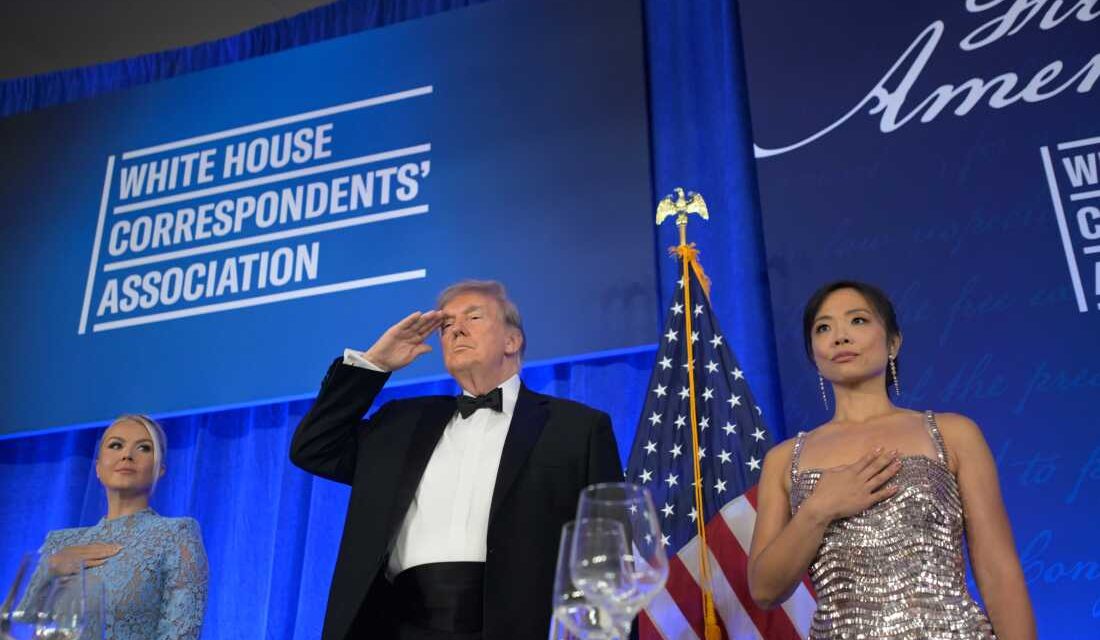
President Donald Trump attended the White House Correspondents’ Association Dinner on Friday, July 24, 2026, at the Waldorf Astoria in Washington, DC. Accompanied by WHCA president Weijia Jiang and White House press secretary Karoline Leavitt, Trump took the stage to deliver a speech that stretched over an hour.
In his remarks, Trump offered a mixture of praise for some journalists while directing criticisms toward others. His speech also included jokes about various public figures’ weight and intelligence, and he jested about serving a third presidential term. Trump mentioned that he had toned down the harsher parts of his speech, remarking on how the original presentation was disrupted by a gunman’s intrusion, which led to the dinner’s rescheduling.
The dinner was notable for Trump’s return and his intentions to attend next year, marking a significant moment in his often contentious relationship with the media. Some journalists and reporters were present at the event, including those whom Trump had previously condemned and barred from certain events.
Trump’s speech included seemingly lighthearted comments, but some bordered on offensive and vaguely targeted individuals including Jane Fonda, Bruce Springsteen, and former President Barack Obama. The audience’s reaction varied from amusement to discomfort as the insults continued.
The president also took aim at late-night hosts like Jimmy Fallon and Jimmy Kimmel, lawmakers such as Rep. Ilhan Omar, and former Governors Gavin Newsom and Chris Christie. Trump’s comments occasionally flirted with racist overtones. He also joked about his previous hotel, now the Waldorf Astoria, praising the location and poking fun at the journalism awards presented earlier, many of which featured critical stories of his administration.
Trump alluded to current political issues like the Iran war and indulged in humor, suggesting a third presidential term—a suggestion constitutionally forbidden by the 22nd Amendment. Displaying a red cap labeled “Trump 2028,” Trump concluded his speech by teasing a potential future candidacy.
The event differed from previous dinners. Trump received polite applause as he entered and was acknowledged by outgoing WHCA president Weijia Jiang for his support. After dinner, Trump witnessed award presentations, one of which went to Tyler Pager of The New York Times. Pager had been subpoenaed by Trump’s Justice Department, although the subpoenas were later withdrawn.
This year’s rescheduled dinner took place in a smaller venue with about 700 attendees and enhanced security, including ID checks and armed officers. The absence of a red carpet and cocktail receptions was notable, reflecting the differences from previous gatherings.
Jiang referenced the April event’s trauma and spoke against intimidation, reaffirming the resilience of the White House press corps. Trump indicated an intention to moderate his speech, although his critical remarks persisted. Awards were also presented at the dinner, specifically honoring acts of bravery during April’s events and recognizing the professionalism of the Washington Hilton staff.
The dress code was more casual this time, with a menu featuring dishes such as grilled peach and burrata salad, lobster, and beef Wellington. Entertainment was provided by mentalist Oz Pearlman. The WHCA board emphasized that the revised dinner sought to celebrate free press and journalism’s role in democracy.
There remains criticism regarding the dinner’s nature. Some believe the event’s optics compromise public trust in journalism, according to Kelly McBride of the Poynter Institute. Additionally, tensions have escalated between the media and Trump, who has enacted various pressure measures against unfavorable media coverage.
Trump ended his speech by expressing respect for journalism while again touting his achievements and humorously suggesting journalists would struggle financially without his presence.
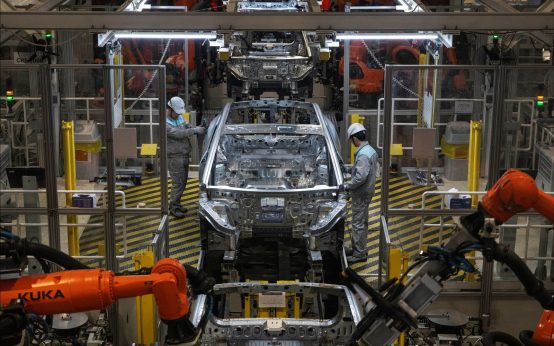 Trump’s Approach to China: Trade Dynamics and Challenges
  Media Outlets Sue After White House Ban
  American Public Opinion on Press Freedom
  Media Lawsuit Against Trump Administration for White House Ban
  The Cost of Challenging Beijing
  Analyzing Midterm Elections and Party Dynamics