This week highlighted a common sentiment: everyone supports a free press, as long as it incurs no personal cost. Politicians across the political spectrum are leveraging their positions to shield themselves from unfavorable coverage, all while claiming to protect the public or the press.
President Trump has prohibited certain critical media outlets from accessing the White House. Democrats are attempting to prevent a corporate media merger on a similarly superficial political basis. During a recent White House briefing, President Trump stated, “I proudly announce that, effective immediately, I am banning Fake News CNN, MSNOW … and Politico.” He also questioned why courts allow media to publish “fake news,” suggesting possible censorship.
Meanwhile, on Capitol Hill and around the country, Democrats are imposing political conditions on media. Twelve Democratic states have initiated legal action to stop the acquisition of Warner Bros. Discovery by Paramount Skydance. Although they present their arguments as antitrust concerns, many acknowledge they aim to protect one of the very networks banned by Trump: CNN. Previously, Democrats have shut down government operations over decisions affecting other liberal news organizations, like National Public Radio. In the past, some even called on cable providers to drop Fox News.
Both Trump and the Democrats seem unaware of the consequences of their actions, focused solely on the political expenses associated with a free press and free market. Trump has garnered public support for condemning media bias, echoing his criticism of outlets like CNN, MS NOW, and Politico. However, this ban is a direct attack on the free press, going against principles upheld by previous presidents. Even leaders like George Washington and Thomas Jefferson criticized the press yet recognized their constitutional duty to protect media freedom.
For the Democrats, opposing the media merger reflects a similar intent. Individuals such as former Obama official Norm Eisen have resisted the Warner Bros.-Paramount merger, labeling it a democratic threat. Their objective is to prevent conservative David Ellison of Paramount Skydance from controlling CNN and other media holdings like CBS. Using antitrust rhetoric, they openly intend to keep CNN allied with liberal voices. Senator Bernie Sanders expressed concern over a “power grab by the oligarchs,” calling Ellison’s potential control over CNN “unacceptable.” Former Obama advisor Dan Pfeiffer urged Democrats to halt the merger to stop CNN’s shift towards pro-MAGA content. Representative Jamie Raskin raised alarms about the merger’s potential impact on CNN’s editorial independence.
Despite condemning Trump’s media ban, outlets like MS NOW and CNN align with the movement to block a legal merger on political grounds. Some propose allowing the merger but demand CNN stays as a bargaining chip, possibly to be sold to a liberal owner. The potential consequences are often ignored. When Senators like Elizabeth Warren obstructed the merger of Spirit Airlines with JetBlue, they praised it as a win for the Biden administration. Yet, Spirit Airlines then faced bankruptcy, resulting in terminated employment for all its workers.
CNN might end up being the media’s version of Spirit Airlines, struggling with revenues and ratings despite occasional peaks. Although Democrats aim to safeguard the liberal platform, featuring their narratives regularly, CNN frequently operates at a risky level in the key advertising demographic necessary for survival. Warner Bros. has incurred significant financial losses. The merger would potentially benefit both companies and their employees. Masked as opposition to monopoly, Democrats challenge a deal approved by the European Commission and other previously skeptical experts.
Having worked with four networks as a legal analyst for 30 years, I support CNN’s continued growth. Strong media companies, both in press freedom and market competitiveness, are essential. This requires transcending personal biases to oppose political manipulation of media by any party.
I have addressed media and free speech in a time of heightened tension. Historically, leaders like President John Adams succumbed to targeting media, employing acts like the Alien and Sedition Acts. Presently, politicians are once again exploiting their influence to control media criticism. They seek to regulate public access to information to shield us from “fake news” or “corporate messaging.”
The defense of a free press and market doesn’t mean endorsing these companies or their reporting. It is about defending the individual’s right to choose what news to consume and whom to trust.
Jonathan Turley is a law professor and author of “Rage and the Republic: The Unfinished Story of the American Revolution.”
Copyright 2026 Nexstar Media Inc. All rights reserved. This material may not be published, broadcast, rewritten, or redistributed.
 Congressional Actions to Curb Presidential Powers
 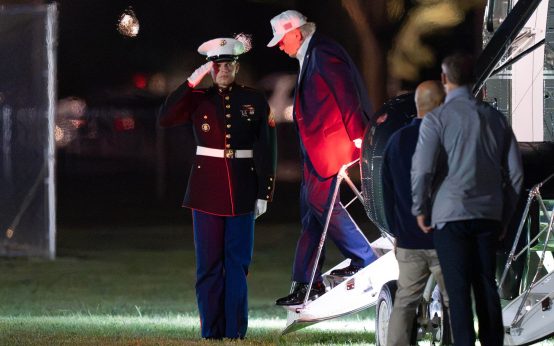 Trump’s Early Return from Camp David Amid Middle East Escalation
  Piddington Villagers Contemplate Joining the US Over Asylum Plans
  Labor Landscape in 2026: Unions Seek Support Across Party Lines
  Florida International University’s Controversial Decision on Immigration Enforcement
  The Democratic Response to AI Regulation