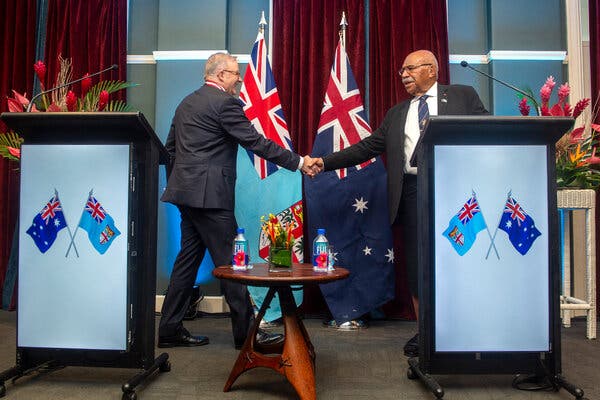
Australia is actively working to counter China’s influence in the Pacific Ocean through a series of treaties and alliances. Prime Minister Anthony Albanese signed security agreements in Suva, Fiji, with Fijian Prime Minister Sitiveni Rabuka on a recent visit. This follows Australia’s engagement with other Pacific nations, like Vanuatu and the Solomon Islands, aimed at fortifying relationships through treaties, educational aid, and policing support.
China’s announcement of a successful submarine-launched ballistic missile test in the Pacific highlighted the strategic importance of this region. Australia’s Foreign Minister, Penny Wong, described the situation as a “permanent contest” for influence in the Pacific against China. The 14 sovereign states in the region, despite their small size and population, hold significant geopolitical value. They played important roles during World War II and contain valuable ocean resources, making them attractive for both military and economic reasons.
Australia Strengthens Pacific Ties
Australia has always had strong connections with the South Pacific islands. It was a colonial administrator for some and helped establish the Pacific Islands Forum, the region’s major multilateral organization. Recent diplomatic visits reinforce these historical bonds and aim to secure strategic partnerships.
These moves are part of a broader Australian strategy to maintain stability and security in the Pacific. The aim is to ensure that these islands remain aligned with Australia and its allies rather than succumbing to Chinese influence. With strategic shipping lanes and the potential for deep-sea mining, the Pacific Ocean represents a critical area for economic and military interests.
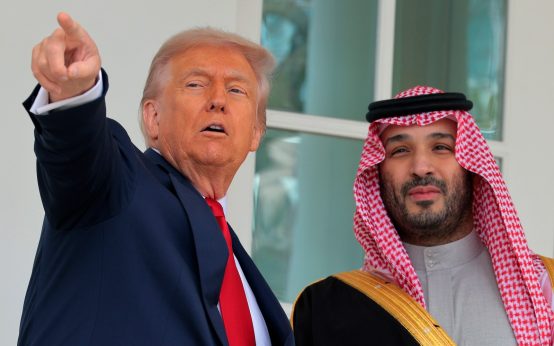 White House Approves F-35 Sales to Saudi Arabia Amidst Regional Tensions
  Inside the Secret Deals Powering the President’s Push to Deport Migrants to Countries Not Their Own
  Navigating the Challenges of Third-Country Deportations
  Midair Altercation on Bangladesh to London Flight
 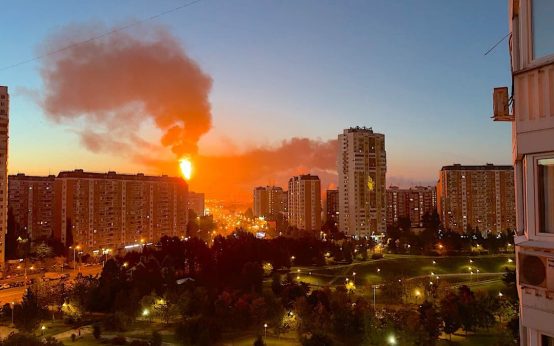 Ukraine Missile and Drone Barrage Hits Russia Amidst Elections
  U.S. Strategic Goals Remain Unmet Amid Prolonged Conflict