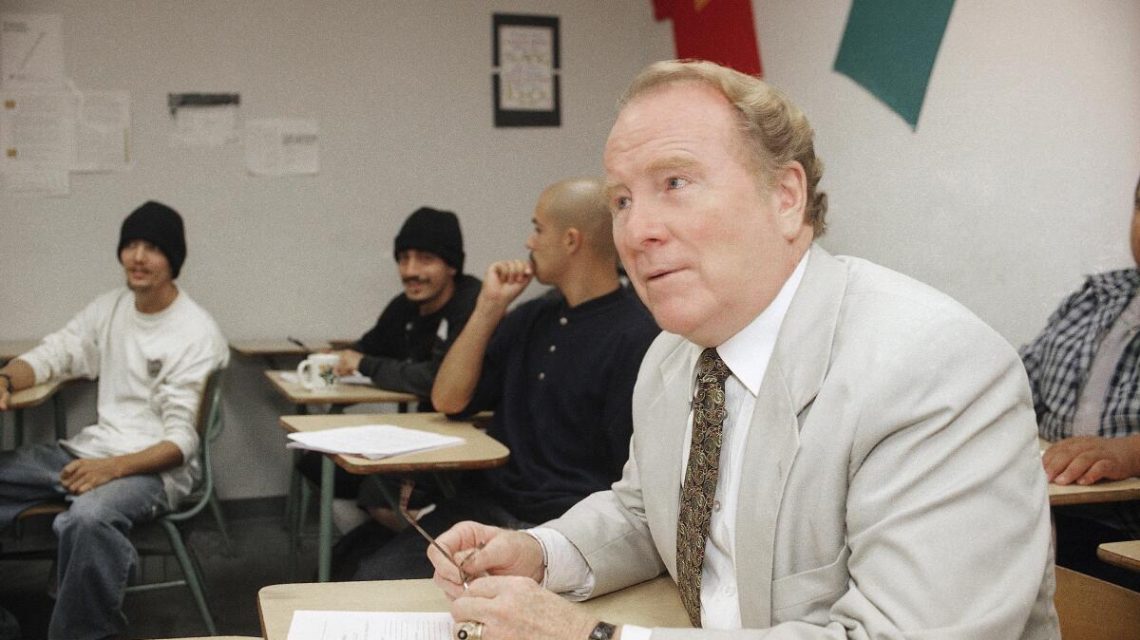
Thirty years ago, Orange County Rep. Bob Dornan, a Republican politician, accused electoral fraud after losing a close race. Dornan couldn’t accept the likely reasons for his defeat in a historic upset to Loretta Sanchez. Voters had grown weary of his divisive politics, and his Latino-majority district wanted representation from one of their own. Dornan was seen as an ideological figure who failed to bring back any benefits from Washington, D.C. for his constituents. Instead, he and his supporters blamed illegal immigrants.
During this period, California was passing numerous anti-immigrant laws, allowing Dornan’s claims about nonprofits allegedly registering noncitizens to vote against him to resonate with Republicans. Congress investigated Dornan’s accusations, while local lawmakers proposed bills requiring voters to show government-issued identification each time they voted—similar to voter suppression tactics from the segregationist South.
The investigation by Congress concluded in 1998. Noncitizens did vote for Sanchez, but they comprised less than 1% of the total votes, insufficient to overturn the election results. No one was charged for voting illegally or improperly registering noncitizens. When Dornan ran again in 1998, declaring efforts to address election irregularities, Sanchez defeated him decisively, ending his political career.
This episode is a part of my curriculum in O.C. history college classes, demonstrating what happens when political parties embrace a demagogue who blames others for their failures. Despite his loss, Dornan’s views lingered. The notion that illegal immigrants routinely vote in elections and favor Democrats has become widely accepted among Republicans.
Currently, President Trump’s refusal to accept defeat by Joe Biden in 2020 has reached a new low with speeches on debunked election fraud theories. His statements included references to communist China, former Venezuelan leader Nicolás Maduro, and alleged noncitizen voters. Networks largely ignored Trump’s ineffectual tirade. Even Fox News host Sean Hannity moved on shortly after it concluded.
Trump urged the U.S. Senate to pass a bill requiring voters to show proof of citizenship before voting, emphasizing election integrity. In California, MAGA supporters like Assemblymember Carl DeMaio, Senator Tony Strickland, and aspiring Southern California U.S. Attorney Bill Essayli are pushing Proposition 39, which would require verification of voters’ citizenship and government-issued ID presentation at polls.
Federal law mandates that voters in federal elections must be U.S. citizens. Only select municipalities permit noncitizen voting in local elections. Despite Trump’s claims of 278,000 noncitizens registered to vote across multiple states, actual occurrences remain rare, akin to Dornan’s era. Yet, Trump and his followers press on, claiming an effort to restore faith in a corrupted system—a dog whistle for those worried about changing demographics and GOP losses.
Some Republicans cite recent California primaries as evidence of election fraud, suggesting different outcomes were possible in two races. California hasn’t experienced a statewide Republican victory in 20 years. Steve Hilton trailing Democrat Xavier Becerra in the gubernatorial primary, along with Karen Bass and Nithya Raman eclipsing Republican Spencer Pratt in the Los Angeles mayoral primary, were predictable outcomes.
Trump’s insistence that both Republicans deserved to win outright further fueled conspiracy claims. In his White House speech, Trump criticized California’s vote-counting, comparing it unfavorably to third world elections. Ironically, despotic leaders often emerge from such regions.
A May poll by the Public Policy Institute of California revealed Proposition 39 in a close contest, with 49% of voters supporting it and 51% opposing it. References to Trump’s comments might sway the opposition, diminishing support for the proposition.
The Republican focus on imaginary noncitizen voters might temporarily gain traction but will eventually fail. Orange County’s shift to blue led to a diminishing GOP presence, now concentrated in wealthier areas and lacking national prominence.
Republicans can appeal to immigrant and Latino voters successfully if they change their strategy. For example, in 2024, Latino GOP legislators achieved record victories in California, and Trump secured a higher proportion of the national Latino electorate. This success was driven by a focus on voter concerns rather than fixation on noncitizen voting.
Trump’s gains among Latino voters appeared to indicate significant political change, reducing Republican desperation ahead of Election Day. However, Trump’s actions have contributed significantly to the party’s difficulties.
Trump’s closing argument falsely blamed Democratic policies and candidates for opposing voter ID mandates, questioning their electoral viability.
The legacy of Bob Dornan continues to resonate.
 Universities Should Reject Political Influence on Research Funding
  Trump’s Approach to China: Trade Dynamics and Challenges
  Media Outlets Sue After White House Ban
  American Public Opinion on Press Freedom
  Media Lawsuit Against Trump Administration for White House Ban
  The Cost of Challenging Beijing